Image


Facing a criminal allegation in Stoke-on-Trent can be daunting. Our team of criminal defence solicitors provides clear, practical advice from the first call, so you understand the process and the options available. We act quickly to protect your position and prevent avoidable mistakes.
Based in Hanley and serving clients across the city and its wider area, our Stoke solicitors offer representation at police stations, and experienced advocacy in the Magistrates, Youth and Crown Courts. With Smith Partnership you will work with duty-accredited specialists and Higher Court Advocates who prepare meticulously and fight your corner at every stage.
We are a leading law firm in the East Midlands and Staffordshire with a dedicated Stoke office in Hanley, supported by criminal defence solicitors across our network.
At Smith Partnership, we prioritise practical and jargon free guidance with fast and responsive support, especially when time is critical. With leading police station advice, we are here to represent you, whenever you need us.
I had never been arrested before and these solicitors explained everything so that I could understand what was happening with my case. They were brilliant and I recommend them to anyone.
- Client, Crime - Google
Clear communication, expertise and a successful outcome. Nicola was very helpful and honest about the case and possible outcomes, was less stressful due to her input. I would recommend your services.
- Client, Crime
No. If you are arrested, police can take your fingerprints without your consent.
If you are arrested and detained for what is known as a "recordable offence" the Police can take your fingerprints and a non-intimate DNA sample from you without your consent. Examples being a mouth swab, a hair from your head with root or swabs of your hands.
There are more than one kind of Warrant that are commonly referred to. There are warrants that are issued by Courts where a suspect fails to attend when required. They can be warrants backed for bail or without bail. If you fail to attend Court please contact us immediately as we can assist you.
There are also warrants that are issued by the Police / Courts that give the Police the power to search rooms or addresses or buildings. This is usually when they are looking for someone or items related to a suspected offence.
Initially the Police can only hold you up to 24 hours without charge. However this can be extended by a further 12 hours by the Police or 72 hours by a Court. It is therefore vital that you seek our representation if you are arrested and taken to the Police Station, as we can make representations to force the Police to release you earlier than they would like.
There are different types of Bail. The Police can release you on bail whilst they finish their investigation. Sometimes they might impose stringent conditions. The Police can also bail you to Court once charged. Again they may choose to put conditions on that bail.
Bail is also imposed by the Court when adjourning a case to a different date. The Prosecution often apply to have conditions attached to a suspect's bail. In all 3 circumstances, our team can assist you by applying to remove bail conditions that are not needed.
ABH, or Assault occasioning Actual Bodily Harm as it is correctly known, is a form of assault. It comes under Section 47 of the Offences Against the Persons Act 1861.
This is charged by the Police where the injuries suffered by the victim are more than trifling. This means they are more serious than minor ones. It is a serious offence which carries up to 5 years imprisonment if convicted. If you are arrested or charged with ABH please contact one of our team immediately.
GBH, or Section 20 Wounding involves causing grievous bodily harm. Those are serious injuries. It carries a maximum sentence of 5 years imprisonment.
Based in the heart of Stoke-on-Trent, our team of criminal defence solicitors blends deep local knowledge with the experience of a leading regional firm. We are Duty and Police Station–Accredited, and ready to step in at short notice to guide you through what to expect and the next best steps.
From 24/7 police station representation to advocacy in the Magistrates’, Youth Courts and Crown Court you will work with seasoned practitioners, including Higher Court Advocates, who build a clear strategy around your goals. Meticulous case preparation and robust courtroom advocacy are at the core of how our team of Stoke-on-Trent solicitors are here to protect your rights in the city and surrounding areas.

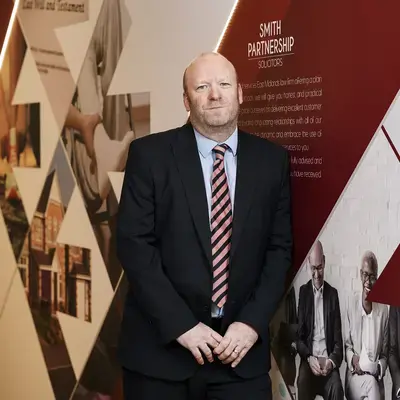
Partner | Crime
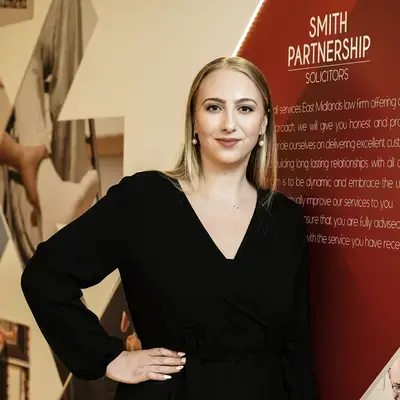
Senior Associate | Crime

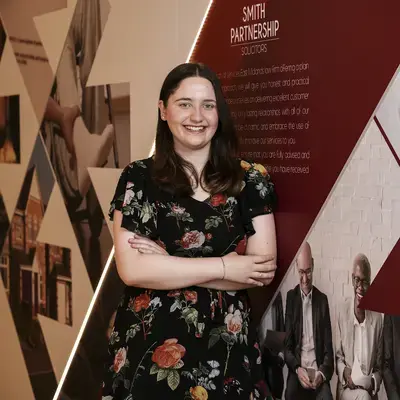
Associate | Crime
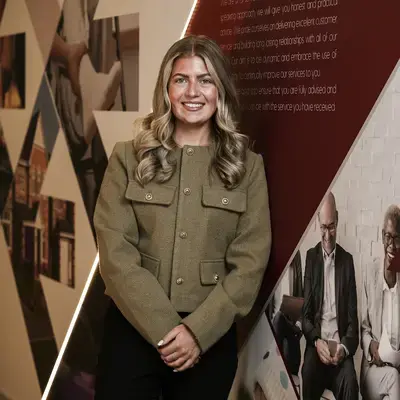
Associate | Crime
Muctar Johal
Partner & Head of Childcare
Practice areas
I qualified as a Solicitor in 1991 and joined Smith Partnership in 1999, having spent 10 years working for local authorities. I have over 28 years of experience in practising almost exclusively children's law.
I set up the Childcare Law department in 2002, and was made a Partner in 2006. In the same year I qualified as a Solicitor Advocate (Civil) and in 2013 I became the Client Care Partner at our head office. My team and I specialise in all areas of childcare law, but in particular public children's law where the state, through the guise of the local authority, has intervened in private family life due to allegations of child abuse or neglect. I conduct all my own advocacy, including against nationally-renowned silks and leading junior counsel, predominantly in the County and High Court. I am regularly instructed by CAFCASS, children and parents in the most legally- and factually-complex child abuse cases involving child deaths, serious head injuries, other serious non-accidental injuries and allegations involving serious sexual abuse. A number of the cases I have been involved in have been reported, including:
I have also been instructed by CAFCASS in cases involving disputes between parents as to childhood immunisation — such as Re B (A Child - Immunisation) [2018] EWFC 56, 168 NLJ 7808, [2018] All ER (D) 11 (Sep) — as well as contested surrogacy cases, disputes regarding children from same-sex relationships, and for leave to remove from the jurisdiction.
I have lectured for many years on the subject of public childcare law on CPD-accredited courses around the country, and have delivered papers in a number of national conferences. I have also taught childcare law on the Social Work Masters at the University of Leicester.
I was formerly a member of the Family Justice Council in Derby and a former chair of its Expert and Disclosure Subcommittees for a number of years.
Accreditations:

Qualification year:
Admitted to the roll of Solicitor on 15th November 1991.
Supervisor:
I am a Partner and Head of the Childcare team, and therefore responsible for the work of all our Childcare and Social Services Solicitors and staff. I bring my 27 years of post-qualification experience and expertise in leading the team and driving forward our agenda to provide the highest possible level of service and representation to our clients involved in public childcare law proceedings brought by Local Authorities/Social Services involving their children.
I spearhead the drive to ensure that not only do we provide advice and assistance leading up to any proceedings, but that we offer continuity through representing our clients at most, if not all of the court hearings.
I am married with 3 children who take up most of my time. For better or for worse, I am a follower of Liverpool FC.
Extremely compelling advocate' and head of childcare Muctar Johal 'is highly respected in the field of child protection.
Effective advocate" (...) "adept at handling the most complex cases involving children" (...) "skilled and subtle negotiator.
An excellent advocate.
The legal knowledge and advice that is given – especially by Muctar Johal – is superior to advice from other legal firms.
At Smith Partnership, Muctar Johal ‘leads his team by example’ and is a renowned figure in children law.
Muctar Johal leads his team by example. His advocacy is exceptional. He is calm and unflappable. His ability to digest complicated medical reports is phenomenal.
The breadth of experience and knowledge within the family team make it the go to firm within the area for advice on complex legal issues.
Muctar Johal is quite simply exceptional. On the very rare occasions he does not have the answer to a complex legal issue, he will undertake thorough research and you can be sure you are getting the best advice.
Praised for ‘providing the best public service to its clients’, Smith Partnership has a highly specialist childcare offering, alongside its expertise in private family law matters. Commended by clients as a ’brilliant lawyer and advocate’, Muctar Johal co-leads the practice, with expertise in childcare matters involving complex and sensitive medical and care proceedings.
‘This is an exceptional firm, providing the best public service to its clients. I have seen first-hand how their teams operate, supporting each other. They have a terrific breadth of experience and enthusiasm for the work, which can be so challenging.’
‘The partner I know well is Muctar Johal. He has a superhuman ability to juggle a huge caseload, be an excellent advocate at court and yet finds time for his extremely vulnerable clients, to engage with them and gain their confidence. He is a brilliant lawyer and advocate.’
Smith Partnership is best known for its expertise in public childcare law, with the team handling matters ranging from care and supervision orders, wardship proceedings in the High Court and placement and adoption orders. Derby-based Muctar Johal leads the team with significant expertise in representing a wide range of individuals such as guardians, parents and carers in care proceedings.
'An exceptional family team comprised of dedicated, approachable people willing to go the extra mile for their clients. Muctar Johal, partner and Head of Child Care, is an extremely knowledgeable and effective advocate who has a superb manner with lay clients, which enables them to feel relaxed and confident when talking to him about difficult issues. He works in partnership with advocates to achieve the best possible outcome in the most complex cases and is a trusted presence in the courtroom.'
Jason Wood
Partner & Head of Commercial Property
Practice areas
I joined Smith Partnership in 1992 and am Head of the Commercial Property team. I have over 30 years of experience and have dealt with a large cross section of complex commercial property matters. My clients include many private sector clients involved in development schemes and property finance together with complex landlord and tenant matters.
My experience includes site assembly and development, property finance, investment acquisition and funding agreements and the negotiation of institutionally acceptable leases.
The Commercial Property team have been the headline sponsor of the Derby Property Summit, an event attended by over 500 property specialists where I led a seminar on the difficulties faced by city centres and unlocking their potential.
I have acted on behalf of a US client who specialises in the sterilisation of medical equipment used by the NHS and other medical providers in relation to the purchase of land from Henry Boot Developments Limited and subsequent development agreement for the construction of a bespoke factory with a value in excess of £10 million.
I have also acted for clients in relation to a new facility with HSBC Bank plc with a value of approximately £8 million. This will enable the clients to acquire further land for development purposes.
Qualification year:
Admitted to the roll of Solicitor on 1st March 1988.
Supervisor:
A wealth of experience. Having been involved with commercial property work for 27 years I have been involved in numerous complex and testing transactions. There are not too many scenarios that I have not come across.
Films, travel either abroad or in the UK in our motorhome, music festivals, spending quality time with my family. Lifelong Arsenal fan. Sometime golfer when time permits.
Smith Partnership advises on a variety of commercial property matters, including developments, landlord and tenant issues and property finance work, with particular experience in the hospitality and healthcare sectors. Practice head Jason Wood specialises in advising developers on site assemblies and the subsequent sale of plots and acts for property portfolios on the purchase, sale and leasing of properties.
The thing that makes Smith Partnership unique is that they give good old-fashioned personal service, and they care.
The ‘highly professional’ Smith Partnership offers ‘excellent business acumen’ and ‘great depth of expertise’.
Key figures include practice head Jason Wood, who has particular expertise in the healthcare sector. The group's expertise covers acquisitions and disposals, property finance and development work, landlord and tenant instructions and corporate support work. The client list features a major pub company and several players from the food and drink industry.
The commercial property team at Smith Partnership provides a comprehensive service, spanning acquisitions, dispositions, refinancing, and easements, and is especially geared towards the industrial and charity sectors. Team lead Jason Wood chiefly focuses on development schemes and property finance mandates. Danielle Upton handles a varied caseload and is particularly well-versed in matters in the industrial sector, including the sale and purchase of warehouses and distribution centres.
‘I found Smith Partnership was extremely effective at planning the foreseeable, as well as the not-so-foreseeable conveyancing needs of my work. They protected my interests but were commercial in wanting to get the deal done for me.’
‘The team is excellent. There is fantastic collaboration to overcome any legal challenges that present themselves during the process. They are efficient, concise, and informative, which helps their clients keep up to date with the whole process.’
The Derby-based team at Smith Partnership is very experienced in assisting charity and industrial sector clients with a wide range of commercial property matters, including pension schemes, acquisitions and disposals, and finance cases. Additionally, the group brings expertise in advising energy sector entities on development work. Team lead Jason Wood is a key contact for funding matters and site assembly issues.
'Very competent, transparent, and act in a timely fashion. Professional yet approachable.'
James Johnson
Managing Partner
Practice areas
As Managing Partner, I lead the firm’s strategic direction and oversee operational performance, ensuring we remain a trusted legal partner for our clients and a great place to work for our colleagues.
Commitment to legal excellence and client care is at the heart of everything we do, and I work closely with our talented teams to drive innovation and growth while fostering a forward-thinking culture.
I’ve been part of Smith Partnership for nearly 30 years, progressing through the ranks. Before stepping into my current role, I headed our employment law practice, where people—clients and colleagues—were at the centre of my focus. I take this ethos into my role as Managing Partner.
The breadth of my role excites me: from shaping growth initiatives and managing resources to safeguarding financial sustainability, championing recruitment and professional development, and helping build high-performing teams. I’m passionate about strengthening our client relationships and maintaining our strong community presence across the regions we serve.
My vision for Smith Partnership is clear and ambitious— it is rooted in growth, innovation, and a deep commitment to delivering high-quality legal services. I aim to expand our digital capabilities, deepen client and community connections, and embrace new ways of delivering legal solutions, ensuring we evolve while building on our strengths and retaining our distinct culture, which I consider to be our USP.
Qualification year:
Admitted to the roll of Solicitor on 1st October 2001.
I aim to bring direction, guidance, and authenticity to everything I do. I value our culture and the legacy built by those before me, and I’m committed to leading collaboratively through a time of growth and technological change. For me, leadership is about mutual respect, relatability, welfare, and connection—principles that underpin the firm.
I’m a keen sports enthusiast—though I’ll admit I’ve mastered none! These days, my sporting efforts are focused on golf (with particular attention to the 19th hole), alongside regular runs and gym sessions. I’m a proud father to my wonderful daughters, and an exhausted owner of a highly energetic cocker spaniel.
Thank you to James Johnson for the help and advice with my unexpected employment dispute. James was very professional, concise and prompt given the timescales we had to get this resolved. I was very happy with the outcome and would highly recommend James!
Smith Partnership has an excellent employment team who are attentive and responsive to our business priorities and provide pragmatic advice.
I have used James Johnson’s services via the Smith Partnership for over five years and I am happy to comment as follows. James is my first point of contact for any legal employment matters. He deals with each issue with complete professionalism, patience and knowledge. He always goes the extra mile to ensure that we fully understand the reasons and implications of any advice he offers. I would not hesitate to recommend James to any other fellow HR professional or employer.
I would like to thank James Johnson at Smith Partnership Solicitors for his excellent service in dealing with my situation at very short notice.
I would not hesitate to contact him again if required & thoroughly recommend him for his efficiency & professionalism.
I engaged the services of Smith Partnership to help me with an exit from my employment which had been instigated by my employer whilst I was on maternity leave and trying to return on a flexible working basis. My case was handled by James Johnson who I found to be meticulous, articulate and thoroughly knowledgeable throughout. James dealt with my case with care and understanding, doing his best to minimise any costs for myself whilst being fully transparent regarding fees. I found James to be extremely reliable, honest and client focused. My case was dealt with very quickly and reached a satisfactory conclusion to what was a very stressful time. I would not hesitate to either use Smith Partnership again and I highly recommend them, as I cannot imagine any other practice dealing with my case as well as they did.
I contacted James Johnson at Smith Partnership for help and advice regarding an employment law matter. It was refreshing to receive candid, open and realistic advice regarding the situation and what was achievable. James provided clear (jargon free!) explanations and guidance. The service was responsive and I felt supported at all times. We achieved a fair and reasonable outcome with James taking the stress out of the situation.
I would definitely recommend James Johnson. I found him to be very approachable and professional, making things easy to understand. When circumstances changed, he was very flexible and accommodating.
Excellent service and professional advice given by James Johnson
Excellent service by James Johnson - I would highly recommend him for any assistance with employment issues.
James and his team at Smith Partnership offered me a fantastic service. They provide sound advice and helped me through a stressful process using straightforward language and professional at all times. Thank you!
Highly recommended - I was very pleased with the service I received from Smith Partnership. James Johnson provided me with clear comprehensive advice, which in turn gave me great reassurance. He is extremely professional, responding promptly to emails and phone calls. In addition, he is very polite and friendly, and it was therefore a pleasure to work with him. James made me feel very cared for, and that I was in good hands. I would definitely hire him again.
James made a very awful situation more bearable by taking the time to thoroughly explain the situation and the options available to me. James was lovely and made me feel very comfortable and relaxed. If I was to be in the same situation in the future James would be my first Call.
James Johnson was excellent. He gave good tactical as well as good legal advice in relation to an employment dispute which ended successfully.
I instructed the services of James Johnson of Smith Partnership for matters relating to my employment. I was in an extremely stressed and emotional state due to the actions of my employer. I was very fearful of where matters would proceed. James took on my case with what I can only describe as the most excellent professional manner. He was compassionate and empathetic to my position and requirements. His advice was at all times presented in a manner that cut through the clinical legality and was conveyed with the practicalities that a lay person needs. Although highly empathetic, James was always very honest in his advice and helping me achieve realistic outcome expectations. One of the best things to come from my instruction of James's services is my personal learning from my observations of how James thinks things through. I have learnt much, and am better able to analyse adversity based purely on reason rather than heated emotion or sense of unfairness. This is the kind of long term benefit one does not expect but one is extremely grateful for.
Throughout my case, I was always reassured no matter what I faced, I was not alone. Wherever necessary, and whatever was required, was done in a timely, effective, and impactful manner by James. I never had to chase a response or update from him, and was never given conflicting, confusing or incorrect advice. James was always respectful of my decisions and what I sought, and he moulded actions in a way that helped fully realise a highly favourable outcome. The support was genuine, continuous and James was committed not just to my case, but also in ensuring my wellbeing. I felt like I was treated not as a mere client, but with compassion and great care, as a person. I trusted James entirely, even as I faced extreme stress and I learnt to trust his advice fully and am very glad I did. My trust in James reaped a handsome outcome and matters concluded on a highly satisfactory resolution which provided me with everything I was looking for and a sense of closure to a very difficult time for me.
Reputable universities can always train a solicitor to be the best. One is perhaps less able to train the very best of solicitors to be the very kindest as well. I think this rare feature of kindness combined with excellent counsel is wonderfully demonstrated by James. I have no doubt when I state that I received the very best counsel from the very best of solicitors.
I now go forward into a new career with the best start possible. Thank you for every single thing James!
I had an employment law issue that was dealt with swiftly and to my utmost satisfaction by James Johnson, I cannot praise him and his team highly enough.
Thanks to the diligence and commitment of James Johnson at The Smith Partnership, my recent employment issue was handled with the utmost empathy and professionalism at a very testing time for my Company. Nothing was ever too much trouble for James, I felt constantly reassured, and his communication was always instantaneous, honest and integral. As a result of this exceptional service I will solely be using The Smith Partnership for any future legal issues I have.
James provided me with excellent advise relating to a settlement agreement. He took me through the legal speak, translating it into plain English and helped to enhance the outcome for me. Given the COVID restrictions all of this was carried out remotely and James was very helpful, overcoming a number of technical issues, ensuring that the whole process was completed within 24 hours. I will definitely recommend his services to friends and family. Thank you James.
James Johnson was recommended to me when I needed representation urgently regarding an employment matter. He immediately conceived a winning strategy and delivered this flawlessly, leaving the other party's representative trailing. Not only did he get the right result, but he was prompt, efficient and supportive through a difficult time for me. I can't thank him enough.
Great advice from James Johnson, would highly recommend. The whole experience went smoothly, everything was explained well, felt comfortable discussing what normally would be difficult.
I worked with James to organise a sensitive matter which I was unsure how to approach. From the beginning he was extremely professional, spoke to me in plain English and gave me a call when I had queries around the wording on a document. I am so pleased I chose Smith Partnership for this assistance and would not hesitate to call them again if a need arose. Thank you very much James!
Excellent solicitors! Would highly recommend. I was supported by James Johnson who gave me great employment advice. Such a professional and lovely person who was always available to help and got everything done quickly and effectively! Thank you.
James gave me very clear advice which I understood easily. He went above and beyond, replying to emails at the weekend due to the time frame of the matter in hand.
Thank you, James Johnson for all your help at such a very difficult time in my life. From the moment you engaged with me (and my Husband), you provided immense support, advice and help. My husband and I are so very grateful for everything. I will never forget how you managed to encapsulate my exact sentiments and feelings from our meetings together. You are a unique talent and so professional at what you do. Wishing you the best for the future.
Smiths Partnership and James Johnson were able to assist me in a recent employment matter which required immediate support and expertise . James came to my assistance and was able to break down each aspect into meaningful components removing a huge amount of stress and gave me immediate confidence that he would support me in my requirements - I couldn't recommend James or Smiths partnership highly enough.
Finding myself in the need for the services of an Employment Law specialist was very daunting. James Johnson, partner at Smith Partnership soon put me at ease. Whilst showing empathy for my situation he was very professional and efficient. I wouldn’t hesitate to recommend him and Smith Partnership to anyone who finding themselves in the unfortunate need for their services.
My experience with Smith Partnership & James Johnson was excellent. James understood and dealt with my situation. Communication and professionalism were excellent and James helped me secure the best outcome. I found the experience with Smith Partnership to be good from first contact with Claire through to conclusion.
I contacted James Johnson to assist with a settlement agreement between myself and my employer. I was impressed with his understanding and knowledge on the matter. His insight showed some issues that required resolution before we were able to sign off the agreement. He was efficient and stuck to our allocated budget, I would certainly obtain his assistance again if needed and would highly recommend him to anyone needing his services.
A huge thanks to James Johnson at Smith Partnership for handling my settlement agreement after being made redundant from my previous employer. James was professional, thorough and explained the process clearly from start to finish in an understandable way. My case was handled very efficiently and quickly. I can highly recommend his services!
I wanted to put on record how much I appreciated your support with my settlement agreement. Your calmness, empathy and professionalism meant that the process moved quickly and you worked extremely hard. Thanks so much for all your sterling support and advice, which you delivered at pace to a favourable conclusion and with great communication throughout. I couldn’t have got through this without you and want to ensure you are recognised for this.
Used Smith Partnership for my settlement agreement from my previous employer. Customer service from Judith Bull was excellent, smooth process from start to finish from loading my ID remotely without going to the office. James Johnson one of the Partners was excellent, professional, fair and didn’t try to upsale my agreement to try and get more money from me as there was no guarantees faultless through out and really please with the service from both Judith and James.
James and his team were quick to respond, extremely thorough and achieved the results I wanted. Kept me informed of any costs all the way through the process. Highly recommend!
I was referred to James Johnson by a friend to assist with negotiating and finalising my settlement agreement, and I couldn't have been more pleased with his services. As someone navigating this process for the first time, I found it to be quite overwhelming at times. However, my initial Teams conversation with James instantly put me at ease. His calm and confident demeanour provided me with much-needed reassurance. He guided me through the agreement, uncovering issues that I had overlooked and identifying errors made by my employer. I wholeheartedly recommend James to anyone in a similar situation requiring assistance with exit negotiations from their employer.
I dealt with James and Katie, and all I can say is incredible service. Timely, friendly and efficient. I was kept in the loop at all stages and would not hesitate to recommend Smiths Partnership.
I used Smith Partnership with regard to my redundancy settlement paperwork. They made the whole process very easy for me, at a time when things were stressful and contacting a solicitor seemed just another difficult thing to have to do. James Johnson and his team ensured everything was dealt with professionally, quickly and made it hassle- free for me. I was so happy - I recommended them to the rest of my colleagues.
I highly recommend James Johnson from Smiths Partnership. I recently worked with him on an employment matter, and he provided excellent service. During the initial consultation and the final resolution of my case, James demonstrated an unparalleled level of professionalism, expertise, and dedication. Thanks to his expertise and diligence, my case was resolved swiftly and successfully. I am truly grateful for the positive outcome.
James has handled my case in an extremely professional and swift manner, helping to make a very stressful situation feel less daunting. My legal knowledge is extremely limited, but James explained every step of the process to me in very simple terms, helping me to understand exactly what was happening.
I highly recommend James and wouldn’t hesitate to work with him again in the future.
James has been fantastic helping us with legal work. Would recommend. If you are looking for solicitors who make you feel welcome and answer your questions Smith is a great option.
James Johnson was incredibly supportive and gave some very sound advice. He was able to use his knowledge and his amiable approach to succeed in getting me the settlement that I needed when I found myself no longer in employment. I would totally recommend him to anyone who finds themselves in similar circumstances. He is professional and approachable and certainly gets results. I cannot thank him enough.
James and his team provided excellent service and useful guidance. They were very responsive and very personable. Would definitely recommend them.
If you are looking for a trust worthy, efficient and effective solicitor then use Smith Partnership. My solicitor - James, was brilliant. He handled my case sensitively, answered all my questions and was fully informed of all the details of my situation. I couldn’t have asked for a more smoother process. Thank you James and Smith Partnership for your support!
I applaud the Smith Partnership in the way that they have evolved and established themselves over the years, making them one of the leading law firm in the UK and certainly the best in Derby, offering many legal services backed up by highly skilled professional people. James Johnson is testament to the way that they have moved forward, James helped me this week with some advice on employment law as I am presently involved in an employment tribunal. I had less than one hour on the phone with James and he was absolutely brilliant in listening to me and answering my questions. James certainly knows his trade and is exceptional in delivering what is required, he gave me some sound advice. It is also important for me to mention the support staff at The Smith Partnership, they to are exceptional in the way that they help manage the cases, they are polite and efficient. Last but not least, I think the fees are great value for money.
I wanted to take this opportunity to thank James Johnson for his support during my recent redundancy experience.
I was under pressure to resolve the situation at pace. Despite the Easter Bank Holiday, James met with me, represented me and resolved any of my outstanding queries promptly but also in a professional and dignified manner that satisfied both my employer and myself.
James Johnson provides a personable service, has always delivered and turned around responses and documentation in a timely fashion. His knowledge and support with the cases we present and his advice accordingly provides a great deal of comfort and confidence.
I saw James Johnson regarding an employment issue. He explained everything clearly & thoroughly and offered excellent advice. Communication was superb and everything was sorted quickly and efficiently. Would definitely recommend.
I contacted Smith Partnership for advice on an employment issue. I received a first class service which included robust advice and support from James Johnson. I was kept informed throughout the process, on the prospects of my case, costs, and guidance on reaching a settlement with my former employer. I have no hesitation in recommending James to any prospective client who requires advice on employment matters.
I cannot thank James enough for his recent support with regards to an employment contract settlement issue. Interaction & support was very professional but also friendly & supportive. James was highlighted a number of issued I had not considered, and took time to address a number of specific concerns I had. I really appreciate support James provided esp as had never experienced this sort of issue before - would certainly recommend to others.
James at Smith Partnership is simply superb. Honest, trustworthy and transparent. Excellent communication and nothing was too much trouble. I would choose him time and time again for excellent advise and representation. Thank you!
I worked with James Johnson to review an employment settlement agreement. James was fantastic from beginning to end and the whole experience was super simple. James ensured that the matter was dealt with quickly, that updates were provided promptly and that negotiations between all parties was effortless. I would highly recommend James for employment related matters.
I recently had the pleasure of working with James for legal advice on two job settlements, and I cannot recommend them highly enough. From the outset, he demonstrated a calm and collected demeanour that instantly put me at ease during what could have been a stressful process. James is incredibly knowledgeable and has a remarkable ability to cut through the legal jargon, making complex concepts easily understandable. This clarity was invaluable as it allowed me to make informed decisions without feeling overwhelmed. Communication was another standout aspect of my experience. He was always prompt in responding to my questions and provided regular updates, which kept me informed throughout the entire process. James was not only professional but also very reassuring, providing the support I needed during this time. One of the most impressive qualities was his efficiency—everything was handled quickly and effectively, ensuring that I could move forward without unnecessary delays. Overall, I am extremely grateful for the support and expertise James provided. If you are in need of legal advice, especially regarding job settlements, I wholeheartedly recommend him . Thank you, James, for your exceptional service!
I am incredibly grateful for the outstanding service provided by James. From the very first consultation, James was professional, approachable, and thorough, ensuring I fully understood every step of the process. James’s expertise gave me confidence throughout, and I felt well-supported. I would highly recommend James to anyone in need of reliable legal assistance.
James was a huge help as I went through my first UK redundancy. He gave excellent advice, was very clear and knowledgeable.
I can't recommend James Johnson highly enough. From our very first conversation, James was professional, knowledgeable, and reassuring. He took the time to clearly explain my rights and options, and his calm, confident approach immediately put me at ease during a very stressful time.
James successfully negotiated a significantly better settlement agreement with my ex-employer than I had initially been offered. His attention to detail, strategic thinking, and strong communication skills made a real difference to the outcome. I felt fully supported throughout the entire process, and I genuinely believe I wouldn't have achieved such a positive result without his expertise.
If you're looking for a solicitor who truly has your best interests at heart, James is the person to speak to.
James Johnson at Smith Partnership is clearly a very experienced lawyer and an expert in his field. James’s support and guidance was exceptional. Ease & speed of communication with outstanding breadth and depth of knowledge of employment law. If you are seeking legal advice, don’t go anywhere else!
James Johnson is extremely knowledgeable and made the process very easy. I was kept in the loop at all stages and could ask for assistance at any time. Thank you for making this a very smooth journey. I highly recommend Smiths for anyone looking for legal assistance.
I am very happy with the service I recieved. James responded promptly under time pressure, provided clear and knowledgeable advice and communicated the next steps throughout. Everything was handled efficiently and professionally. I also want to thank Katie for her support. Highly recommend.
'James Johnson provides a professional service throughout all his communications and interactions. They are reliable and results-oriented, they work with you to identify best-fit solutions.’
Based in Derby, Smith Partnership primarily acts for employers in Employment Tribunal claims. James Johnson heads up the practice, leading on disability discrimination cases and advising on TUPE transfers. Johnson predominantly advises clients in the retail, sport and health sectors.
‘They offer a valuable service and are quick to respond.’
‘Comms is always to the point and laid out for all to read and interpret with ease.’
Ruth Jones
Partner & Head of Family
Practice areas
As a Partner and Head of the Family team, my main area of work is advising clients on financial aspects of relationship breakdown. Caseloads include matters involving multi-million-pound assets (including pensions/properties/investments and businesses). I represent a wide variety of individuals including senior executives, business people, GPs, accountants, sportspeople etc. Part of the job involves liaising with accountants, actuaries and other professionals so that clients receive the best advice tailored to their circumstances.
I also deal with disputes involving children and in particular helping clients to make child focused arrangements following relationship breakdown.
I am building the growing area of prenuptial/cohabitation contracts.
I am a member of Resolution and a trained mediator. I am committed to trying to resolve matters in a constructive manner, recognising that litigation, whilst important, is often not the best solution to family breakdown.
Qualification year:
Admitted to the roll of Solicitor on 15th October 1992.
Supervisor:
I do try and bring a sense of fair play and teamwork, I believe in a collaborative approach where possible. We are better as a team than as individuals and I recognise that different members of my team have different skills. I try and draw on those so that the clients receive the very best service.
As the daughter of an English teacher, grammar and effective communication is pretty important too!
I live with my partner of over 30 years and am a mum to 2 children in their twenties. They tend to occupy most of my free time!
In snatched moments I enjoy reading and walking my 2 miniature dachshunds. I am trying (and failing) to develop a regular gym habit, but if I do make it to the gym, I enjoy yoga and swimming.
5 stars without a doubt. Ruth Jones was my family law solicitor and she was a god send in my difficult times which turned out to be very lengthy, especially through COVID. She was professional and to the point, yet understood me on a personal level. I cannot recommend her enough!!
Very experienced' and 'highly regarded' practice head Ruth Jones (...)
Head of family practice, Ruth Jones, routinely advises on the financial aspects of relationship breakdowns, prenuptial/cohabitation contracts and cases involving minors. Solicitor Emma Hennessy is also noted.
The breadth of experience and knowledge within the family team make it the go to firm within the area for advice on complex legal issues.
The support from Ruth in the Family Law team has been invaluable. Throughout a very difficult time, it made all the difference to have such great advice and support. The service has been pragmatic, meticulous and (most importantly) caring too.
Throughout the Divorce process, Ruth and her team, worked efficiently and responded promptly to my queries. Ruth dealt with my case with professionalism, kindness and empathy and her thorough and informative approach from the onset, helped me through this very unforeseen and stressful time. Following my experience, I would have no hesitation in recommending the Smith Partnership and would be happy to record a five-star rating.
Praised for ‘providing the best public service to its clients’, Smith Partnership has a highly specialist childcare offering, alongside its expertise in private family law matters. Recognised for going ‘the extra mile for her clients’, Ruth Jones co-leads the practice alongside Johal.
‘This is an exceptional firm, providing the best public service to its clients. I have seen first-hand how their teams operate, supporting each other. They have a terrific breadth of experience and enthusiasm for the work, which can be so challenging.’
Emma Hennessy
Associate & Branch Manager
Practice areas
I have over 30 years’ experience in family law. I work in the Swadlincote office for which I am the Branch Manager.
When dealing with matters I take a strategic and compassionate approach. I focus on each client individually, considering their own particular needs and translate legal jargon into lay persons language.
I deal with all aspects of family law including divorce, financial matters including cohabitation and separation of cohabitees and private law children matters.
Qualification year:
Admitted to the roll of Solicitor on 15th February 1996.
Supervisor:
A determination to achieve the best possible result for my clients at an affordable price.
Away from the office I spend my time on my smallholding caring for my many animals! I have also been known to enjoy the odd glass of red wine at the weekend!
Just want to thank you and Emma for everything. You've both been brilliant and helped me through a very difficult time.
Emma Hennessy at Smiths Partnership Swadlincote, has been supporting with ongoing family matters which then lead to her Legally Representing in Family Court. The support, understanding and kindness shown by Emma and her secretary Amanda as well as the honest and straight talking legal knowledge and guidance is something my family and I will be forever grateful for! We couldn't wish for better Legal Representation.
I received great legal representation from Emma Hennessy and the best outcome for me was always at the forefront, Jodie Aston handled the property transfer and completion efficiently and promptly and always communicated with me to keep me updated on the process, huge thanks to the whole team.
Patrick Booth
Associate
Practice areas
Associate solicitor in the Clinical Negligence department based at Norman House, in Derby. I act for clients who have suffered negligence by medical clinicians and who wish to recover compensation. Most of the cases are against the NHS. My case load tends towards more complex matters such as cases involving birth defects, life changing injuries, and injuries of maximum severity. I am a Court of Protection appointed Deputy. I am a former member of the Solicitors Disciplinary Tribunal. I am an Assessor to the Law Society’s Personal Injury Accreditation Panel. I am also an Assessor to the A.C.C.A. I am a Trustee of the Nottinghamshire Hospice.
Qualification year:
Admitted to the roll of Solicitor on 1st October 1981.
Supervisor:
I am a keen amateur baker and I try and keep my colleagues supplied with cake. (Whether the cake is any good – is open to interpretation!)
I try and maintain a sense of the ridiculous.
My interests include bridge and education. (I am a Trustee of an Educational Trust which looks after 15 Secondary and Primary Schools in the East Midlands). I was a very keen long-distance runner but health problems (and old age) have forced me to give that up. I am recovering from recent major spinal surgery. I attend a gym three times per week.
All contact with this partnership has been impressive. I liked what they wrote on their website in their statement of how they practice law, 'putting clients first', and my experience tells me they really do. My initial contact was for advice concerning medical negligence. The secretary had Patrick Booth call me back the same afternoon. I expected to pay a fee for his advice but he insisted this first consultation was free, even after I'd made clear that I was not going to take my complaint against a hospital department to court. Patrick Booth gave me precise advice concerning what to write in my initial complaint to the hospital and even offered to read this through, what I could expect as a response and advised me to escalate the matter to the CQC if the hospital's response to my complaint was unsatisfactory. He explained the further actions possible and had I the emotional fortitude to take a department's catalogue of serious error to the press, or to court, I know I would have had confidence in Mr Booth's counsel. The efficiency and friendliness of my first contact with the Smith partnership led me to Amanda, the drafting of a will and appointment of executor. Just like Patrick, Amanda ensured clarity about my intentions, was transparent about her reasonable fees and I have confidence that when the time comes, she will execute my wishes perfectly. It is reassuring that she will visit me at home to discuss the draft and will be able to photograph the location of documents and gifts at the same time. One happy client here!
My first time going to Smith Partnership and I was not disappointed. They were professional, knowledgeable, and always kept me informed. Their guidance throughout the process was clear and reassuring. They were incredibly supportive throughout what could’ve been a really stressful process. From the beginning, they were always clear and communicative, I never felt like I was left in the dark or unsure about what was happening. I’m really thankful for their help and would definitely recommend them to anyone looking for honest, thoughtful, and professional legal support.
Clare Cuomo
Partner
Practice areas
I represent parents, grandparents, family members and children, as well as the Children and Family Court Advisory and Support Service (CAFCASS) in cases which are often highly sensitive and complex. These cases often involve social care and the protection of children and I have dealt with non-accidental injuries, sexual abuse and issues of serious neglect and violence. I also act for children in complex cases involving disputes between parents as to who the child should live with or have contact with. Many of my cases require high levels of court work and advocacy. I was admitted to the Child Panel in 2005 and continue to remain a member of this association which works in the best interests of children and young people.
Accreditation:
Member of the Law Society Children Panel

Qualification year:
Admitted to the roll of Solicitor on 3rd November 1997.
Supervisor:
My colleagues would say that I am hard working, committed and caring and willing to go the extra mile. Also, that I strike the right balance between my family and work.
In my spare time, I enjoy reading, shopping and going to the gym.
I also enjoy travelling.
Clare, you’re absolutely amazing, that is all I can say - you won me my daughter back. You and Amelia have both been amazing through all of my difficulties, I don’t think I’d have got through it without help from you both.
Della Phillips
Partner & Branch Manager, Leicester
Practice areas
I am the Branch Manager of our Leicester office and am actively involved in the business development of both our private client and commercial services.
I specialise in children matters and regularly act on behalf of parents whose children are subject to local authority care proceedings, representing clients at both court hearings and during negotiations with the local authority pre-proceedings. I deal with complex cases involving non-accidental injuries, sexual abuse and issues of serious neglect and violence. I am also a member of the Law Society Children Panel and frequently represent children who are the subject of court proceedings.
I also have extensive experience in private law children matters and work with parents, grandparents and carers in applications for Child Arrangement Orders, Prohibited Steps Orders and Special Guardianship Orders.
I have also advised clients during relationship breakdowns and where there are issues of domestic violence and forced marriage. I have experience in obtaining applications for Non-Molestation and Occupation Orders for vulnerable clients.
 Accreditation:
Member of the Law Society Children Panel
Qualification year:
Admitted to the roll of Solicitor on 2nd February 2009.
Supervisor:
Calm, sensitive and approachable. Always happy to help out members of the team.
In my spare time, I am a committed dancer, have a keen interest in fashion and enjoy travelling abroad.
I approached Smith Partnership during the worst time in my life. My husband had died and I had struggled with a lot of things, leading to the point where my children had just been removed by the Local Authority. I was introduced to Della who helped me through this period, which was further worsened by Covid-19. It led to delays in the legal case and difficulties around seeing my children. Throughout the whole time Della was there. Whenever I had a query, she responded quickly and where it was possible for her, she would take action to help. At times where the process was frustrating and seemed endless, Della was there to remind me that I wasn’t alone. She was always prompt and efficient in responding to me. After 18 months it was finally time for the court hearing, and Della and her team continued working to find a resolution agreeable for all parties right up until the last moment. I was very happy with the outcome, especially considering that I believed up until the end that I had absolutely no chance of ever getting my children back. But thanks to Della’s perseverance and hard work we came to a solution that gives me the opportunity to have my children back home with me in the very near future. After having lost my husband, my business, my home and then my children in a very short period of time for each other, I was so close to giving up. I couldn’t see a way where I would ever have a life or be happy again. Della and her team have given me that gift. For the first time in years I have been able to see a future for myself; one with my children in it to share with me. I cannot thank her enough for that and would recommend her to anyone.
Della, Thank you for your help and hard work throughout the nightmare time we had as a family. We appreciate everything you did for us and forever grateful. We can move on with a happy life. Thank you again.

Nina Skilton
Associate
Practice areas
 I represent parents and children involved in care proceedings. I take instructions from Children Guardians. I also represent children in complex private law matters.
Accreditation:
Member of the Law Society Children Panel
Qualification year:
Admitted to the roll of Solicitor on 3rd April 2000.
Supervisor:
As a part of this very fun-loving team, I bring 24 years of practising experience. Having also worked as a lecturer in Law, I am able to share an academic background which assists in considering relevant case law. I am able to act as supervisor within the team and wherever possible a mentor to more junior members of staff.
I enjoy the outdoors and sports. I regularly compete as a runner in cross country road and track events. In 2018 I became an age category English fell champion.
Simon Rowley
Consultant
Practice areas
Overall responsibility for complaints and claims.
Qualification year:
Admitted to the roll of Solicitor on 1st December 1983.
Supervisor:
Very professional company especially solicitor Mr Simon Rowley is a fantastic person, good character, honest and modest person ever I seen in my life. He worked my case even didn’t charge me. Thanks Mr Simon.
Absolutely recommended Smiths Partnership assisted me with a CICA application, Smiths went above and beyond for me, there was no questioned unanswered, everything was explained perfectly, communication was faultless, after hitting hurdle after hurdle I had bad news initially from the CICA and Simon Rowley fought my appeal excellently, Simon saw the injustice that I had faced and fought to get me the best outcome. I won my appeal and I couldn’t me more happy with the result, I’m absolutely over the moon, me and family would like to thank Smiths for everything that they have done if I ever need a solicitor in future, or my friends and family smiths partnership will be my first and only choice. Ten out of ten for everything. happy client. Very happy.
Andrew Oldroyd
Partner & Head of Crime & Branch Manager, Derby
Practice areas
I joined Smith Partnership in 1991 and became a Partner in 1998. I am the Branch Manager for our Derby office.
I have dealt exclusively with Criminal Defence work whilst with the firm. I have particular experience and expertise in representing the young and vulnerable.
I have a well-developed practice in the defence of motoring prosecutions, regularly dealing with cases funded privately by individuals and insurance companies.
Qualification year:
Admitted to the roll of Solicitor on 16th July 1990.
Supervisor:
I head an invaluable team whose day-to-day commitment maintains our enviable reputation. My colleagues never cease to be cheered by my sparkling sense of humour.
I think that I have a particularly patient and compassionate approach to my court work which is especially suited to my youth client base.
I am married to Nikki and have 2 sons. The bulk of the attention I receive within the household is from Fergus, our cat.
I have a particular love for food and drink, spending much of my spare time in the kitchen.
I have a keen interest in football, a statement brought into question by my life-long support for Notts County.
I continue to play squash with an agility that belies my advanced years.
Huge presence in The Midlands for crime. Andrew Oldroyd partner takes the case on as though each client is a family member.
Very strong criminal team, with great experience, technical ability and commitment.
The combination of friendliness and professionalism – they are very approachable and do not give the impression of “judging” clients. They have a strong work ethic and far better respected than other firms in the local are with a high volume of Higher Court Advocates.
Andrew Oldroyd dealt with my matter in a very professional way. The advice he provided was informative. He explained everything concisely and was extremely supportive throughout the process, providing regular updates on the situation. I would have no hesitation in using his and the Partnership's services again should I need to. Thank you for everything that you did.
I used the the services of Andrew Oldroyd for a speeding fine which I was facing a driving ban, Andrew did a fantastic job putting my case forward and defending me, I can strongly recommend Andrew and the Smith partnership. Thank you again Andrew for a fantastic job.
We have recently dealt with Andrew Oldroyd over a potential motoring conviction. He provided a professional, courteous and helpful service. Thank you.
The service that Andrew Oldroyd of Smith Partnership provided was exceptional . I highly would recommend there services to others.
From the first telephone conversation with Andrew, he was honest and sympathetic towards me, which helped very much when he represented me in court. He put my case across in a very professional manner and my sentence wasn't a shock, suffice to say the Court dealt with me leniently. I would highly recommend Andrew Oldroyd. In the nicest of ways I hope I will not be needing his help in future.
The professionalism and personal approach delivered by Andrew Oldroyd, both in the preparation and delivery of my case at Court.
Wouldn’t hesitate to recommend. Andrew Oldroyd is really nice, knowledgeable, approachable and compassionate.
Well where do I start. Smith Partnership was recommended to me by my friend PC Chambers. I have recently spoken with him to let him know about my case and i couldn't thank him enough for his recommendation. I met quite a few people at Smith Partnership, and everybody was so helpful and they would go out there way to make sure you have no worries about proceedings and times for court hearings. The communication that was given to me was 100%. I would like to say a big thank you to all the staff at Smith Partnership and especially Andrew Oldroyd for all the hard work that he and his team put in to my case. Thank you again.
From first instruction to the final day in court, I couldn't have asked for anything more. I would recommend Andy Oldroyd to anyone needing legal assistance. He has tirelessly worked on my case, dealing with a chaotic court system due to Covid through to the final hearing getting the result we wanted. Nothing was too much hassle for him, and
although I'm sure a very busy man! Always had time to reply to emails and pick up the phone.
Andrew Oldroyd is a Star. We cannot put into words our gratitude for all the attention, care, effort and time he put into winning this case. My son has his life back - we cannot thank Andrew enough.
Andrew is incredible. He never judged me for the help I needed from him. He is meticulous in his attention to detail, extremely through and kept excellent communication with me. I truly felt like Andrew really was fighting for me and because of him we got an outcome that was better than expected.
I write to express my sincere and heartfelt thanks to Andy Oldroyd for his excellent work and professionalism throughout the process of acting as my solicitor and representing me in court.
I am extremely grateful to Andy for his patience and understanding in always finding time to answer my many queries throughout the months; no matter how irrelevant my queries might have seemed. I was particularly impressed at how much time Andy had clearly taken to memorise all the fine details of my case, be it, my personal life or my working life, which I believe helped in significantly reducing what could have been a very lengthy driving ban.
Andy was fantastic at keeping my stress levels to a minimum throughout the process through his compassion and his approachability. I cannot recommend him highly enough.
Andrew Oldroyd provided concise and perfect advice which lead to the best possible outcome for my case regarding a driving offence!
Andrew Oldroyd heads the criminal defence practice at Smith Partnership. Noted for its ‘great experience, technical ability and commitment‘ the firm takes on defence cases relating to homicide, drug conspiracies, sexual assault, motoring offences and prosecutions by various regulatory bodies. Other key contacts are David Cusack and Crown Court litigators, Vasanti Vaitha and Beth McGovern.
Andrew Oldroyd dealt with my sons [...] case, Andrew was proactive, honest, prompt and fulfilled all of the duties promised. His considerable knowledge and skill was fully applied in the case which resulted in a very satisfactory result. We cannot thank him enough!!!
I just wanted to send a quick message of thanks for your assistance with my case. I have absolutely no doubt that without your assistance I would now be disqualified and I cannot thank you enough. My dad and sister have also asked me to pass on their thanks! We are all extremely grateful.
We would like to thank you and Justin for all your help in [...] case. You gave us some hope and reassurance when we didn't know where to turn. We would like to express our gratitude for your patience, professionalism and understanding at a very frightening time for us as a family. We would recommend your practice without hesitation.
Andy Oldroyd was an amazing solicitor to defend my case. He went above and beyond to help get me the best possible outcome. Could not recommend Smith Partnership enough, all great people and extremely worth it to get in touch with!
Andrew Oldroyd is great solicitor and he is very good indeed help me a lot with my case and I have chose right solicitor and if someone need solicitor he is best option for your case and Andrew Oldroyd thank you for your help with my case.
I would like to thank Mr Andrew Oldroyd of Smith Partnership for the excellent service in dealing with my court case and wouldn't hesitate in using their services again in the future.
Andy Oldroyd was recommended to me by a colleague who had been well supported by him in a kind and empathetic way. Andy was very helpful in fully explaining this unknown and intimidating driving offence process. It meant that it was as stress-free an experience as it could be. He even showed me inside the court room before the court case started which helped me better prepare for the actual case. I would without hesitation recommend Andy.
Andrew Oldroyd - incredible level of knowledge and expertise. Extremely personable. Committed to providing an outstanding service to clients.
I contacted Andrew Oldroyd for support with my son who had, unfortunately, found himself in bother and we needed criminal defence. From the start, Andrew returned my calls with speed which helped alleviate our stress levels. His calm aura, professionalism and expertise was so reassuring. We worked together to build a defence which saw a positive outcome for my son. Andrew was by our side throughout all of it, quick to respond to emails and calls. I cannot highly recommend Andrew - and Smith Partnership - enough. Thank you Andrew from myself, my son and our family.
Andrew Oldroyd handled my criminal case for me and I was very happy with the outcome. I found him to be extremely helpful and responsive. He did a fantastic job of explaining everything to me and I would definitely recommend him.
The practitioners at Smith Partnership receive instructions on the full spectrum of criminal cases, including homicide, drug conspiracy and fraud. Andrew Oldroyd‘s workload features defending clients in motoring prosecutions; he leads the team.
‘Taking the law and legal knowledge as a given, which is always excellent, they provide great client care and offer real service and access to their partners and senior members of the team.’
‘An exceptionally solid team of solicitors with a strong emphasis on client care. Each case is managed diligently and forcefully from cradle to grave.’
At Smith Partnership, the team is based in Derby and is led by Andrew Oldroyd, who has experience advising clients on a range of criminal cases, with particular specialism in motoring prosecutions and in youth defence work.
'The team is experienced and approachable and has achieved a reputation for quality client relations. Andrew Oldroyd of Smith Partnership, Derby was excellent with his empathy, understanding, preparation, and advice. The whole episode was as smooth and as transparent as it could have been, and there were no unexpected surprises from our side. I feel very lucky to have been handed the minimum sentence, which is of course down to Andrew’s attention to detail and preparation.'

Anna McLeod
Partner & Head of Clinical Negligence & Personal Injury
Practice areas
I am the Head of the Personal Injury Department and I devote my time to dealing with complex Clinical Negligence claims. I have experience in all types of clinical negligence work, including delays in diagnosis of cancer, A+E claims, surgery claims, GP claims and dental negligence.
I am based at Norman House in Derby, but travel to all Smith Partnership branch offices. I also visit clients at home in order to provide a dedicated service to clients and victims of medical accidents.
I recently secured a seven-figure settlement for a family who lost their wife and mother in tragic and avoidable circumstances.
Qualification year:
Admitted to the roll of Solicitor on 17th March 2008.
Supervisor:
My colleagues would say that one of my most important contributions to the department would be my offerings for our regular charity bake sales.
Away from work I enjoy baking, yoga, travelling with my husband and young son, and walking in the Peak District with our dog.
I would like to thank you for all the work you have put in to the case and for your honesty and kind support.
You were always a pleasure to talk to and it was lovely to always get such a quick response to any queries.
Anna was very understanding and kept me up to date at every stage. She did everything she could to help me.
Thank you very much for your hard work, professionalism and understanding Anna, which resulted in a smooth and quick resolution to the situation.
I appreciate all of your hard work so far Anna, thank you so much…thank you, not only for your hard work, but compassion on this really difficult situation too.
Anna recently worked on my case and was friendly, informative and professional throughout. She made me feel at ease whilst discussing a very difficult subject matter and explained each stage of the process clearly and was available throughout to answer any questions I had or to provide me updates on how things were progressing. I would definitely recommend Anna and Smith Partnership Solicitors to anyone looking for professional legal advice.
Anna has been extremely helpful, efficient and approachable throughout a case that she has worked for me. Nothing has been too much and she has always kept me in the loop with any updates on my case. She really worked hard to get the right outcome and it’s much appreciated. Thank you Anna!
Anna handled our case with real sensitivity and compassion and explained everything to us very clearly through each step of the process - I could not recommend her & Smith Partnership highly enough.
From the first phone call to the last email I have received nothing but an outstanding service from Anna McLeod on my late mum’s medical negligence case. Anna was unbelievably supportive and understanding of the circumstances I found myself in and throughout the process was always available and willing to listen to my “ranting” over the phone which help me tremendously. I cannot rate Anna highly enough and I’m so glad I chose her to fight my mother’s case and it gives us a great feeling of closure that we successfully won the 2 year battle.
Upon diagnosis, after being ignored for 3+ years, I called Anna McLeod to seek her thoughts on whether I had been neglected by a medical professional. Anna listened to everything I said, opened a claim and supported me throughout. At times we were informed that there had been no breach of care, but this was not correct, and Anna was thankfully successful in proving that appropriate medical care had not been received. I am extremely grateful to Anna for listening to me, and continuing to support me.
I cannot recommend Anna and Smith Partnership enough. The whole process of my claim was incredibly smooth and Anna’s attention to detail was outstanding. The result wasn’t just successful, but also extremely clear and pleasant. Thank you to everyone at Smith Partnership!
Smith Partnership dealt with my clinical negligence claim. After an extremely stressful incident I approached Smith’s and am so glad that I did. My case was handled by Anna McLeod and I would like to express my biggest thanks for the belief and moral support she showed me from day one. I needed someone with just the right combination of genuine kindness, knowledge, and willingness to persist with the lengthy case, and I found that with Anna. She always kept me informed, contacted me when she said she would and showed great patience in explaining and clarifying any concerns that arose. My case was successful, and I cannot thank Anna and the Smith’s team enough for their hard work and commitment to righting a considerable wrong.
I can't thank Amelia enough for her hard work bringing my clinical negligence claim to a successful conclusion. She guided me through a very stressful situation with professionalism, kindness and friendliness. I was kept informed about all that was happening, and everything was explained very clearly. If I had any queries she was always available to help. I must also mention Anna, who was also involved with my case, for her kindness and help. I would not hesitate to recommend Smith Partnership Solicitors Derby.
Anna and Amelia have been amazing, always there to explain things. They show genuine care and a willingness to do the best for my case and are very down to earth while being exceptionally professional.They are really good at communicating, not stuffy, really relatable, and friendly. They genuinely care.
Fraser Cunningham
Partner & Head of Company & Commercial
Practice areas
I head up the Company and Commercial department overseeing a range of Corporate transactions (e.g. company/business sales and acquisitions) and restructuring work (e.g. demergers and shareholder agreements) together with a broad range of commercial contracts (e.g. Agency, Franchising, Distribution, IT, IP agreements through to terms and conditions of sale/purchase).
Recently advised on the sale of a technology company to a large Swedish Equity fund and on the restructuring of a pharmaceuticals company to facilitate the sale of a particular division.
Qualification year:
Admitted to the roll of Solicitor on 15th December 2004.
Supervisor:
Possibly an obsession with grammar.
Excellent service from Fraser in the commercial team. Make the process of getting a personal guarantee signed very simple and efficient. Highly recommend.
Excellent, legal service re business sale - I used the services of Smith Partnership to complete the legal side of the sell of my business. The service I received from Fraser Cunningham was first class with a personal, understanding approach. I can highly recommend.
Dealt with the commercial department of Smith Partnership Solicitors. Fraser Cunningham and his team guided me through the whole process of a business acquisition which resulted in quick and efficient completion. Great service, competitive price. Highly recommend.
We contacted Smith Partnership in need of independent legal advice regarding personal guarantee paperwork. Fraser Cunningham was our point of contact following our initial enquiry. From our initial emails to our in-person meeting at the Derby offices we were beyond impressed with Fraser. Down to earth, professional, efficient & knowledgeable; we knew we were in good hands & would not hesitate to use the services of Smith Partnership in the future thanks to the fantastic experience Fraser granted us with.Thank you.
Fraser Cunningham has been a fantastic person to deal with over the past few years. Always prompt and helpful - nothing is too much trouble for him. Fraser is also extremely knowledgable about his subject. I can't recommend this guy enough!
You guys have been great and I will 100% recommend the team to anyone looking to sell on.
Based in Derby, Smith Partnership‘s capabilities include M&A matters, employee ownership trust transactions and negotiating contractual agreements. Practice head Fraser Cunningham’s recent caseload consists of advising on negotiating licence and share purchase agreements, particularly for clients in the sport and recruitment sectors.
‘The service I receive is truly second to none. I can pick up the phone to any of the team at any time and have my query answered confidently and efficiently and for that reason I have and will continue to recommend Smith Partnerships to my friends and colleagues.’
‘The communication and transparency is really what I admire most about working with Smith Partnerships. All fantastic individuals will a wealth of knowledge that I admire and enjoy our working relationship with.’
Smith Partnership, based in Derby, houses a strong corporate and commercial team, experienced in handling complex transactional work, with particular skill managing transitions to Employee Ownership Trusts. Practice head Fraser Cunningham oversees a range of work, including transactions as well as corporate restructurings and commercial contracts, such as franchising, distribution, and IP agreements.
'Exceptional service in every regard. Far more personable than other legal firms we have dealt with in the past. Consummate professionals. Every person in the team is brilliant at their job, highly professional, but at the same time highly personable. The team has supported us across all business aspects: commercial contracts, shareholder agreements, lease agreements, business sales, and HR contracts. If a potential client is looking for a commercial provider, I always recommend Smiths, as they genuinely provide the full suite of corporate and commercial legal expertise a business requires. In terms of innovation, I believe it is their joined-up approach that makes them unique and therefore highly attractive: a group of people highly skilled and experienced in their specific commercial areas, working together to do the best for their clients.'
Justin Ablott
Partner
Practice areas
I am a Higher Courts Advocate working in crime. I am responsible for the Derby Crown Court operation. I therefore have responsibility for the preparation of the more serious criminal cases dealt with by Smith Partnership and also the presentation of those cases in Court as an advocate.
Qualification year:
Admitted to the roll of Solicitor on 1st November 2002.
Supervisor:
I keep a calm head and good judgement in difficult situations.
Being married with two sons keeps me occupied for most of the time but with a keen interest in sport when time allows.
Sorry for the delay in sending across my upmost thanks and appreciation for your care and support in what has been the most frightening journey of our lives. From voluntary police interview to the final not guilty verdict. As a family we never envisaged being placed in the situation that unfolded. Thank you for being patient and listening [...]. We will be eternally grateful.
A key figure in the outstanding criminal department and part of the dedicated and hard-working team of extremely knowledgeable criminal practitioners.
We would like to thank you and Justin for all your help in [...] case. You gave us some hope and reassurance when we didn't know where to turn. We would like to express our gratitude for your patience, professionalism and understanding at a very frightening time for us as a family. We would recommend your practice without hesitation.
Mr Ablott was outstanding in putting my case to the jury and I thank him very much (marks) 110%. I don't think anybody else could do better. Excellent updates and information of the case, I give you 5 stars.
Liam Kreibich
Senior Associate & Head of Landlord & Tenancy
Practice areas
I am the Head of the Landlord and Tenant department and specialise in all aspects of housing law. I joined the firm in 2016 as a solicitor, was promoted to Associate in 2019 and then Senior Associate in 2024. My job involves regularly advising letting agents and landlords, assisting landlords with possession claims from start to finish, dealing with tenancy deposit disputes and disrepair claims as well as handling a wide range of other contractual disputes and defended debt recovery matters as part of the Dispute Resolution team.
Qualification year:
Admitted to the roll of Solicitor on 1st February 2012.
Supervisor:
I think my team appreciate the regular coffee and tea rounds I make… as well as my dry wit, sarcasm and sparkling personality, of course.
Outside the office, I am kept busy/tired by my young family though I try to keep my fitness levels up by playing football every week. I also enjoy playing the piano whenever I can.
I recently used Smith Partnership Solicitors in relation to a tenancy and deposit dispute, and I was extremely impressed with the service I received — particularly from Liam Kreibich. Liam provided clear, professional, and well-structured legal advice that helped cut through what had become a very stressful and confusing situation. What stood out most was his ability to explain the legal position in plain English, while still being extremely thorough and precise. The advice and correspondence he prepared demonstrated a strong understanding of tenancy law and contractual interpretation, and it was obvious that the matter had been carefully considered rather than treated as a generic response. His calm and measured approach also helped reduce a lot of unnecessary stress during the process. Thanks to the support provided, the dispute was resolved successfully through the DPS process, and I felt far more confident throughout knowing the case had been professionally handled. I would happily recommend Smith Partnership Solicitors to anyone needing legal support in this area, and especially Liam Kreibich for his professionalism, responsiveness, and expertise.
I contacted Smith Partnership regarding landlord advice. Liam was fantastic right from the beginning. He responded to my emails and messages quickly and gave clear and concise advice. He is always professional, friendly and clear about the law. He has provided clear guidance and options and enabled me to make informed decisions based on sound advice. I am really pleased to have Liam representing my case. Many thanks.
This is a short email to thank you for the service and advice you have given me. I was at a loss as to how I was going to get my tenant to leave my property, which I had been trying to do since the beginning of May 2018. After speaking to you on the phone, you explained everything to me about how the process works and so I instructed you to act on my behalf. I must say this was the best thing I could have done. You did everything you said you would, kept me in the loop and acted very professionally throughout. You acted on everything that needed to be on the day it needed to be done and thanks to you my tenant has now gone and I have my property back. So many thanks for all your help and if in the future I have any other issues I will be calling you sooner rather than later.
We have been working with Liam for several months now, his advice has been invaluable to solving some difficult cases. We would recommend Liam to any agency or landlord.
This [evicting a tenant] was an extremely stressful time for me given my lack of understanding of the law and what I was expected to do. Liam Kreibich explained the processes and timings to me in plain English, written and spoken. Liam’s quick responses to emails and telephone messages were exceptional. Liam did everything, with almost no time or effort from me! The best part was that I could completely trust him to represent me professionally to other organisations. I am very thankful that I chose Smith Partnership and have used their services again since. Again, I got an impeccable service from Marissa Layton on another matter. 100% satisfied with the services received.
As new landlords, this was the first occasion when we required legal advice to resolve a difficult issue with a tenant.
We were recommended to use Liam at Smith Partnership. Liam’s professional advice was delivered in a timely and efficient manner.
But perhaps more importantly to us, was that Liam appreciated our lack of experience in this area and was sympathetic to our situation. Liam often provided us with more than a pure legal service, with the provision of friendly and helpful advice on non-legal aspects of the issue.
The fees were at a reasonable level and we have no hesitation in recommending Liam and Smith Partnership to others.
Liam, I can only say a great big thank you for all you have done. In the time you were dealing with the case, not once did you let things slip and I am sure it was because of your persistence we finally got closure. Once again, very many thanks.
Liam, I would like to thank you for your service and professionalism throughout the handling of my case.
Having used the services of The Smith Partnership and in particular Liam Kreibich for a number of years, Liam’s professional approach and advice when dealing with complex and challenging tenancy related cases has been invaluable.
Liam has a wealth of knowledge and understanding of tenancy law and has always provided both us as Letting Agents and our clients with sound advice, guidance and support.
We have always received excellent service and prompt responses from Liam relating to a number of cases over the years. Given the constant changes in legislation and complexities that surround tenancies, I can fully recommend appointing Liam to ensure your investment and interests are protected accordingly.
This [evicting a tenant] was an extremely stressful time for me given my lack of understanding of the law and what I was expected to do. Liam Kreibich explained the processes and timings to me in plain English, written and spoken. Liam’s quick responses to emails and telephone messages were exceptional.
Liam did everything, with almost no time or effort from me! The best part was that I could completely trust him to represent me professionally to other organisations.
I am very thankful that I chose Smith Partnership and have used their services again since. Again, I got an impeccable service from Marissa Layton on another matter.100% satisfied with services received.
Great service and support which I will be recommending and will use Liam in the future if we have this unfortunate situation again.
We deal with Liam Kreibich and have found that he goes above and beyond. Expertise knowledge - Highly recommend
Having dealt with several solicitors over the years, I was so impressed with Liam Kreibich at Smith Partnership due to his personable and professional approach. From the outset he was reassuring, he always made time for me and his advice was extremely precise. I highly recommend him.
Liam helped us to issue a Section 21 eviction notice to our tenants. He was very professional and always available if we had any questions. He was calm and friendly and explained the process clearly to us. The fees were very reasonable. We would use him again if we ever end up in this situation again.
We asked Liam to help us with a Section 21 eviction notice as we had never done it before. Throughout the six months it took for the tenants to leave, Liam was always available to help with our questions and guide us through the various challenges we faced. He answered our emails quickly. He was calm, friendly and sympathetic. We would definitely recommend him and would use him if we ever find ourselves in this situation again.
We had to gain possession of a rental property where the tenant had defaulted on rent for over 6 months. This was during COVID where rules had changed temporarily. Liam guided us always keeping us briefed with options and risks particularly as the case had various complications. His verbal advise was always detailed and followed up via email concisely. Furthermore, Liam would always return a call promptly when messages were left and also return missed calls.
Great service...and some!
When we had a tenant issue we used Liam Kreibich, Landlord Solicitor. He was professional, friendly, explained clearly the process and kept us updated on the progress. Should we have an issue again I wouldn't hesitate to use Liam and I definitely recommend him.
I asked Liam Kreibich for assistance when I needed to serve a Section 21 Notice on two tenants. Liam dealt with the matter in a professional and efficient manner and I was very pleased with his work. I’ve used Smith Partnership a number of times in recent years for various matters and I’ve always been extremely satisfied.
Liam Kreibich was friendly, helpful and supportive when we had an issue with a tenant. He explained the process clearly to us and kept us updated with the progress. I would definitely recommend Liam if you require a Landlord Solicitor for a tenancy issue.
We received excellent service from the Smith Partnership through Liam Kreibich in connection with regaining possession of our property. Liam always responded to enquiries promptly, provided crystal clear verbal information (confirmed in writing) was supportive but always professional. We felt that the fees at different stages of the process were well explained and that there would never be any unnecessary expenditure. Highly recommended.
Cannot recommend highly enough, received very professional service and was treated in a warm respectful manner by every person I spoke to, all responses to my emails or calls were very quickly handled and good ,thorough advice and support were given, I felt supported through a very difficult time dealing with an awful tenant for the first time. I will recommend Liam Kreibich and the smith partnership to anyone I hear is going through a similar experience … should also add that my bill was also a pleasant surprise and seriously less than I had dreaded could be the case, I was even due a refund and this was paid to me immediately, without me having to do a thing.
I would like to thank Liam Kreibich at Smith's and Partnership for their exceptional service, outstanding professionalism and curiosity and kindness in helping me, it was a win win win thankyou.
Liam in this firm is the BEST solicitor you can have. He is absolutely competent and friendly. I have been blessed to have him. I am sure we are in safe hands and we follow every advice he gives as he is just the BEST.
I needed to use a Solicitor for an eviction of a tenant. After research I chose Smith Partnership. Liam Kreibich took over our case and was very helpful with advice throughout the process from start to eventual eviction which was very successful.
Would highly recommend and would use again.
Excellent experience would like to thank Liam & the team for their work. When in court Judge praised the paperwork submitted. Many thanks.
Great service from Liam who assisted us with getting our rental house back. He kept in contact all the way through giving us updates. Can’t thank him enough for making the process a little easier for us. Thanks.
I was referred to this company via a letting agent as I had a issue with a tenant. The Solicitors was accurate and precise in their communication and knowledge of the issues and I would definitely recommend these.
Liam was very easy to contact and very responsive advising us how to serve notice on our lodger. After a briefing call, he very quickly prepared a formal notice and the lodger was on his best behaviour after that, until he found another place. Smith Partnership's fees were far more reasonable than our solicitor based in SE England.
Liam Kreibich handled the eviction of a tenant from a rental property I own. He is very professional and a pleasure to deal with, very prompt in responding and got a good result quickly. Extremely efficient and knowledgeable. Liam made a distressing situation much easier to cope with. I would absolutely recommend him. Excellent service.
Liam and his colleagues did a great job and dealt with a stressful claim situation with timely and clear advise. They managed to defray a sizeable chunk of the claim, giving us valuable input on the issue at hand and also useful advice for the future - thanks again to Smith Partnership who we would heartily recommend.
I was very pleased with the service I received from Liam Kreibich at Smith Partnership. He and the whole team were responsive and professional and provided good advice and guidance over and above the specific legal duties we required.
Liam Kreibich on behalf of Smith partnership was very informative and efficient. Kept us upto date and advised of possible future actions. All bases covered. Would not hesitate to use again with any sort of legal problem.
We chose Liam Kreibich to represent our case as we needed some sound legal advice and representation in court to place a possession order and CCJ's against three tenants. Liam was very knowledgeable and efficient and successfully achieved all that was needed. We would wholeheartedly recommend Liam for any issues involving residential letting and problem tenants. He was very professional at every stage of the process and kept us informed via email. I hope we will not need the services of Liam again, but if we do I would definitely ask for him to personally deal with our case and would not hesitate to recommend him to any other landlord.
I contacted Smith Partnership regarding several eviction & tenancies issues. LK has been my main contact - I received sound legal advice, support during the different stages of litigation & above all a professional service that I would rate 5* I would recommend this firm to other Landlords and/or prospective clients.
Liam Kreibich took over my housing dispute case as a landlord, and to say it was complex would be an understatement. From the beginning, Liam made everything clear and easy to understand, while taking a huge amount of stress off my shoulders throughout the process. He is incredibly knowledgeable in this area and consistently went above and beyond to achieve the best possible outcome. I couldn’t recommend Liam and Smiths more highly.
Very efficient and helpful. Liam Kriebich is an asset to the team; our clients have nothing but praise for him, and he is willing to go the extra mile for his clients.
Alison Neate
Partner & Head of Professional Negligence
Practice areas
Dispute Resolution | Professional Negligence | Contentious Probate
Head of Professional Liability, Accredited Commercial Mediator, Member of the Professional Negligence Lawyers Association & Recommended by the Legal 500.
I joined the firm in 1994 as a Solicitor in the Dispute Resolution team, I became a Partner in 2000. In 2014 I launched an online service, ClaimsAgainst.co.uk, righting the wrongs of professionals who have been negligent.
Qualification year:
Admitted to the roll of Solicitor on 2nd April 1993.
Supervisor:
Technical expertise. Excellence in client service.
I live with my young family in Rutland.
I have worked with Alison for more than three years and have always found her to be knowledgeable, diligent and professional. Alison works hard to understand her clients and their individual needs and thus makes her a pleasure to work with.
Alison Neate’s commitment to the client is unrivalled and she will always do her utmost to secure the best outcome for them.
Alison is exceptional, committed, diligent and commercial.
The quality of your legal advice and speed of turnaround surpasses what you would expect from a top London law firm and your understanding and knowledge of our business makes it feel like we have our own in-house lawyer, the best of both worlds.
The market is crying out for sensible, specialist claimant professional liability lawyers, and it is a shame that clients often end up not knowing where to turn.
We were very impressed with every aspect of the way in which the case was handled. The advice given throughout was expansive and welcome and we felt that the Smith Partnership had our best interests at the forefront of their action.
‘Outstanding litigator‘ Alison Neate heads the professional negligence unit at Smith Partnership, which deals exclusively in claimant professional liability against financial advisors, accountants, solicitors and real estate developers.
In the Smith Partnership we found their technical abilities and reporting to be excellent. The case was a difficult case and one we felt may lose but they managed to negotiate an excellent compensation award for the clients, all of whom were elderly and needed extra care.
The Professional Negligence team at The Smith Partnership are absolutely first class. Their levels of client care, awareness of the needs of the clients and ability to solve even the most complicated of legal problems is fabulous.
Alison Neate heads up a brilliant team of legal professionals. Her dedication and commitment to clients is outstanding. Alison will always do her utmost to ensure that her clients achieve the very best in every situation.
On a recommendation we approached Alison Neate at Smith Partnership Leicester relating to a potential case of professional negligence against a firm of solicitors. Alison advised and eventually obtained disclosure of a large quantity of documents from the solicitors who had for months been refusing to respond. Alison was easy to work with and approachable. She applied her experience, good legal knowledge, intelligence and perseverance to the issues.
I’d like to say thank you for your extremely professional and efficient work throughout what has been a pretty torturous process. You have maintained our trust throughout, which was no mean feat considering what some so called ‘professionals’ have put us through. We would have no qualms about recommending yourself and Smith’s to anyone else unfortunate enough to be put in a position of requiring assistance.
Smith Partnership's team has a particular strength handling professional liability claims, often at High Court-level. The team frequently acts for claimants in cases brought against solicitors, accountants and surveyors. Leading the practice, Alison Neate brings over 15 years of experience in professional negligence and is recognised by her clients as ‘an outstanding professional negligence litigator’.
'Smith Partnership is my number one recommendation for individuals who have been let down by professionals, where there have been significant consequences.''Alison Neate heads up the professional liability team, acting exclusively for claimants. She has wonderful client care skills and is someone to whom I would direct my friends and family if they needed assistance.'
Smith Partnership specialises in claims against solicitors, barristers, financial advisors, architects and insurance brokers. The team has notable experience handling group actions and multi-party claims. Leicester based practice head Alison Neate, is an accredited commercial mediator with strong expertise in this area.
'Smith Partnership was one of only two solicitors in Derby that deals with litigation. The solicitor was very helpful with information before we confirmed their undertaking of our case. We were advised what costs each stage of the process would be, and clear invoices were provided when completed. So our solicitor was Alison Neate. She was very professional, courteous, and most helpful. She explained things clearly, but it was no problem if there was something we didn't understand to re-explain in more layman's terms. It was very clear that she is extremely knowledgeable within her field and does not sugarcoat situations, which is refreshing.'

Michelle Lamb
Conveyancer
Practice areas
I deal with the property sales for the Probate department.
Have worked alongside Tim Jackson for over 20 years and also assist with his large caseload.
Supervisor:
I dread to think!
Enjoy socialising with friends and am a keen Derby County supporter. I am a mum to two very active children that keep me very busy!
Michelle lamb completed the sale of my late mums property. From the first contact with her she was empathetic and caring of our circumstance. She was very gentle with us and guided us through the process very professionally. She communicated regularly with us so we knew exactly what to expect and managed our expectation every step of the way. She helped make the final thing we had to do for mum as easy as she could and we are extremely thankful. I would highly recommend her. Thank you so much Michelle - we appreciate everything you have done for us - I would highly recommend you to friends and family
Thank you for a well done job Michelle at this unprecedented time.
I am so glad I chose Smith Partnership, you all are amazing and fantastic. The receptionist lady is very welcoming and helpful.
Thank you all for a wonderful well done job!
Thank you Smith Partnership at Burton-Upon-Trent for a fantastic well done job at this unprecedented time. I am so glad I chose Smith Partnership. Very good communication and the receptionist lady was very welcoming and helpful. I will definitely recommend your firm and will be using your firm again in future.
Big thank you to Michelle Lamb at Smith Partnership who has help us through a stop start House sale, through the Covid-19 pandemic. Found them to be very thorough and kept us well informed throughout the sale. I would certainly use them again.
Michelle Lamb and her team provided a very professional service throughout the sale of my property. I felt informed throughout the entire process and that led to a hassle-free experience. I have used other solicitors in the past that failed to deliver the service that Smith Partnership provides. A big thank you to Michelle and Ellie for their hard work. I hope to be able to use you again in the future.
I have recently used Smith Partnership for the sale of my house. They were excellent with their communications every step of the way. I would like to give credit especially to Michelle who made the whole process so easy and quick. Thank you.
We used the Smith Parnership, and specifically Michelle Lamb, to guide us through the sale of our late fathers property. The service provided was excellent and we were impressed by the sensitive and professional manner in which they undertook their work. We would highly recommended.
I would like to take this time to express the amazing service I had selling my house and buying my new one. Michelle Lamb I couldn’t thank her enough for supporting me through the sale of my house and supporting me emotionally. Finally I would highly recommend Smith partnership to anyone. Thanking you once again.
Michelle Lamb has been an amazing solicitor she handled the sale of my father’s house. She kept me informed what was happening with the sale.
Smith partnership were used in the sale of my property. Service was second to none, kept me up to date with progress through email as I work nights so this was amazing, no phone calls waking me up. I will definitely be using them again that’s for sure and I would recommend them to anybody especially Michelle Lamb who dealt with everything for me. Very professional firm and staff.
Michelle was very efficient and responded promptly to any queries regarding the sale of my late father's property. I would recommend her to anyone who was selling a property.
Michelle was extremely attentive, and professional throughout my conveyancing experience. Good communication and honest quick advice, enabled a speedy result.
We have used Smith partnership for all our sales and purchases for over 15 years, and there has been a few! Always found them very helpful, friendly and always kept us informed throughout the processes. Tim Jackson has always looked after us but since retiring we were looked after by Michelle Lamb and again the sale of our last house was faultless. In at least 10 + house purchases and sales we have never had any reason to complain regarding Smith's - can't recommend them high enough. 5 Star!
Michelle and the team were fantastic through every stage of the sale of my property. Email and phone call responses were always incredibly quick and I was never left wondering about an update. Thank you to the team for all of your help, you were brilliant.
Nicola Nelson
Associate
Practice areas
Representing parents in Care Proceedings, Meeting clients, drafting statements, going to advocates meetings, PLO meetings, attending Court.
Areas of specialism:
Qualification year:
Admitted to the roll of Solicitor on 15th May 2019.
Supervisor:
Supportive, happy to help, dark sense of humour.
Reading, spending time with family, travelling, learning Japanese and French (badly). Pets - guinea pigs.
I’ve had the pleasure of having smith partnership represent me in family court but more specifically Nicola Nelson on two separate occasions now.
[...]
But with that being said in my opinion I wouldn't have got as far or done as well as we did without the support, guidance and empathy of Nicola Nelson @smith partnership, We won our case in the end. [...]
[...] it was a very stressful situation, but again Nicola was there a second time with her experience and support to guide us through it and advise me when things got tough.
The emotional support that she offered, always answering any questions or doubt, showing that we wasn't a case and we meant something was a massive factor in writing this review.
Over the years I've had a bit of a chequered history, I've worked with many solicitors covering many different issues. But hands down, Nicola Nelson is the most empathetic and caring and hard working solicitor I've ever met, the patience of a saint I might add, as sometimes I could become very distressed and upset as it's a difficult thing to go through but she is a gentle soul and always listened and guided me. I'll never forget that.
I have no doubt in my mind that should I ever require services for family matters in the future. Smith partnership and hopefully Nicola Nelson would be my first point of call and I will always be in their debt.
Rebecca Wallis
Partner & Branch Manager, Burton
Practice areas
I qualified as a Solicitor in 2002 and joined Smith Partnership in 2008, heading up the team at the Burton branch. From there I progressed in the company, becoming an Associate in early 2015 and a partner in 2019.
I have extensive experience in all areas affecting family law and deal with a variety of cases and clients. The areas of work I focus on include: divorce, financial cases, private law children, cohabitation matters and pre-nuptial agreements.
I am also a member of the Law Society Family Law Panel.
Qualification year:
Admitted to the roll of Solicitor on 1st February 2002.
Supervisor:
You would have to ask them!
Away from the office I enjoy watching and participating in sport. I like to keep fit and have competed in the Great North Run twice. I am also an avid supporter of Burton Albion Football Club.
I received a great service from Rebecca Wallis. My case was a long difficult one and I was given good advice and kept informed throughout.
Thank you Rebecca and Amelia!
Very happy with support provided in family court proceedings with the quick turnaround and resolution. Rebecca went above and beyond on the day of the FHDRA to get a resolution on the same day.
The advice given by Amelia and Rebecca was invaluable and helped me make the right decisions.

Sharon Dowley
Legal Assistant
Practice areas
I have worked for the firm for 30 years in varying roles throughout my employment.
I am a team player and can be called upon to assist where needed.
I enjoy spending time with my daughter, reading, cooking, watching motor racing, cycling and rambling. Thinking of taking up scuba diving as I tried it on holiday and really enjoyed it.
Carrieanne Masters
Paralegal
Practice areas
I began working for the firm in 1998, as a Legal Clerk in the Aviation department. After many years in this field of law I moved departments to work in personal injury. I currently work in the more specialised area of clinical negligence with Partner at the firm, Martin Bradbury, where I qualified as a Paralegal in 2016.
I work on a variety of clinical negligence matters, concentrating on more complex and higher value cases.
I work part-time in the office and often travel to meet with clients and their relatives to discuss developments in their cases.
Supervisor:
A meticulous approach to the work I produce, achieved in a calm and controlled manner throughout.
In my spare time I enjoy running and have competed in quite a few charity events and 10k races in recent years.
Clare Buchanan
Chief Financial Officer
Practice areas
In 2011, I joined Smith Partnership as a Practice Accountant. I’m obsessed with qualifications and continual learning and have gained my ACCA, PGDip in Legal Studies and an MBA. I am now focused on improving my softer management skills.
During my accountancy career, I have worked with a vast array of businesses, from farmers to SMEs, charity organisations and housing associations to larger firms such as JCB.
I have a wealth of knowledge in the accountancy and taxation field, along with a strong commercial knowledge developed from my roles both in practice as an accountant and business adviser and financial controller in industry.
I head up the Finance department and I am also the firm’s Compliance Officer for Finance and Administration (COFA). I am responsible for a team of seven cashiers and accounts staff who tirelessly safeguard the funds and assets of our many clients and stakeholders.
I do not consider myself a bean counter, more of a business partner who serves the staff around me to help them do the best job they can do. I have worked alongside every business discipline to improve the business model, efficiency and results of the organisation.
If you met me I am sure you would not stereotype me as a ‘boring accountant’. Although my role puts me under daily pressure along with the constant deadlines that have to be met, I try to bring fun to my team, knowing the correlation of enjoying your job and improved productivity. I am a huge team player, someone that my team thoroughly trusts. I bring a non-stop, can-do attitude to the firm, and always have a willingness to find a solution to someone’s problem and improve areas of work that need it. I hold an enormously privileged position within the firm, where I have the ability to see the finances and everything that runs alongside these. I provide continual management information and advice to senior owners and management enabling them to make decisions at the highest level.
As with most full-time working mums, I juggle my work-life balance like a magician. Somehow, I always seem to be in the right place at the right time to drop and pick up my son from football practice, matches and all the other things that go along with a young man in secondary school.
I love to travel (favourite place so far being Goa), and enjoy soaking up the different cultures and behaviours of the people I meet. People watching with my hubby is also a favourite pastime!

Eleanor Derry
Senior Associate
Practice areas
I am an Associate Solicitor within the Childcare team at our Burton office, having previously worked in our Derby office. I represent parents, grandparents and wider family members involved in the care of children within Care Proceedings and the pre-proceedings (Public Law Outline) process. I am children’s panel accredited and therefore also represent children in both care proceedings and within private law applications, via their CAFCASS Guardian.
I represent clients at Court and at Local Authority meetings, to assist them in securing the care of their child or when decisions need to be made in respect of a child’s best interests. Often the decisions that parents or carers need to make are not easy, they can be complicated with many factors at play and advice must suit each client and child’s specific circumstances and needs, taking into account potential issues which may also present in the future.
I have represented and advised clients in cases involving non-accidental injuries, domestic violence, FGM and forced marriage, child neglect, mental health illness, learning disabilities, trauma, sexual abuse, drug and alcohol misuse amongst many other issues. I have represented clients who require the assistance of an interpreter, an intermediary or advocate, official solicitor due to lack of capacity, as well as clients who are in prison or abroad. I have represented clients within proceedings before the High Court and where secure accommodation of a child or deprivation of liberty is concerned. I have also represented clients where there are significant cultural or immigration issues present.
In the majority of cases, clients seek to keep their child or children in their care which is what I work to achieve but where this outcome is not possible, consideration will be given to securing the next best option such as keeping the child placed within the wider family. Where a sibling group is concerned, consideration always needs to be given to whether siblings should remain together or whether they may need to be placed separately. In some cases, clients will decide that their child would be best placed elsewhere and we will work together to secure the best possible outcome for the child, with the parent maintaining contact.
Accreditation:
Member of the Law Society Children Panel

Qualification year:
Admitted to the roll of Solicitor on 15th May 2017.
Supervisor:
I bring a different background to the team having previously worked as a primary school teacher. I also bring knowledge of the Court of Protection and Inquests to the team. Knowledge of the education and healthcare sector is useful when practicing childcare law.
I am friendly, organised and professional with a good sense of humour. I provide clear, well considered advice and have a distinct dislike of injustice.
I enjoy anything creative and have a keen interest in fine art and design. I draw and paint in my spare time to unwind. I am very active, an avid gym goer and keen runner. Outside of work I can usually be found outdoors, doing something fun like hiking or enjoying time with my very energetic dog.
Eleanor, we will be forever grateful for your help. Best wishes for the future.
I just want to take a minute to thank you for everything you have done for me and my children. I'm very thankful to have you as my solicitor.
I can't recommend Smith Partnership enough.I was going through a difficult Family Court process, and Eleanor Derry and Jas were amazing. They listen and take notice. I am extremely grateful for their support and work.
I really appreciate everything you have done for me in the past and present and I won’t hesitate to contact you again if I require any further assistance as you have been amazing. Thank you so much!

Jodie Aston
Conveyancer
Practice areas
I joined the firm in January 2004 and I now head up the Residential Conveyancing department within the Swadlincote branch. Our team deals with freehold and leasehold property sales and purchases, re-mortgages, transfer of equity cases, Right to Buy, the Help to Buy government backed scheme and new build properties.
Supervisor:
Friendly, efficient, hardworking and prompt.
I am married, have two children and a lively cocker spaniel, all of which keep me very busy outside of work!
Jodie Aston, is very professional in her job. This is the 2nd time we have used her to do our conveyancing.
Thank for helping push our sale through to completion and for always keeping us fully up to date.
I found this company fantastic. For any buying or selling of houses I thoroughly recommend Jodie Aston, she really knows her stuff and keeps you updated on a regular basis. First class service.
If you’re looking for a conveyancer I cannot recommend Jodie Aston enough. We have just moved and from first enquiry through to completion she was professional, personable and on top of everything, we were kept up to date with the progress of both our house sale and house purchase at all points, we did not need to chase for an update or to chase the sale or purchase down. Jodie made buying our dream house an absolute breeze.
We received a fantastic service from Jodie Aston for our house move. Everything was taken care of so it made the whole experience stress-free. Would definitely recommend if you are looking for a conveyancer!
Jodie Aston was fantastic!! On the ball from the first moment all the way to completion regarding our house sale and purchase. Everything you need in solicitor: proactive, assertive, and always a step ahead. She is a great communicator and always had our interests in mind. We had a few tricky and frustrating moments during the process, she always assisted to find the best resolution. I would definitely use her again or recommend her to others. Thank you Jodie.
Very professional and thorough. Jodie handled my case brilliantly, explaining every little detail and going above and beyond to get the deal over the line. Would definitely recommend.
We used Smiths to purchase our first home, throughout a fairly turbulent purchase Jodie was supportive and encouraging. We really can't thank her enough and would recommend her to anyone for her approachability and competence.
Jodie was amazing concerning our house purchase. She was thorough with the searches and kept us well informed along every step of the way. Really efficient and supportive service - thank you!
Many thanks to Jodie and everyone at Smith Partnership for handling the sale of my property in such an efficient way. It was rapidly dealt with and completely hassle free. Jodie and Zoe kept me informed all the way from start to completion and I wouldn’t hesitate to recommend this company to anyone looking for a good solicitors.
Highly recommend working with Jodie Aston on the sale of your property. She was very efficient and informative. No job is too big or small. Absolute excellent service throughout when speaking with Jodie you just know she knows what she's talking about and gives the best advice. Thank you again for your service will 100% return if and when needed in the future.
Jodie and Zoe were both absolutely brilliant in carrying out our house move conveyance. We hit a problem during the move that was nobody’s fault but with Jodie and Zoe’s hard work we managed to overcome that problem and go ahead with the move. Further, again with Jodie and Zoe’s guidance, we avoided what would have probably been a very expensive and time consuming mistake. First class service from all of the team and we would certainly enlist their services again without hesitation. Thank you Smith Partnership for your help and hard work.
Consistently great service again from Jodie, Zoe and the rest of the team.
I was recommended to contact Jodie Aston at Smith Partnership following my recent divorce. Great advice, competitive fee and quick result.
I used Smith Partnership for the sale of a property. Jodie and her team were excellent from start to finish. The communication throughout the sale process was superb and I usually got a response from one of the team within an hour of sending an email. I will definitely be using Jodie in the future.
I used Smith Partnership Solicitors for the purchase of a property. Jodie and the team were very professional and provided timely updates and delivered an excellent service. I intend to use the firm again when I look to buy further properties. Highly recommended.
Sold two houses using this firm. Zoe and Jodie were very focused on getting the completion through as quickly as possible. Completely recommend them.
Me and my partner, have recently bought our first home. With not being experienced in the process etc the whole team at Smith Partnership left us at ease talking us through each step and answering any questions I have, how silly it may be. I want to say a big thank you to Jodie and her legal assistant Zoe, they have been truly amazing and now finally we have our keys.
We have used Jodie at the Swadlincote branch several times for the sale & purchase of properties and have always been completely satisfied with the efficient service Jodie & her team provided. Would highly recommend the smith partnership to anyone needing conveyancing services.
Amazing service, Jodie was fabulous as was all of the team.
I cannot recommend Jodie at Smith Partnership enough!! Nothing was too much trouble for her & she always kept us updated.
Thank you for making our sale & purchase such a smooth process.
I would recommend Jodie at Smith Partnership, she was fast and friendly and nothing was too much trouble for her.
Thank you for making the purchase of our new home such a smooth process.
Recently used Smiths to purchase a house. Lots of hold ups from the vendor but Jodie kept me updated at all times, and worked quickly and very efficiently to help the sale go through. Now the proud owner of a new home so thank you Jodie. Highly recommend!
I would definitely recommend Jodie at Smith’s again. She has sorted out the remortgage of my home. Through your the service she has been thorough and always responded promptly. I’ve come across no issues and everything was plain sailing. Thanks Jodie!
Brilliant experience with Jodie Aston and Zoe Goddard. Excellent communication skills, always kept in the loop throughout a very challenging sale/purchase.
Excellent service from start to finish. Jodie and her team were very efficient in everything that they did, with regular updates. Made the sale and purchase hassle free, would highly recommend.
This is the second time using The Smith Partnership, Swadlincote and in particular Jodie and Zoe. Excellent service throughout the sale of our property. Highly recommend if you are looking for on-point Conveyancing.
Jodie, Zoe, Jo and the team provided a careful and professional service during the sale of my late father's property. Thanks to all.
I have had a very positive experience with Smith Partnership. My son recommended them and I have not been disappointed. Jodie Aston and her team have looked after me very professionally and the sale of the house was very smooth. Thank you all so much for your hard work.
We used Smith Partnership to manage the selling and purchase of property. Jodie, Zoe and the team were great. With regular updates on progress and always seemed to be on it with pushing things along, ensuring we could get a completion date as soon as possible. Wouldn’t hesitate to use again.
Purchase of a property. I am a property developer and I always use Smith Partnships in Swadlincote. Jodie acts for me on both sales and purchases. I have used Smiths for over 15 years and they continue to act always on my behalf. Very professional and timely. I would highly recommend
Jodie and Zoe make an excellent team. We have used Smith Partnership a few times for conveyancing and I can’t recommend them enough. Service is friendly, thorough and prompt and Jodie and Zoe are great at responding to queries quickly.
Thank you Jodie and Zoe for helping us to buy our new home. You were both so helpful and explained what was happening throughout the process. We would definitely recommend you to friends and family.
Our instructions to proceed with the legal matters relating to the sale of our investment property were dealt with expeditiously and professionally.The sale was concluded in a timely manner.
I have not a bad word to say we are Very pleased with the service and speed we got form Jodie and Zoe we will always be using them if we buy any more bungalow or holiday lets they are very thorough and keep you informed every step of the way and any problems that pop up. I always recommend smith partnership.
I was delighted with the service I received from the excellent team at Smith Partnership. The process of conveyancing for the property I was buying was very efficient and especial thanks go to Jodie Aston and Jo Wright for their diligence and kindness in going the extra mile when needed.
A big thank you for the friendly and efficient way you dealt with our sale and purchase recently.
Nothing was too much trouble from the moment we stepped into reception and members of the team came down to answer any queries we had in a very pleasant manner. You also kept in touch by email and telephone making the experience much less stressful for us.
Thank you again and we would have no hesitation in recommending Smith Partnership Swadlincote to others.
Smiths Partnership Solicitors at Swadlincote have been absolutely brilliant. Jodie Aston and Zoe Goddard could not have done anymore for us. They were both always at the end of the phone and if I had to leave a message they replied back quickly. Moving house is very stressful, especially selling Leasehold but they were great and would highly recommend them. Even Jo Wright was prompt and there for us on day of completion. We want to say a big thank you to them all.
We have recently moved house and dealt with Smith partnership Swadlincote, Jodie and Zoe have been so helpful and made the process of moving as smooth as possible. Their swift response to our queries and knowledge has been fantastic. We were kept up to date at every stage and had no problems in contacting any of them. Thank you again for all your help, it really has been appreciated.
Jodie and Zoe worked very hard for us during a very difficult move, they were always available for advice and always kept us updated. They were both very easy to talk to, approachable and explained all the steps to us. Thank you very much.
Smiths were very helpful and understanding of our requirements. Our buyers pulled out close to exchange, but we decided to continue with our purchase and Smiths were very clear and precise when ensuring that we understood the financial implications of continuing so far as stamp duty was concerned. We wouldn't hesitate to recommend this company to anyone looking for conveyancing.
I was looked after by Zoe & Jodie, who lead me through the whole process as it was my first time selling a property. I couldn’t have asked for anything more as they are on the ball. Thank you guys.
Jodie and Zoe were great through the whole process! We had quite a long stressful time with selling our house and buying another one (nothing to do with smiths, we had buyers dropping out). Jodie and Zoe kept us updated at every step and happy to answer questions, which really helped us feel better about everything. Thanks again!
Fantastic experience from Jodie and Zoe for my house move. Thank you for your guidance and professionalism and exceptional service.
I wholeheartedly recommend Jodie and Zoe from the Smith partnership Swadlincote. I have used them twice for a house sale and on each occasion the service was outstanding. Everything was dealt with quickly, with expertise and everything was clearly explained to us. Highly highly recommend.
Big thank you to Zoe Goddard & Jodie Aston supporting me with a house sale in Woodville which was straight forward and managed timely.
Brilliant from start to completion. Informative, helpful and very efficient. Thank you!
We cannot thank Jodie and Zoe plus the team enough for all their hard work. After losing a buyer we had to move before selling in order to buy the property we wanted. Everything went smoothly and it wasn't long before another buyer came along and the ladies kept on track to ensure a happy conclusion. Thank you so much, I wouldn't hesitate to recommend Smiths to anyone.
We can't thank Smith Partnership enough for their incredible support during our recent house move. A special shoutout to Jodie and Zoe, whose professionalism, efficiency, and personal touch truly made the experience seamless. They kept us informed every step of the way and turned what could have been a stressful process into a smooth and stress-free one. Their dedication and expertise were second to none. I wouldn't hesitate to recommend Smith Partnership to anyone in need of a reliable and supportive team. Truly outstanding service!
We used Smith partnership (Swadlincote branch) to deal with the conveyancing when selling our house as we have had good experiences with them before. Jodie Aston, Zoe Goddard and the rest of the team are absolutely the best in the business. Seriously, their communication and commitment is top notch. If you want to sell your house and don't want to be let down on the conveyancing side of things, then there really is only one choice. Jodie and her team will get it sorted for you. We really can't sing their praises high enough. Thank you to all at Smith partnership for all your hard work.
Moved house with Jodie Aston as our solicitor. She was very persistent and professional with the issues we had, and was clear and honest throughout the process. Very pleased and assisted by Zoe. We would definitely recommend to others.
We used the Smith Partnership for an our house sale and purchase of a new house. Jodie and her team was brilliant and helped us with everything and they kept us in touch with was happening, they went above and beyond and I would highly recommend them to anyone that wants a solicitor for house sale/purchase.
A great experience selling and buying our homes with Jodie and the team. Prices were competitive and fair, I was kept informed at every stage and the whole process was completely stress-free. Our completion time frame was also amazing! Thank you so much for all your hard work! I’d never use anyone else and recommend Smith Partnership to everyone!
Jodie Aston, without you this couldn't have happened. Your determination to get us in before we got hammered with more stamp duty will never be forgotten and you deserved a well earned drink after being non-stop. You were amazing from start to finish and never failed to keep us informed. You've made us so happy!
Exceptional service received! Highly recommend choosing Smith Partnership for the sales process of your house. We worked with Jodie and Zoe who were both absolutley fantastic. We unfortunately were in a really difficult situation due to our buyers solicitors majorly holding the process up but Jodie and Zoe worked tirelessly to get the desired result. We were constantly kept in the loop and were given honest and open updates throughout. We will be returning customers absolutley.
This is the second time I have used Smith Partnership for buying and selling, both times I have dealt with Jodie Aston, she's an absolute credit to the company, so efficient, on the ball, keeps you updated regularly. I have no issue at all in recommending this company as they’re fantastic.
I just wanted to thank you for making the sale of my mum’s property go smoothly & for everything you did to complete the process for us. Very much appreciated!
Words is not enough to express our deep gratitude with the assistance we have received from you, going an EXTRA mile to sort the sale of our property and also for the purchase of our new house. Much appreciated.
Jodie Aston at the Swadlincote branch has been incredibly helpful throughout the purchase/sale process. Communicated very well through each of the stumbling blocks along the way right through to completion. Would certainly recommend and will be using their services again in the future.
Jodie & John were both fantastic, Jodie supported me in the sale of a property which was in my company with the upmost professionalism possible. The transaction was complex given certain issues however, she had dealt with them and the purchasers solicitors pragmatically. Have used Smith Partnership for many transactions and previous purchases - cannot highly recommend them more than anyone else especially for that boutique service.
I have used Smith Partnership many times now and have always had excellent service from Jodie and Zoe. Expectations are perfectly managed, service is friendly and very professional. I wouldn’t use anyone else.
Have dealt with Jodie and Zoe at the Swadlincote branch regarding a house purchase and sale and they are very friendly and professional. Would recommend.
The service provided by Jodie, Zoe and Jo was world class. We used Jodie and Zoe 18 years ago and there was no question in using anyone else - experts who know what they are doing. I am very grateful for the regular communications and updates and the professional service provided. They ensured that the sale was smooth and stress-free.
I am absolutely delighted with quality and professional service provided by Jodie, Zoe and Jo. Excellent communication and a smooth process with my house sale. Thank you.
We have used the Conveyancing team at Swadlincote many times and it has always been a pleasurable experience. Jodie, Zoe, Jo and the lady on reception are always friendly, professional and helpful. Jodie and Zoe always respond quickly to queries and Jodie always has time to speak to you either in person or on the phone. They are a great team and I would not hesitate to recommend them and have done to several people who have always been grateful of the good experience they have had. Thank you Jodie, Zoe, Jo and the lady on reception.
Would recommend to anyone really friendly and helpful with the buying process. Thank you Smith Partnership for your hard work.
I received great legal representation from Emma Hennessy and the best outcome for me was always at the forefront, Jodie Aston handled the property transfer and completion efficiently and promptly and always communicated with me to keep me updated on the process, huge thanks to the whole team.
My experience with Smith Partnership was very good. Jodie kept me informed of the process, and always had prompt responses to my queries. Instructions were clearly communicated to the buyer resulting in a fairly swift trouble free sales process, despite initial delays.
Jodie was incredibly diligent, dedicated and truly supportive through the difficult purchase of our new family home. The workload Jodie and team took on get us in before Chris was astounding, would not have been possible without her!!
Jodie and her colleagues at Smith Partnership in Swadlincote were all incredible. We have sold a house and bought a house with them and both times they were fast acting, available to contact every day, communication was brilliant and they were so approachable and kind. I would recommend to anybody. We are so grateful for everything they have done for us.
Jodie in Swadlincote was not only a first class solicitor but also an enormous support in our moving process. Our situation was complicated and this was navigated by Jodie (with her assistant, Zoe) so professionally we could not have asked for more. A really great team, thank you both.
Highly recommend Jodie Aston at Smith Partnership. Jodie is thorough and very professional and knowledgeable, I would definitely use again.
Cannot thank Jodie and Zoe enough for their help completing the sale of my parents property. Its been a bumpy ride with the chain collapsing a few times (none of it our fault) but have to say their knowledge and experience is second to none and I wouldn't use anyone else now. Excellent communication, emails and calls answered straight away. To be honest everyone at Smiths is very helpful and friendly and have been an enormous support following the death of my parents.
Jodie Aston at the Swadlicote Branch conducted my house sale conveyancing. The service I received was excellent, always available to answer questions and gave a superb fast delivery sorting out queries. Jodie was recommended to me by a friend, and I can highly recommend her to anyone seeking a conveyancing solicitor. Thank you to both Jodie and her assistant Zoe. If I am in the market for a conveyancer in the future, I know where to come.
Thank you both for all of your help, support and hard work throughout the purchase process. We know property transactions can often be stressful and complex, but your professionalism, responsiveness and guidance helped us navigate everything with confidence. We really appreciated the time you both took to answer our questions, keep us informed and ensure everything progressed as smoothly as possible. A special thank you to Zoe for all of the support behind the scenes and for keeping things moving, and to Jodie for your expertise and advice throughout the transaction. Your efforts were genuinely appreciated and did not go unnoticed.
I would highly recommend the team at Smith Partnership (Jodie and Zoe in the main). We had a very challenging exchange with mis-information being provided up the chain. The team were professional and efficient. This is the 2nd time we have used them in the last 2 years and both times the experience has been a good one. Jodie particularly took time to speak with my MIL and was very caring in her manner which was very much appreciated. Overall a great experience!
Excellent and prompt throughout selling period. Would use again and recommend to others.
Having sold and bought a handful of houses over the past few years the experience with Jodie, Zoe and Jo at Smiths Solicitors, Swadlincote was exceptional. The support via email and phone to my questions was prompt and the team are very knowledgeable. I was kept informed of progress and updated when I needed to be. If I am ever in a position to choose my own Conveyancer for my next house sale, I would not hesitate to use Jodie and the team.
Jodie and Zoe were great. Always available for an update and made sure the case went smoothly and quickly.

David Cusack
Partner
Practice areas
I qualified as a solicitor in 1988 and have attended court almost daily since then.
I have an extensive practise in all aspects of the criminal law from serious and organized crime to motoring cases throughout the region and around the country. There is very little that I have not encountered. I still enjoy the competitive aspect of the criminal courts and like to win. Making sure that my client's voice is unmistakenly heard above the din is still my biggest thrill. I am regarded as a very effective trial advocate and have a very good record in avoiding driving disqualifications.
Qualification year:
Admitted to the roll of Solicitor on 15th February 1988.
Supervisor:
I am approachable, down to earth and prefer to speak to people in plain English not jargon. I hate what I see as injustice which is really why I do what I do. I like to put people in stressful situations at their ease if I can with clear honest advice. Sometimes I have to be direct but I find clients welcome this. People can find the courts a very bewildering experience so I will always do my best to explain what is happening and why.
I am married with 4 grown up children of whom I am very proud. I love spending time with them and we still travel together as often as we can.
David Cusack and Justine Dexter have been involved in a case for me recently. They both offered great advice, and showed tenacity in getting the outcome I hoped. Communication was easy and I was kept up to date throughout. I wouldn’t hesitate to use their services again if required.
David cusack, WHAT A GUY! Need I say anymore.
Dealt with Mr Cusack throughout - very professional, informative and straight to the point. Could not recommend enough. Would definitely use in the future... if necessary. Thank you & take care.
It's been a long journey and court case. All for trying to do the right thing and standing up for others involved. Happy with the outcome. And all my legal team, I particularly Adrian, Sophie and David. Well done to all mentioned, I owe you all a good meal and drink. Thanks for all the hard work everyone. Highly recommend.
I can’t recommend David Cusack at Smith Partnership highly enough. He represented me in a drink driving case and went above and beyond to find the mitigating factors that ultimately helped get the charge reduced — allowing me to keep my licence. David’s advice was straightforward and no-nonsense. He didn’t sugar-coat anything, but because of his clear, candid guidance I was able to make the best decision for myself, my family, and my conscience. If you ever find yourself needing legal representation, I’d strongly recommend speaking to David — he’s an honest professional who genuinely cares about getting the best outcome for his clients.
I have used many solicitors in my life and I can honestly say the Smith Partnership has been number 1 and after shopping around is who I stuck with and will only use. David Cusack has got to be the best person to be in a court room with you but there are some others in the firm that are just as good.
Bally Atwal
Partner
Practice areas
I’m a Partner in the Dispute Resolution department specialising in general commercial and property related litigation.
I also head up the Aviation department at Smith Partnership, who deal with all aspects of aviation liability claims for and on behalf of domestic and international airlines, as well as their insurers. Matters handled by the department include the defence of passenger claims brought under the Montreal Convention 1999 in respect of personal injury and associated claims and EC Regulation 261/2004 in respect of delay/cancelled flights.
Case highlights in the last 12 months include the negotiated settlement of a claim brought by a passenger who claimed a fall and the consequent injuries, which he suffered whilst disembarking the airline client’s flight, preventing him from returning to his career as an international model. The claim was valued by the claimant’s legal team in excess of £7 million, this being the sum claimed on the court documents made up of a substantial claim for loss of earnings. With the assistance of medical and employment experts, to undermine the claimant’s expert evidence, the claim recently settled with claimant accepting a Part 36 offer of £250,000 out of time, resulting in the airline client being entitled to have its costs from the date the Part 36 offer expired, met by the claimant.
Qualification year:
Admitted to the roll of Solicitor on 1st September 1999.
Supervisor:
A sense of purpose… failing that, fees.
Away from work, I enjoy spending time with the family.
Armchair football fan - weak arches and a lack of ability putting paid to any aspirations of a career as a professional footballer.
Gym, yoga and fair golfer.
Bally - Thank You for all your hard work getting this matter resolved. You have truly been a rock in this whole process.
Dear Bally, please may I take this opportunity to thank you for all your advice and actions bringing this case to closure. This has been a long and most difficult time for me, and to know that you have the utmost confidence in your solicitor has made it all so much better for me. I would have no hesitance in recommending you to any of my friends, should they have to go through a similar ordeal, thank you again.
Thank you very much for your assistance in this case. It was quite a challenge from time to time, but I have really appreciated your efforts, patience, kindness and expertise!
Couldn't recommend Bally Atwal enough! Very knowledgeable and informative throughout, contact was brilliant and I'm very grateful for his assistance. Efficient, friendly and very easy to work with. I used Smith Partnership for several issues that needed guidance and all were dealt with compassion and understanding.
We used Bally at Smith Partnership for a dispute resolution manner and he was extremely knowledgable, fair and thorough in all his advice and service the entire way through. I can’t recommend him and the partnership enough. He made a very stressful and emotional scenario as pain free as it could be. Thank you!
Bally was recommended to me to deal with a property contract issue. Bally was professional, knowledgable and had a very friendly approach. I'll be using Smith Partnership for any future legal advice and would have no hesitation in recommending Bally.
Bally is very informative and helpful to answer my questions. I had a one phone call and I am very satisfied with the customer service and respect. I would have reached out them bit earlier if I know about their services.
I used Bally and Beth at Smith Partnership to deal with a former client of mine who was trying to false sue me for a job I had done. Their tremendous work paid off dividends and I would highly recommend them both for their work on my behalf from start to finish. Very happy.
Bally Atwal is the stand-out person. Charming but with inner toughness, always thinking strategically and how best to serve the client’s interests, whether that means fighting or settling.
My wife and I found ourselves in dispute with a town council and in need of a good dispute resolution solicitor. We came to Smith Partnership (Derby) after a bad experience with a previous solicitors practice based in London. We have found Smith Partnership to be professional, prompt and pragmatic throughout the process.
Whilst the council tried to frustrate the process throughout, Smith Partnership took it all in their stride and advised us accordingly, such that we achieved all of our objectives. This was a case where the little man (i.e. us) were able to hold the public authority (i.e. the council) to account which was only possible with Smith Partnerships sound advice, guidance and much patience.
We would not hesitate to use Smith Partnership again and we cannot recommend the practice highly enough. Special mention should be made of Bally Atwal our dispute resolution solicitor - service is impeccable, prompt and moved the case along with each correspondence.
Fielding ‘excellent commercial and technical skills’, Smith Partnership’s commercial litigation team covers a broad remit of litigation, with demonstrable specialisms in the airline industry. Bally Atwal works closely with airlines and their insurers on aviation liability claims.
‘Bally Atwal is an excellent litigator. He is highly responsible, available to work at short notice and quickly, and he has superb technical and commercial skills.’
At Smith Partnership, the team advises on a range of commercial litigation, including shareholder disputes, supply chain issues, and breach of contract claims, and operates in a variety of industries, such as hospitality and construction. Russell Davies and Bally Atwal co-lead, with the former focusing on business leadership disputes and is a qualified mediator, and the latter specialising in aviation liability claims.
'Smiths are specialists in air law and really know their stuff in that field. I felt the team was extremely professional in every way.'
Russell Davies
Partner & Head of Dispute Resolution
Practice areas
I specialise in commercial dispute resolution, helping clients to resolve their differences and achieve the most commercially acceptable solutions in the most cost-effective way. As well as disputes arising from contracts, I deal with business ownership disputes, property-related disputes and have a particular specialism in litigation relating to leases and tenancies of pubs. My job is to advise clients on their options and to help them decide which of those options should be pursued.
Qualification year:
Admitted to the roll of Solicitor on 16th November 1992.
Supervisor:
I bring a wealth of knowledge to the team, having been practising for over 25 years. I have been known to bring in cakes occasionally, although my colleagues would probably say not often enough. I am a bit of a grammar pedant. I’m very proud of the team – they are a great bunch of talented lawyers.
I am married with three grown up children and two dogs. My interests include playing golf, watching pretty much any sport but with a particular interest in football and rugby. My favourite team is Shrewsbury Town, but living in Derby it is impossible not to feel an affinity for Derby County. I’m a big fan of the England Rugby team and love a good day out at Twickenham.
We've been working with the Smith Partnership for 15+ years and found the professionalism, service and more importantly breadth of knowledge through the various departments second to none. We would have no qualms recommending them for any legal work which needs undertaking.
I have used Smiths for several years now and I have the confidence within them to provide consistent quality of advice and professionalism as standard.
Even in some adverse times they have shown stability of strategy and thought which you come to expect from their wealth of experienced partners.
Expectations have been tempered to ensure a satisfactory outcome and most credit for this goes to Russell Davies.
Thank you very much for all your support on this, it has been hugely appreciated and your advice throughout has been invaluable. I would totally trust you to deal with future cases.
Just a big thank you - I would totally trust you to deal with future cases.
Clients from across the UK instruct Smith Partnership in commercial claims relating to director and shareholder disputes, breaches of contract and construction claims, among others. The Derby offering is headed by ‘knowledgeable and highly skilled’ Russell Davies, who has significant experience in property disputes with commercial development aspects as well as commercial lease disputes.
Russell Davies – Knowledgeable and highly skilled individual who is always on hand to offer advice and support. Always offers a commercial decision as well as legal advice.
Noted for its ‘very good response and service levels’, Smith Partnership has particular strength in property litigation and litigation regarding breweries, both specialisms of practice head and mediator Russell Davies, who attracts praise for his ‘experience, honesty and understanding of situations from a legal and personal perspective’.
Russell Davies has a very proactive approach with our business relationship and regularly offers advice to our company without being prompted. This demonstrates that our partnership is long term and we feel very valued as a client. We intend to strengthen this relationship by working on many more legal cases moving forward.
Smith Partnership acts on all types of claims, from lease renewal disputes to rent arrears claims and residential tenancy possessions. Practice head Russell Davies has a niche specialism in disputes relating to leases and tenancies of pubs and is lauded by clients for his 'very proactive approach'. Associate Liam Kreibich 'provides excellent support and legal advice' to residential landlords and is particularly experienced in relation to possession claims.
We would like to express our sincere appreciation for the exceptional service provided throughout our matter. Your professionalism, expertise, and attention to detail were evident at every stage. We were kept fully informed, supported, and guided with clarity and confidence. We would not hesitate to recommend Smith Partnership to others and look forward to working with you again in the future.
Once again, thank you for all your help in resolving this in a prompt manner, and will be in contact again should the need arise. I will of course recommend Smith Partnership to any friends who may be in need of legal services.
Fielding ‘excellent commercial and technical skills’, Smith Partnership’s commercial litigation team covers a broad remit of litigation, with demonstrable specialisms in the hospitality industries. Russell Davies is noted for his work on litigation regarding the leases and tenancies of pubs.
‘A pleasure to work with. They are incredibly proactive and have excellent commercial and technical skills. They are my favourite law firm to work with, especially on complex commercial disputes.’
Claire Twells
Partner & Head of Debt Recovery & Business Development
Practice areas
Debt Recovery | Dispute Resolution | Business Development
I lead the Debt Recovery team and provide advice to clients regarding credit control and ensuring that the invoices they raise are paid. I regularly attend clients’ offices to review their internal credit control procedures and to ensure that a robust process is in place.
When invoices are left unpaid, I seek to recover the sums due to my clients by using the correct legal process to ensure the debt is recovered. I act for a large number of clients including universities, utility companies, independent schools, veterinary surgeries and companies within the fast-moving consumer goods sector. I am also the Head of Business Development for the firm.
Qualification year:
Admitted to the roll of Solicitor on 3rd May 2005.
Supervisor:
I think I bring “thinking outside of the box” to the teams within which I work. I like to do things differently and not follow the norm. I believe that makes you memorable.
I have a young daughter and in my spare time I enjoy spending time with my daughter and husband visiting National Trust sites. I also enjoy attending the gym and going for a run. I love yoga but struggle to find quiet time!
Busy Bees have employed the services of Smiths Solicitors for approximately 14 years in regards to Debt Recovery and in particular the Court procedures.
They assist us from sending LBA’s, Issuing Court proceedings, Enforcing Judgements, arranging and progressing Payment Plans to supporting us with the occasional Witness statements and advice for Court cases.
Their excellent pragmatic management of our Debts has been continually successful and their team strive to act efficiently and politely to ensure a high Customer focus.
The University of Leeds has used Smith Partnership to support debt recovery with students and commercial organisations for nearly 10 years. In addition to the collection work they undertake for us, both in the UK and overseas, the Debt Recovery team also provide valuable advice and insight which helps inform and shape our own recovery processes. Claire Twells, as Head of the Debt Recovery team has personally advised and represented us on individual recovery cases where her professionalism, expertise and attention to detail have been invaluable.
The whole team are very approachable and responsive, providing legal information and advice in an accessible way which supports the work of our internal collection team and ultimately reduces our exposure to unpaid debts.
I would not hesitate at all to recommend Claire Twells. She is professional, approachable understanding and thorough. She goes above and beyond to help her clients and has real empathy for the situation that you find yourself in. She gives great, tempered advice and helps to take the emotional stress out of having to deal with difficult people. Look no further for your debt recovery issues!
A highly respected Solicitor with a wealth of experience. Very approachable and clearly explains the law and procedure which helps put her clients at ease.
Very impressed by the service provided by Smith Partnership. We have seen a significant increase in progression of cases and results since working with them. Claire is always willing to offer advice and guidance. I would highly recommend them.
I can't speak more highly of Smith Partnership. Whenever we have any legal requirements, they always deliver top class service. Approached Claire Twells about some debt recovery issues and as always, the service was excellent and she helped us recover the amount fully. Claire, and Smith Partnership in general, are highly recommended.
Claire at the Smith Partnership is everything you need in a Lawyer, Commercial Litigator, and Debt Recovery Specialist. We've had representation in the past yet none have come close to Claire's effectiveness, candour, and warmth, all equally important facets to a good relationship with your legal representative. Every good business requires a strong and effective legal team. Claire has supported us through some challenging situations that without her expertise and strength would have been far more stressful and difficult. Quick, solution-focused, and strong in our corner. I only wish that we'd begun working with Claire right from the start and you will too.
Smith Partnership is the only solicitors I would trust with any legal matter. Claire Twells is just incredible. She is very warm, welcoming and her credibility and knowledge is undeniable. Thank you so much for al your help last year.
Claire Twells has recently represented my business in recovering unpaid invoices. As a small business owner, I have found her easy to deal with, compassionate, and highly efficient. I cannot recommend Claire and Smith Partnership highly enough.
I recently appointed Claire Twells of Smith Partnership in order to resolve some unpaid invoices. Claire has been outstanding throughout this process, extremely responsive and I'm pleased to say, with her help, the situation has been quickly resolved.
I cannot thank Claire enough, she was professional the entire time, compassionate and so helpful! She went above and beyond throughout the entire process. She put us at ease and made everything go so smoothly. If I ever need legal advice again, Claire would be my first go to every time!
Stellar result from Claire Twells and her team. A practical and no nonsense approach achieved the required result. 100% success. Thanks.
I recently dealt with Claire Twells on a legal matter for my business. I was worried and uneasy about the situation and I was recommended Claire by a close business friend. Not only did she sort the matter very quickly and highly professionally, she also put my mind at ease and was lovely to talk to. She is now our go-to and I wouldn’t trust anyone else with our business legal matters!
I instructed Claire Twells of Smith Partnership to resolve a business issue with a supplier. It was handled promptly and professionally and we came to a speedy resolution after weeks of circular conversations. I would highly recommend Claire and Smiths to anyone needing debt recovery/contract termination discussions.
Really pleased with the debt recovery service received from Smiths Partnership, Claire Twells's input in particular. We have used SP before and they've always been able to come up with a positive outcome for us. Happy to recommend!
We had a very difficult customer who totally fabricated his reasons , for non-payment, of an invoice. Claire (Twells) handled the situation with clarity and reassurance and consequently removed much of the stress that this debt had created. Whilst it took longer than initially anticipated to resolve our claim, we were pleased with the final outcome, due to Claire's support and professional approach.
Claire was recommended to me by my Bank. From the initial conversation with her regarding our issue she was extremely helpful, easy to communicate with and explained everything in an easy to understand way. Claire took our case and successfully recovered our invoices in a very swift timescale. Would not hesitate to use her services again.
Smith Partnership impresses with ‘exceptional service’. The private education and consumer goods sectors are mainstays for the practice, which advises private nurseries and acts alongside banks for their private education clients. The group also handles mandates in the manufacturing, construction, finance, telecommunications and brewing industries.
Claire Twells, who ‘interacts exceptionally well with clients’, heads the department, which includes ‘tenacious’ litigation executive Sharon Davies and litigation executive Andrew Hambleton.
The debt recovery team at Smith Partnership gives ‘indispensable’ advice to clients across a multitude of debt sectors, including educational debts, consumer lending, bridging loan shortfalls and trade debt. ‘Conscientious’ and ‘creative’ Claire Twells heads the practice and is experienced in assisting public listed companies in relation to debt recovery concerning rental arrears for commercial property clients. Clients, who come from a variety of industries, including automotive, manufacturing, sport and hospitality, are impressed by the team’s ‘determination to succeed.
Under the leadership of Claire Twells, the 'strategic, results-driven' debt recovery team at Smith Partnership assists its portfolio of clients, which includes large organisations, in the range of matters. Twells stands out for her experience in educational debt recovery in particular, and works closely with clients in relation to internal credit control procedures.
‘As a company, Smith Partnership are highly respected and their big asset is approachability, which makes them stand out from other law firms.’
‘Claire Twells is my go-to debt recovery specialist, she is outstanding in her approach to debt recovery and even better, she gets results, and as such, I have referred her to many of my contacts.’
Based in Derby, the team at Smith Partnership is well-versed in representing clients in a wide spectrum of sectors in a broad range of debt recovery matters, including internal credit control procedures. Practice head Claire Twells has an excellent reputation for advising on debt recovery issues in the education sector, as well as in the financial, consultancy and manufacturing sectors.'
'Their friendly and efficient service makes them easy to deal with. Friendly, helpful, great sense of humour, and reliable.'
Sharon Davies
Paralegal
Practice areas
Paralegal working in debt recovery. My role is the collection of debts on behalf of my clients. I have pursued debts due from individuals, small businesses and large companies. My clients range from large pub companies and gas suppliers to small and medium-sized businesses.
Supervisor:
I bring a wealth of experience to the team having been in the job since 1990. I am always happy to assist others with queries.
I make a mean Malteser cake which goes down well with colleagues.
I enjoy going walking.
Sharon Davies has acted for Scargill Mann & Co in debt recovery since 1995. Throughout our many dealings Sharon’s advice has always been very positive and we have found her knowledge of debt recovery matters to be exceptional! Sharon responds well to our requirements and like ourselves is reluctant to give up on a bad debt, winning many cases where other solicitors may have walked away. I can highly recommend her.
We have been working with Smith Partnership and in particular, Sharon Davies since 2011.
Sharon acts on our behalf in debt recovery matters and we find her to be extremely efficient and effective. Sharon's knowledge of debt recovery matters is exceptional and she is always ready to give advice on how best to proceed. Sharon always goes above and beyond expectations and keeps us up to date with progress.
We would have no hesitation in recommending Sharon to anyone in need of debt recovery services.
Without question Sharon Davies represents outstanding value for money. Over the last seven years, Sharon has always provided us with an excellent service from general enquiries through to debt recovery.
Sharon is extremely helpful and polite. We would have no hesitation in recommending Sharon to other companies. Well done and many thanks.

Stephen Banks
IT Manager
Practice areas
I run the IT team providing IT support and Case Management Development to all of the firm's 220 users.
Supervisor:
Organisation, right first-time fix philosophy, grumpiness!
DIY and gardening.
Jackie Chappell
Receptionist, Derby
Practice areas
I am responsible for the Reception and Office Assistants based in Derby as well as answering calls and taking enquiries for all branches.
Hopefully I am a team player.
I enjoy travelling and walking, especially in Cornwall. Cooking and gardening.

Sarah Clark
Associate
Practice areas
I became a graduate of CILEX in 2011 and joined Smith Partnership in January 2013 as a Legal Executive in the Will and Probate department, finally qualifying as a Chartered Legal Executive in 2014 (also known as a Fellow of the Chartered Institute of Legal Executives). In 2022 I continued progressing my career further and joined Solicitors for the Elderly.
My main area of work is Will writing, administering estates, Court of Protection, Powers of Attorney, Declaration of Trusts and all areas concerning private client. I advise clients on tax planning issues and asset protection (in particular regarding care homes which is a particularly favourable topic for most of my clients) together with the transfer of property and severance of tenancy.
I prepare Powers of Attorney to deal with a range of different matters from simply the sale of a property, Lasting Powers of Attorney (health and welfare, property and financial affairs) and revoking earlier Powers of Attorney if required. I also register Lasting Powers of Attorney and Enduring Powers of Attorney with the Office of the Public Guardian if a person is becoming mentally incapable of dealing with their own affairs. My Will writing skills often deal with issues such as life interests, asset protection, Will Trusts and Discretionary Trusts benefiting disabled persons and minors. I also deal with estate work to either assist the client with obtaining a Grant of Letters of Administration/Probate or to deal with all matters involved in administering an estate to include the discharging Inheritance Tax.
Supervisor:
I am friendly and approachable.
I am a keen gardener and enjoy spending time with my husband, little boy, dog and cat. I also enjoy baking in my spare time.
Excellent service as always used the company (Burton) for over 40 years and never a complaint.
Sarah Clark is a very helpful and professional solicitor, she puts you at ease, and she explains everything to you so you understand completely. I would recommend Sarah Clark and Smith Partnership, as I've always received first class service. Thank you Sarah!
Mrs Sarah Clark was listening to my concerns and gave me good advice about the statement of reasons and inheritance tax. All the staff are very good. I have already recommended you to a friend.
Sarah was very friendly and down to earth and put us at ease. We are very happy with the service and would definitely recommend.
I was treated very kindly from the moment I spoke to Sarah and Paula. Very good service from start to finish. Thank you.
Sarah was recommended to us by a mutual friend - and we can see why! Excellent service from start to finish. Sarah explains everything in a clear, easy to understand manner. Good communications, fast service - highly recommended.
Sarah was very helpful, friendly, approachable and understanding and advised us very well. She listened to what we required and explained all. Keep up the good work.
Sarah gave me advice I would not have known - and AI had not/could not know or suggest. She gave a practical solution to my personal dilemma. Sarah also explained some legal jargon I did not understand.
Good, clear communication. Promptly responded to any questions I had throughout the process.
Sarah was informative, professional, approachable and helpful at all times.
Ann Gadsby
Paralegal
Practice areas
I am part of the Commercial Property team, acting for clients on a mixture of commercial and residential sales and purchases.
Supervisor:
A wealth of experience, having worked for local solicitors and the legal departments for national builders.
Reading and movies.
We have used Smith Partnerships services for a long time and Ann has always dealt with our property and land deals with detail, care and professionalism throughout, I would highly recommend Anne and Smith Partnerships for anyone wanting a great level of service.
I wish to express my complete satisfaction with the level of service always afforded by you on all my matters legal.
Your calming style and friendly manner is only matched by your professionalism and I am happy that you’re always on my side!
We hired Ann Gadsby of Smith Partnership to help us buy a property in December and we have nothing but praise for her and the company. They are thorough and offer help and support at all times. We were so impressed and will only use Ann for future needs. Many thanks
We have used Smith Partnerships services for a long time and Ann has always dealt with our property and land deals with detail, care and professionalism throughout, I would highly recommend Anne and Smith Partnerships for anyone wanting a great level of service.
Ann has been exceptional under trying circumstances and ensured that my property sale completed without a hitch.
Thank you, for all of your hard work.
Mike Kimberley
Partner
Practice areas
I am a member of our Staffordshire team and I have over 30 years' experience specialising in all aspects of criminal law. My role is extremely varied and I advise and assist clients on a wide range of matters both at the police station and at court.
Qualification year:
Admitted to the roll of Solicitor on 15th July 1986.
Supervisor:
I have been with Smith Partnership since Monday, 19 September 1988. I, together with two others, Richard Oldroyd and Philip Powis, started the Longton office working long hours to establish this branch office with a high level of commitment to providing a service to our clients, and we have maintained a strong client base.
My staff are the most loyal in the firm having over 150 years of collective experience and are committed and dedicated to providing a first-class service to our clients.
I enjoy reading and listening to music to relax.
Effective, efficient and above all knowledgeable. I found myself in a position I genuinely should not have been in legally and this organisation were utterly fantastic. They put me at ease, represented me with upmost professionalism and saw to it that the matter was both cleared up properly and furthermore followed up. A* customer service.
Excellent service, kept informed and up to date throughout process. When ringing or emailing Mike Kimberleys response time was very quick. Highly recommend.
Lorraine Horton
Legal Clerk
Practice areas
After completing my Law degree, I became an Accredited Police Station Representative. I have many years' experience in assisting clients both at the police station and the courts.
Supervisor:
I have worked for the firm for 23 years. Quite often I speak with clients, send and receive emails and work outside the normal working office hours to ensure that my cases are fully prepared.
I spend most of my free time working.
A lovely woman who wanted the best outcome for me.
From the start to finish we had very good communication and very friendly people who made my daughter very relaxed.
Very satisfied with the overall service. Lorraine showed great commitment and compassion in what were very difficult circumstances.
Lorraine, I would like to express my heartfelt gratitude to you for all the care and concern you have shown me during these difficult last two years and working tirelessly to ensure that the verdict worked in our favour and thank god it did. If it weren’t for your advocacy and knowledge, the matter would have certainly not come to a not guilty verdict today. Thanks once again for your legal advice, time and efforts.
I and my family cannot thank you enough for your assistance. Your legal expertise and professionalism went above and beyond my expectations throughout the course of my case.
This service was brilliant, great staff, no beating around the bush, just straight to the point and you always know where you stand. I was kept up to date with things and if something was difficult to understand, it was quicky broken down and explained. Also the staff are very friendly and easy to ask for advice. I would just like to say a massive thank you for all of your support in this matter, Lorraine was brilliant whilst working on this and got what I would say is a fair and justified outcome. Thank you!

James Lamming
Legal Clerk
Practice areas
I am responsible for managing the Police Station department at our Leicester branch and overseeing all of the cases that are dealt with at the police station.
I am also a Police Station Accredited Representative that is experienced in dealing with a wide range of cases – including domestic violence, thefts, sexual assault cases and others.
Supervisor:
I would like to think that my colleagues would say that I have an enthusiastic approach to my work and that I am helpful, along with providing a touch of jocularity to the office.
I like to keep fit by running with my wife, along with going to the gym and playing football.
I also like to go travelling and another keen hobby of mine is watching films.
The service from James Lamming was excellent.
Excellent from the first phone call, to meeting. James at the station gives excellent advice.
Excellent from start to finish, I got some great advice. Thank you
Marie Martin-Bell
Credit Control Manager
Practice areas
Chase outstanding bills for all Smith Partnership debts.
Helpful and sociable – emergency sewing repairs a speciality.
I like to socialise with friends, follow local marching bands and am involved with the local cricket club – as the tea lady! I’m also a keen cross stitcher.
Steve Newcombe
Consultant
Practice areas
Crown Court
I was a partner in an established law firm in Leicester which merged with Smith Partnership over 20 years ago. I became a Partner of Smith Partnership working in the crime department until 2015 when I took on a consultancy role.
My work involves defending clients in the Crown Court. I have dealt with cases involving serious fraud, murder, and drug related offences. I was one of the first solicitors in England and Wales granted authority from the Law Society to appear before the senior criminal courts. I have been a regular advocate before the Crown Court for 23 years.
Good natured and easy going. Always ready to use my experience in the law to benefit younger members of the firm. Often the go to person with particularly difficult cases. 37 years post qualification experience and counting.
I am a devoted supporter of Leicester City FC and have held a season ticket for many years. I have interests in music and hi fi together with pets which have included two cats and an exceptionally large German Shepherd dog.
I have been with Smiths for a few years now and I was very impressed with how well my legal council represented me. I was a co defender and I feel the company my brother went with could have done better but I cannot fault the way that Smith dealt with my case resulting in me being not guilty.
Hi Vaz & Steve, I would like at this stage to say a big thank you to both of you for your help, support and understanding through this. It's been a tough time and without you in the background things would have been extremely frightening. The outcome wasn't exactly what we all hoped for but it could and would have been a lot worse without your professional help - Thank you!
Steve Newcome and team of smiths has been amazing and has gone above and beyond to sort out my legal problems would highly recommend.
When we needed an excellent solicitor advocate at short notice, Vasanti Vaitha and Steve Newcombe worked so hard to ensure we had excellent representation as well as clear, thoughtful communication all through. At a very difficult time they were approachable, sensitive, fair and totally professional. We can recommend them wholeheartedly.
I just want to say a massive thank you to Steve Newcombe, for all his hard work. Steve went above and beyond for me, I really am thankful for all the hard work you put in for me Steve, you’re a top man. I know you wanted the best result for me. Thanks again to Smiths and Steve!
I just wanted to say thank you absolutely everything you have done for [...]. You and Steve have been brilliant. All the time and effort you have put into [...] case and without you we wouldn't have got the outcome he got today. Thank you... I know [...] appreciates everything you all have done. Thank you so much for everything.
Neil O'Driscoll
Partner
Practice areas
Have worked on numerous high-profile media sex cases.
Qualification year:
Admitted to the roll of Solicitor on 2nd March 1992.
Supervisor:
I am sensible and reliable.
Golf with a handicap of 28.
Walking my 4 dogs.
Neil managed to keep my case at magistrates he got it all dealt with & I got a lesser sentence as a result of this. I've always been treated with respect with all smiths solicitors. I want people to get the most professionable service they deserve & I think Smiths will deliver.
Smith Partnership did a fantastic job on my case. They are very down to earth, easy to talk too, very nice people. They defended my case perfectly. Thank you to my solicitor and all their hard working team. You did a good job. Smith Partnership are the best in Burton upon Trent. Thank You!
I have known Smith Partnership for a long time and have always felt that you have done as much as possible to get me the best results you can so thank you very much.

Adrian Pearce
Partner
Practice areas
I qualified as a solicitor in 2007 and joined Smith Partnership in 2012. I am a Partner in our Crime team in Derbyshire and have nearly 30 years' experience in all aspects of criminal law. My role is extremely varied and I advise and assist clients on a wide range of matters both at the police station and at court. I head up the High Profile/Serious Crime Department, where I am assisted by Nick Wenden. Although I cover all areas of criminal law, my main focus is on serious and complex cases ranging from large scale conspiracies, drugs cases, rapes, murders, wounding, Proceeds of Crime and more. I attend on matters throughout the UK.
Qualification year:
Admitted to the roll of Solicitor on 16th April 2007.
Supervisor:
I am a workaholic and can frequently be found reading evidence, sending emails and speaking with clients outside of normal office hours.
My key interests are weight training, supporting Aston Villa and watching movies.
Adrian Pearce at Smiths is hands down one of the best (if not THE best) at what he does in the country. He’s represented me twice now,1st time he got me the outcome he said he would which was a shock really.. a good shock! My 2nd case is still ongoing from January 2020. During that whole time he has kept me updated with meetings, calls, emails and letters letting me know how my case was progressing. Any questions I have gets a quick reply. He’s a friendly, positive no nonsense kind of guy, down to earth, tells you how it is and doesn’t promise you the world or sugar coat your situation although when speaking with him it seems like he can pull the impossible off! I wouldn’t hesitate to have Adrian on my side again and I recommend him to anyone that needs his help. Top guy! Thank you
Adrian Pearce from Smith partnership has been representing my husband in a case he has been great always made sure we were informed about everything always replied either be letter email text phone calls could not thank him enough of want he has done for my husband with his hard work my husband got the out come we hoped a big thankyou to him from me and my husband would always use smiths partnership if had to again.
I needed legal representation at crown court. After a friend’s recommendation, I approached Adrian Pearce. This was a very worrying and stressful period in my life, I was extremely thankful and appreciative of the successful outcome.
From my very first contact with Adrian Pearce he always kept me informed and treated me in a very professional but also friendly way, nothing was ever too much trouble.
I would highly recommend Adrian Pearce to anyone who requires legal representation.
Adrian Pearce has represented me, my family and friends for the last 10 years. Genuine and reliable chap that has provided an excellent service along with good advice. I would not hesitate to recommend Adrian and his team in the future.
I have often needed legal assistance and I’ve always used Adrian Pearce. He has always given me very good legal advice and represented me on several occasions. Adrian has always been easy to get hold of day or night and always follows up after the event to check everything is OK. I always pass his number on to my friends and would recommend his services to anyone.
I've used Adrian on a number of occasions with a 100% success rate, I no longer consider Adrian as my solicitor but more as a friend.
Adrian has spared me wasted time on many occasions, I personally would recommend him at the highest level. Straight talking and one of us.
We have met many law professionals during our personal, professional and social lives. Whilst many have been competent and experienced, none of them have come close to the standards of Adrian Pearce.
We contacted Adrian during an extremely stressful time in our lives. The law firm we were using were not being proactive, and as such we were living in a precarious state of limbo.
After emailing Adrian outlining our legal situation, he responded almost immediately and an appointment was made. Adrian is fair, transparent, professional and an absolute gentleman. He discusses costs openly, and fights for his clients. Contacting Adrian was the best decision we have ever made.
Adrian was with us throughout the entire process and we could not be happier with the outcome. We recommend Adrian Pearce to all of our family, friends and colleagues who may require legal assistance.
Adrian is a gifted criminal solicitor, and we consider him not only to be a legal expert but also a friend.
Thank you again Adrian.
Adrian was very understanding and kept me up to date at every stage. He did everything he could to help me.
Thank you very much for your hard work, professionalism and understanding Adrian, which resulted in a smooth and quick resolution to the situation.
Adrian, Firstly can I reiterate my heartfelt thanks for your amazing work whilst representing me, you went above and beyond and without your hard work in the background I know for a fact that I wouldn't be sat here a free man with a second chance at life, I cannot thank you enough and I will recommend you to anyone who needs legal services.
Dealt with Adrian Pearce with my case after having been passed onto him. He’s been nothing but helpful going the extra mile to keep me informed of any information involving the case and spotting there mistakes. If ever needed a solicitor again Adrian would be my go to solicitor having read nothing but good reviews and him living up too them reviews with my case. Thanks again Adrian
Can't thank this company enough, Adrian was amazing from start to finish. His knowledge and ability to make you feel positive was essential. He was always available even after work hours and genuinely a great guy. Thank you once again and I wouldn't hesitate in recommending this company and Adrian's services.
I have used Smiths for years, the staff are friendly, helpful and keep you up to date and will always get best outcome in my experience.
Superb company. Adrian helped me through a long case lasting over 4 years with a perfect outcome. His knowledge and expertise is second to none. Can’t recommend him enough. Simply the best.
What a great experience from start to finish. Excellent company and I would recommend to anyone. For our case we had Adrian and we instantly felt at ease with him, no judgment and he got things done. He was always on point with everything and very honest with what was going on, and was always there either with a call or message if I had any questions or help with stuff I didn’t understand. I would highly recommend Adrian to anyone and everyone. Thankyou to Smith Partnership and especially Adrian for everything.
Very good experience using Smith partnership,
particularly Adrian who gave me the personal touch reassuring me and my partner throughout the entire process.
Couldn’t recommend high enough.
Adrian Pearce has been representing myself and family and friends for many years now
He’s clear and to the point and makes sure you understand everything clearly and as to why. He does seem to go above and beyond for his clients. He is very well thought of around the Coventry area and we recommend him everyday all day.
I was recommended to use Adrian by a family friend. I found myself in serious trouble after making a poor decision when I helped out a life-long friend. I was very stressed and anxious, and the case dragged on for a number of years. From day one Adrian supported me and was available 24/7 to answer any questions. I truly believe if it wasn't for Adrian's legal advice my life could have ended up a lot different. I don't plan to get into trouble again but if I did, I would not hesitate to use Adrian again. Me and my family cannot thank Adrian enough for his help through a few difficult years.
l couldn’t thank enough Smith Partnership company. First time in my life I’ve been in trouble. I was stressed and anxious but Thank you to the Adrian I have been reassured sins the first contact. Adrian addressed the problem Immediately and reassured me explain me exactly on what to do on the next step .Your are sure that you are in good hands and your case will be dealt in the best possible way. Thank you for being very professional!
Smith Partnership have been an amazing representatives for me. The teams knowledge and advice has been first class, and more than anything Adrian helped me massively with my mental health, by putting me at such ease. He explained every step to me in great detail, and reassured me along the way. Honestly I cannot recommend this firm enough.
Adrian Pearce and team dealt with my heavy case. Adrian was with me every step of the way through some tough years, without him and the crucial legal assistance, life could of ended up much different. I cannot thank him enough and if I ever end up in a spot of trouble again, that’s who I’ll be calling,
Adrian Pearce has always dealt with my case(s) and I wouldn’t go to anyone else. He managed to make me feel comfortable and still maintain his professionalism, which I think is very important and needed - I think without his help things could’ve been very different.
Brilliant and high professional service from Adrain Pearce, supportive and checks over every detail. Truly recommend.
I have been using these guys for about 6 years mainly for criminal convictions. The results I get from these guys amazes people! With the outcome! Highly recommend Adrian Pearce and Nick Wenden.
I cannot recommend Adrian Pierce enough. He was truly amazing for me. He made me feel so at ease and nothing was too much trouble. He went above and beyond just to make me feel less anxious with my case. Adrian is very straight talking and down to earth . Amazing solicitor, thank you Adrian.
Adrian Pearce has been dealing with my […] case now for 4 years as it’s been going on, today I walked free from court I could have never done it without him he is so helpful and I could never wish for any better legal advice from anyone.
More than happy with the help provided by Adrian Pearce couldn't of done it without him thanks again would definitely use again
Kevin & Adrian were very helpful regarding a police investigation. Always at the end of the phone to answer questions & help out.
Adrian, I just wanted to write to say thank you for representing me in court and getting me the sentence I was given. I couldn't of asked for better representation and I am really appreciative of the reassurance you have me through out my remand time and having the time to talk to my Mum also. I have to say you are very good at the work you do and may or may not have many people write to you saying thank you but I just wanted to show my appreciation all the same. I hope to not have to call on you again as I am aiming to change my life for the better but if needed its you I'm calling.
I was very fortunate to find Adrian Pearce from Smith Partnership, I required specialist help with a very sensitive case. Adrian deals with criminal law and specialises in large cases. I cannot recommend using Smith Partnership and especially Adrain when it comes to Crime. He has a vast understanding and experience within this sector. His guidance and due diligence was extraordinary. He doesn't like to loose and rarely does. I have been dealing with Adrian for nearly 3 years over a complex case. He is exceptionally thorough and made sure all details no matter how small were researched, which really put my mind at ease which is something everyone who requires a solicitor wants. Honestly I can't thank you enough for your extraordinary hard work, help and brilliance with my case.
It's been a long journey and court case. All for trying to do the right thing and standing up for others involved. Happy with the outcome. And all my legal team, I particularly Adrian, Sophie and David. Well done to all mentioned, I owe you all a good meal and drink. Thanks for all the hard work everyone. Highly recommend.
Honestly, we couldn’t have asked for better help. We were dealing with a charge that had us worried and stressed out, and Adrian Pearce handled everything like a true professional. He was super easy to talk to, kept us updated the whole time, and in the end the charge was dropped. Adrian guided us every step of the way, making a difficult situation so much easier to manage. We couldn’t recommend his legal services more highly, though we’re still not sure what impressed us more, his sharp legal mind or his good looks!
Smith Partnership represented my son, and I couldn’t be happier with the support he received. Everything was communicated thoroughly, and thanks to their hard work he had the best outcome possible today at Crown Court. We’re very grateful for the professionalism, guidance, and reassurance they provided throughout the whole process. Highly recommended. Thank you Adrian.
I can’t thank Adrian enough for all he's done for me, especially the reassurance and friendly approach he had with me. You have no idea how much it has helped knowing I have a team I can trust and lean on for support, and even have a laugh with whilst dealing with such a stressful time in my life.
To complement their criminal practice, the team also has a dedicated Crown Court department led by Adrian Pearce whose portfolio is largely comprised of multi-defendant conspiracies.
‘Taking the law and legal knowledge as a given, which is always excellent, they provide great client care and offer real service and access to their partners and senior members of the team.’
‘An exceptionally solid team of solicitors with a strong emphasis on client care. Each case is managed diligently and forcefully from cradle to grave.’
The team houses a dedicated Crown Court department which regularly assist clients with serious criminal cases, led by Adrian Pearce, a skilled expert in complex, multi-defendant conspiracy work.
Sanjeev Siniara
Legal Clerk
Practice areas
I am a senior criminal clerk and I have worked on high profile criminal cases ranging from Murder and Human Trafficking. I have worked on the following cases:
Supervisor:
I bring over 20 years experience dealing with criminal cases and have the ability to deal with complex legal issues with clients who are in challenging positions.
I spend most of my spare time walking my energetic Vizsla dog who does his best not to stay clean. I have helped produce several amateur films.
Just wanted to say how impressed and grateful I am towards Sanjeev on how he has spoken to us and handled my son's matters! He has been informative and professional! I'm sure he is an asset to your team.
Sanjeev was very professional and helpful.
Very pleased with the service, Mr Siniara was so professional and helpful. From the very beginning, the staff we dealt with were all polite, helpful and reassuring. Especially Mr Siniara.
Big company and huge help! Brilliant service and impressive profession. Mr Sanjeev Siniara is brilliant and very professional.
Kevin Thompson
Legal Clerk
Practice areas
My main role is to manage the police station operation, overseeing the representation at numerous police stations and co-ordinating the business so as to ensure our clients are offered a first class service of advice at police stations 24/7.
I’m also involved in the prep of mags and Crown Court cases and needless to say in the 25 years I have been here I have covered every type of case from the most trivial to the most complex and serious.
Supervisor:
Experience, hard work & efficiency.
I am married with twins, love sport, coach junior football and I am an ECB qualified junior cricket coach and have supported Man City for 40 years.
He is truly a great asset to Smith's, offering superb advice and legal help at a much needed time, together with great communication. By far the best.
Just want to thank the whole team and amazing representation they’ve provided me with throughout my cases. I cannot thank you all enough. Vasanti Vaitha, Kevin Thompson you’re amazing. Thank you so much.
Excellent duty solicitor from K. Thompson at St Mary’s Wharf police station.
Kevin & Adrian were very helpful regarding a police investigation. Always at the end of the phone to answer questions & help out.
I was represented by Kevin Thompson, he was amazing, very clearly spoken and offered me great advice I felt very safe and secure in having him represent me and couldn’t have asked for better legal advice.
They dealt with my case in the right way. Very reliable also very helpful.
Smith Partnership, particularly Kevin Thompson, has been exceptional with their support and care. I cannot speak highly enough. The process was comforting and they were patient and understanding throughout every step.
Danielle Upton
Partner
Practice areas
I joined Smith Partnership in 2014 and am now a Partner within the Commercial Property team.
I service clients across the East Midlands and nationally from our offices in Derby and Burton upon Trent and I can advise on a comprehensive range of commercial property transactions including, freehold and leasehold acquisitions and disposals, secured lending and business Leases with a particular focus in the industrial and logistics market.
My clients include an award winning Covid-19 testing manufacturer, for whom I acted in connection with their acquisition of a new 80,000 sq. ft. production and distribution hub, a national Digital Brands, Marketing and Communications Agency and several local charities and SIPPs and I have an excellent track record of delivering clear and pragmatic advice.
In 2022, I was appointed as a Trustee of the Consolidated Charity of Burton upon Trent. It is thought that the charity dates back to the 16th century and its objectives are the provision of Almshouse accommodation for poor persons resident in the area of benefit and such other charitable purposes for the benefit of the residents as the Trustees decide. I am a pro-active and passionate participant of the Small Grants and Educational Sub-Committees of the charity.
In 2022, I was also shortlisted for the Rising Star category of the British Legal Awards for the work I did during the pandemic.
Qualification year:
Admitted to the roll of Solicitor on 15th September 2016.
Supervisor:
Great attention to detail, organisational skills and a pro-active ‘can do’ attitude.
Outside of work, I enjoy visiting National Trust properties and long walks with my Staffordshire Bull Terrier, Reggie.
I also love good food, good wine and to travel. Last year I was able to tick off one of my bucket list destinations, Jamaica!
We recently sold our family business through smiths partnership. Our solicitor Danielle Upton based at Norman house, was absolutely brilliant.
I would happily recommend Danielle to anyone.
We recently sold our family business through smiths partnership. our solicitor Danielle Upton based at Norman house, was absolutely brilliant. Even though it was a different time due to lockdown everything went really smoothly, every call or email was answered promptly, overall all the service provided was excellent. I would happily recommend Danielle to anyone.
Over the last 6 months Danielle Upton has worked on a couple of major projects for me. Firstly, setting up a lease as part of a sale agreement of my business. Secondly, preparing and negotiating the purchase of a commercial unit. During this time Danielle offered a totally professional service taking time to explain legal jargon and nothing seemed to be too much trouble. I was kept in the loop at all times and never had to follow her up. Besides a great solicitor, a fantastic lady to work with and I would have no hesitation in recommending her. Thank you.
We’ve worked with Danielle since 2022. She has provided outstanding leasehold advice which led to us securing a landmark site that put our organisation at the centre of nature-based regeneration in Derby and accelerated the city’s sustainability ambitions. We love the way she does business as a great communicator, with a real craft in helping make sense of the complexities across the commercial property sector.
Since being involved within the commercial property sector for last 18 months, I have had the pleasure of working alongside Danielle Upton in negotiating numerous property transactions for our clients. She has been extremely supportive to both myself and our mutual clients throughout, providing clear and concise updates when required, along with going that extra yard in explaining the legal jargon involved - I cannot recommend Danielle highly enough.
Danielle worked tirelessly for us over a 13 month period to complete a property related matter. There were some challenges beyond our control bringing the process to a conclusion but Danielle persevered and kept us fully informed throughout until the matter was finalised. I would certainly use her services again when the need arises.
Thank you for your patience and persistence in getting this deed finally completed. I am very grateful for your attention in getting us to this stage and for your excellent communication throughout.
The Derby-based team at Smith Partnership is very experienced in assisting charity and industrial sector clients with a wide range of commercial property matters, including pension schemes, acquisitions and disposals, and finance cases. Additionally, the group brings expertise in advising energy sector entities on development work. Danielle Upton is well-versed in handling transactional matters and leases involving the industrial sector.
'Very competent, transparent, and act in a timely fashion. Professional yet approachable.'
The commercial property team at Smith Partnership provides a comprehensive service, spanning acquisitions, dispositions, refinancing, and easements, and is especially geared towards the industrial and charity sectors. Danielle Upton handles a varied caseload and is particularly well-versed in matters in the industrial sector, including the sale and purchase of warehouses and distribution centres.
‘I found Smith Partnership was extremely effective at planning the foreseeable, as well as the not-so-foreseeable conveyancing needs of my work. They protected my interests but were commercial in wanting to get the deal done for me.’
‘The team is excellent. There is fantastic collaboration to overcome any legal challenges that present themselves during the process. They are efficient, concise, and informative, which helps their clients keep up to date with the whole process.’
Nick Wenden
Senior Associate
Practice areas
I joined Smith Partnership in 2008 working as a legal clerk in our Burton office and I qualified as a solicitor in 2013 . I am a Senior Associate in our Crime team in Derbyshire and have nearly 15 years' experience in all aspects of criminal law. My role is extremely varied and I advise and assist clients on a wide range of matters both at the police station and at court. I assist Adrian Pearce who heads up the High Profile/Serious Crime Department. I cover all areas of criminal law, that ranges from shoplifting and minor damage right through to serious and complex cases ranging from large scale conspiracies, drugs cases, rapes, murders, wounding, Proceeds of Crime and more. I attend on matters throughout the UK.
Qualification date:
Admitted to the roll of Solicitor on 1st November 2013.
Supervisor:
I bring enthusiasm, hard work and a good eye for detail to the team.
Away from work I enjoy spending time with my family, cycling and I am a keen martial artist.
I have been using these guys for about 6 years mainly for criminal convictions. The results I get from these guys amazes people! With the outcome! Highly recommend Adrian Pearce and Nick Wenden.

Yvette Hanson
Receptionist, Derby
Practice areas
I assist in the smooth running of the Norman House reception.
I provide a friendly and warm welcome to every client.
I enjoy walking, the gym and travelling.
Gemma Gallimore
Partner
Practice areas
Qualification year:
Admitted to the roll of Solicitor on 1st March 2016.
Supervisor:
I am practical and direct and take a common sense approach to legal drafting. I notice the details and take pride in my time keeping.
I love heading to the beach in our campervan, walking our dogs - Frankie and Olive, and tending to our silkie chickens – Rusty, Dusty, Crazy, Berry, Cherry, Mango and Peach. In my spare time, I enjoy pilates, padel and an Aperol spritz.
I thought you made the process as easy as it can be and the whole thing was very much tailored to our needs and our business culture.
Superb service – many thanks! It is so nice to deal with people that are just willing to assist and not put up barriers or make things difficult – very refreshing.
Just want to say a big thank you for your hard work and continued efforts to reach a successful conclusion. Your additional working time (weekends, evenings and working on proposed days off) is really appreciated by all parties concerned and duly noted. It has been an absolute pleasure working with you and you’ve made the process understandable and as smooth as possible.
We’d like to thank you for representing us in the way you did, on it, pragmatic and always there when we needed, it really matched our business personality.
Gemma helped us put an IP agreement in place between two businesses. What really impressed us was how practical and honest she was. When we asked about adding extra clauses, she pointed out that they wouldn’t be enforceable and challenged whether we really needed them, given the work would be chargeable once drafted. She was also very professional, responsive, and easy to deal with. Would definitely recommend.
Emily Dixon
Associate
Practice areas
I am an Associate within the Company and Commercial department and I deal with a range of matters including the following:
Qualification year:
Admitted to the roll of Solicitor on 3rd May 2023.
Supervisor:
I am a very down to earth and approachable person who brings energy and enthusiasm to the team.
When I am not hard at work, you will either find me spending time with my family, friends and partner, renovating my house, walking my dog Simba, or reading a book.
I am absolutely delighted with the service you have provided me once again. Emily has been great from start to finish and I will not hesitate to recommend you or use you again in future. Thank you for your hard work in getting this over the line in such a short tine frame, I appreciate the push.
Zoe Romain showed patience and diligence in dealing with our business. The experience was made more bearable by their reassuring manner and the way they dealt with the issues. They were always contactable and dealt with queries swiftly and efficiently and always kept us up to date with developments.
We can not fault the professionalism of Emily Cokayne on the sale of our business. She kept us in the know throughout the whole of the sale with regular updates and top notch advise with excellent communication. Wouldn’t hesitate to use again and recommend.
You guys have been great and I will 100% recommend the team to anyone looking to sell on.
You guys have been great and I will 100% recommend the team to anyone looking to sell on.
Emily Cokayne has been super efficient getting my acquisition over the line. All explained well & dealt with promptly.
I would like to thank you for your conscientious, effective, transparent and focused attention. We have delivered both tranches of the share reclassification and issue work efficiently and to timescale. It has been a pleasure to work with you.
Sophie Shapcott
Marketing Manager
Practice areas
Business Development
I'm the Marketing Manager at Smith Partnership.
I joined in 2018 as a Marketing Assistant and have worked my way up to now leading the department. I've worked in marketing now for over 10 years and at the end of 2022 I completed my Level 6 Marketing Managers Apprenticeship, equivalent to a Bachelor's Degree, with a Distinction. After three years of studying hard, this is something that I'm VERY proud of.
Supervisor:
I like to always bring a kind and helpful attitude to the team. I'm not afraid to get stuck in and try my hand at something new.
I think I'm quite a creative person, always loved art so I have lots of ideas, but can be guilty sometimes of getting carried away with them!
I'm a massive geek, I've always found digital marketing and social media really interesting, which is why I enjoy my job so much, because I get to work on such a large mixture of projects everyday.
During my spare time, I'm a dance teacher at a local dance school based in Darley Abbey and an Associate of the International Dance Teachers Association. I have taught dance since the age of 16 - Ballet has always been my favourite.
Katie Bullimore
Associate
Practice areas
I qualified as a solicitor in November 2023 and joined the Employment Department after completing my training contract with the firm.
I provide advice to both employers and employees on a wide range of topics including, but not limited to, the following:
I also assist the Head of Department, Rebecca Reid, with more complex employer related matters.
Qualification date:
Admitted to the roll of Solicitor on 2nd November 2023.
Supervisor:
A positive attitude, and sometimes cake!
Outside of work I spend most of my time with my husband Jack and our labrador, Penny. We enjoy going away and exploring new places in our campervan.
I also love a good shopping trip and my new obsession has to be M&S foodhall – their food is the best!
Fast and responsive, Excellent client communication and meticulous advice. I will use this practice again and I would recommend.
I dealt with James and Katie, and all I can say is incredible service. Timely, friendly and efficient. I was kept in the loop at all stages and would not hesitate to recommend Smiths Partnership.
I was recently made redundant and used Katie Bullimore to help with the terms of the settlement agreement. She was very helpful throughout and explained everything to me. I found her to be very friendly and efficient. She answered all queries and questions that I had and I wouldn't hesitate to use her services again.
Faultless experience all round, right from initial contact. Katie my adviser was friendly, knowledgeable, prompt to return calls and worked quickly to provide me with all the information I needed. Highly recommend using their services if you want hassle free advice.
Katie Bullimore has recently settled a legal agreement for me, and through out she has been very professional, efficient and thorough. She has advised me throughout, keeping me informed on a daily basis. I would recommend her services to anybody, and will certainly use her again if needed.
I am leaving my employment on good terms but needed legal advice to complete a Settlement Agreement. I contacted Smith Partnership who were helpful from the start first dealing with Judith Bull who set up the meeting, checks and dealt with documentation requirements and Katie Bullimore (Solicitor) who dealt with the agreement. This was all done swiftly and is now all signed and agreed between all parties. I would recommend using this company based on my experience so far.
Needed a solicitor to deal with a Settlement Agreement. First one contacted could not help. The second promised to get back to me within 24 hours but failed to do so. I contacted Smith Partnership and the solicitor assigned, Katie Bullimore, provided a prompt and professional service. She was very thorough in going through the lengthy document point by point, and brought about a satisfactory conclusion.
Katie Bullimore was a great help to me with employment law. Couldn’t have asked for anymore from her 10/10 would recommend to anybody.
Katie was professional and respectful from start to finish. The process was swift and I was well informed and updated throughout my whole experience. From the initial emails with the very polite legal secretary, I felt confident I’d made the right choice in choosing Smiths Partnership. Thank you.
I cannot thank Katie enough for her recent support with regards to a settlement issue. Very professional,warm and friendly. Katie had time to listen, her legal advise and help was outstanding. Thank you for helping me through a difficult time. Amazing!
Katie dealt with the situation quickly, effectively and professionally. Judith, Legal Secretary, also showed great kindness and empathy during a turbulent time. Would highly recommend Smith Partnership.
I have recently worked with Katie Bullimore to get an legally binding agreement finalised. Katie explained everything to me and highlighted several T&Cs that would have gone unnoticed due to naivety. She handled the process quickly and efficiently and the whole matter was finalised within a week. I am very grateful for her support on this matter.
Best experience I have had From Katie Bullimore. Who has shown throughout my case her professionalism and her expertise. Team at Smiths are highly experienced and supportive. Thank you for your efforts.
I recently employed the advice of Solicitor Katie Bullimore within the practice, to deal with a settlement agreement regarding my Employer. I have to say I found Katie very amenable, thorough and concise in explaining the document. The business was concluded in a matter of days. I would highly recommend the services of Smith Partnership.
I wish to thank Katie Bullimore for her understanding during my redundancy. Having never been in this situation before Katie acted in a proffesional manner and made the contract i gave to her to look over,Katie explained all the details making them understandable. Although Katie is part of a larger group of solicitors i would not hesitate to use them, Katie again. Top marks.
Katie represented me for a recent a requirement, her professionalism, customer service, and her methodology of breaking down complex legal terms was excellent. Her guidance and help brought about seamless successful implementation and closure within a tight deadline, and much appreciated.
I have received excellent service from Katie, it was professional but felt personal in a same time. Katie dealt with my case quickly, she communicated with me very clearly both by phone and by email. I recommend Smith Partnership (Katie Bullimore).
Katie was very professional, quick to support, and very clear in all communications. Recommended!
Katie was very friendly and approachable along side with being knowledgeable and professional. I wouldn’t hesitate to recommend to friends and family and obviously Katie will be the first call I make if the need arises again to use a solicitor.
Fantastic! Very fast, efficient and friendly service from Katie Bullimore. Would definitely recommend.
I took legal advice from Katie; she was professional and direct when discussing the matter and proactive when it came to communication with both myself and the other party involved.
Used Katie Bullimore in respect of my redundancy and would highly recommend her. She dealt with all matters promptly, showed great attention to detail and her communications were concise and clear. Overall a pleasure to deal with at a stressful time.
Katie Bullimore provided me with very clear, easy to understand and timely advice on a matter that need both expertise and a swift response. Katie was in frequent communication to keep me up to date, explain the next steps and reassure me through a potentially very stressful experience. Katie helped me settle the matter quickly to the best outcome for me. Thank you Katie!
Throughout the entire process, you’ve demonstrated exceptional professionalism, responsiveness, and clarity in your advice. Your guidance was not only insightful but also genuinely tailored to my needs, making a complex matter straightforward and manageable. Your attention to detail and commitment to achieving the best outcome have been invaluable. Thank you again for your outstanding service. I would highly recommend you to anyone in need of expert advice and a personal, dedicated approach.
I was supported by Katie Bullimore of Smiths Partnership, Derby regarding a recent employment issue. Throughout the whole process Katie was professional, clear and efficient. She kept in touch and met timescales explaining everything which would happen regarding her involvement. She made the experience much better than I had expected and was also patient and responsive to my many additional questions. I would absolutely recommend Smiths Partnership (Derby) for any employment related legal advice.
I had the pleasure of working with Katie at Smith Partnership, and I cannot recommend her highly enough. She was professional, approachable, and incredibly efficient throughout the entire process. Despite working to a tight deadline, Katie explained everything clearly, ensuring I felt supported and informed at every step. Her expertise and attention to detail were evident, and she handled everything with the utmost care and precision. I’m so grateful for her help and would not hesitate to recommend her services to anyone in need of legal advice. Thank you, Katie!
I was really unsure what to do when I received notification about my redundancy but Katie Bullimore was amazing. She helped to get everything resolved quickly, efficiently and she made things easy to understand. I would definitely recommend her services.
Superbly supported! Katie was hugely helpful and responsive to an issue I had. She gave superb initial upfront advice and then spent quality time walking me through a contract and the implications or meaning, making it feel very straight forward to understand. I would highly recommend her and this company.
I couldn't recommend Katie Bullimore highly enough, she was incredibly personable and helpful. She explained everything in layman terms so I understood fully what was happening. Emails and telephone calls were timely and efficient.
Extremely helpful and friendly especially Katie, dealt with everything quickly and efficiently and constant contact and updates, would definitely use again.
I needed a solicitor with regards to a settlement agreement. They were the first company I approached and can not fault them. Excellent service, very efficient and speedy. Katie Bullimore handled my case with ease, very professional and speedy service. Highly recommended.
Katie was very helpful and made everything clear and got all the correct information to me.
The advice and support I was provided with by Katie Bullimore was outstanding. The process from start to finish was smooth and quick. Honestly couldn’t have found anyone better.
I have no hesitation in recommending the services of Katie Bullimore, solicitor at Smith Partnership. From our very first conversation, Katie was professional, knowledgeable, and reassuring. She took the time to clearly explain my rights and options. Katie’s calm, confident approach immediately put me at ease during a very stressful time. Katie successfully negotiated a settlement agreement with my ex-employer. Her attention to detail, strategic thinking, and strong communication skills made a real difference to the outcome. I felt fully supported & reassured throughout the entire process. If you're looking for a solicitor who truly has your best interests at heart, Katie is the person to speak to.
Recently being made redundant, Katie Bullimore worked through a settlement agreement with evident expertise in employment law, identifying points of importance and ensuring my understanding. Katie communicated with my employer on my behalf to adjust and refine the settlement. Katie was highly Professional, personable and patient throughout our communications ensuring I gained the best outcome in a difficult situation. Over the last 30 years I have required legal representation on three occasion's. I have employed Smith Partnership on each occasion. My experience of the company has been superb. I would definitely trust Katie to represent my interest's should I need her expertise in the future. Thank you Katie!
I was listened to, and based on the understanding of the facts was given honest factual recommendations on how to progress my Settlement. Any emotion was successfully managed so there was clarity on the optimum way forward. The efforts by Katie Bullimore delivered an improvement in the final Settlement for which I am very grateful.
Katie always promptly responded my emails and was very clear and concise during our meeting. She went through all the details, never missing a chance to crosscheck between the agreement we were discussing and other papers I had with me. It was great to find a competent adviser quickly after an unexpected turn of events, it sure helped!
Katie was a brilliant solicitor, easy to work with, quick to respond and extremely knowledgeable and helpful with closing out my settlement agreement quickly and effectively. Would highly recommend using Smith Partnership and would definitely use them again myself in the future.
Immediate support was offered with an appointment booked for the following day.
Katie took all the stress out of the situation by dealing with my employer direct. She was incredibly helpful, professional, clear and supportive throughout. Would highly recommend.
I needed prompt legal advice and a detailed review of a contract. After swift initial assessment of my needs I was put in touch with Katie - a senior employment law solicitor - who dealt with my requirements diligently, swiftly and professionally. Katie made me aware of specific aspects I had not considered when doing my own research, and was insistent we covered everything. But when we were both satisfied we had covered all implications, the contract was signed-off within 24 hours. Thank you!
Katie Bullimore supported me during a stressful time. She got in touch with me very quickly and provided me advice. She is very knowledgeable and managed to get my settlement sorted within a week. I would highly recommend Katie!
Katie was extremely helpful with giving legal advice for my settlement agreement. Everything in the document was made clear and processed the same day. I also received regular updates about what was happening and didn't need to chase at all. Overall a pleasant experience.
Needed a solicitor for a settlement agreement with work and was recommended Smith Partnership by a family member. Katie Bullimore helped me go through the agreement and made sure I understood everything I needed to know and made sure I was happy with everything. Would highly recommend and again thank you very much for helping me.
Seeking this kind of support can often feel overwhelming and emotionally challenging. Katie Bullimore made the entire process clear and manageable, and I wouldn’t hesitate to recommend her services to anyone in need.
I would like to convey my thanks for your guidance and support over the past few days. Your professionalism and emotional support have been invaluable during an emotional time in my life. I would have no hesitation in recommending you to anyone who requires your expertise in the future.
I recently worked with Katie on my settlement agreement, and I couldn’t have asked for better support. From the very first conversation, Katie was clear, patient, and incredibly thorough. She took the time to understand my situation, explained everything in a way that was easy to follow, and made sure I felt fully informed at every step.
Katie identified important amendments, protected my interests, and handled the communication with my employer quickly and professionally.
Her guidance made a huge difference, and I’m genuinely grateful for her help. I would absolutely recommend Katie to anyone needing employment law advice — she is knowledgeable, approachable, and truly excellent at what she does.
Katie Bullimore was excellent, everything was done quickly and thoroughly. Katie helped in getting answers. Explained everything in detail and was very helpful. Thank you Katie as reached out to few companies and Smith Partnership were only ones to respond when needed. You made the process easy and stressful.
I've used Smith Partnership for a number of legal requirements and would highly recommend their services. They're extremely professional, pro-active, knowledgeable and offer sound advice. I worked with Katie Bullimore on a recent employment matter, and I would highly recommend Katie to anyone requiring employment advice
I made contact with Katie having never spoken to her before, regarding verification of a legal agreement which needed dealing with relatively urgently. She quickly understood the situation and arranged for us to talk on teams two days later. It only being two days as she had to receive and review the document. Our Teams meeting was planned for an hour and during that time Katie explained all the pertinent points along with suggested amendments. Following the meeting she actioned the issues promptly and followed them up without the need for me to chase her. I was expecting a protracted communication process but with Katie it was totally the opposite, she was quick and efficient. I would gladly recommend Katie to anyone needing legal advice on employment matters. First class service.
I was recently made redundant and used Katie Bullimore to help with the terms of the settlement agreement. She was extremely helpful throughout and explained everything to me. It was a great experience all round, right from my initial contact. Katie was very knowledgeable, prompt to return calls and worked quickly to provide me with all the information I needed and advise me of my best course of action. I would highly recommend using Smith Partnership and Katie for professional employment support. Thank you.
I can’t recommend Katie Bullimore highly enough. She handled my settlement agreement with total professionalism, breaking down complex terms so I knew exactly where I stood. She stayed calm and focused on my best interests throughout, taking the stress out of the entire experience.
I approached Smiths by chance and appointed Katie to support with finalising a settlement agreement. She was polite, professional and took the time to ensure my understanding with each clause and allowed me the time to ask any questions and share any thoughts. Everything was dealt with efficiently and without delay which alleviated a lot of pressure. Thank you again Katie, I wish you the very best.
I simply cannot speak highly enough of the professional service provided by Smith Partnership solicitor Katie Bullimore. I required urgent legal advice regarding a complex settlement agreement between my employer and I needed to meet specific time frames. Needless to say, Katie was able to deal with this and the challenges that arose very swiftly. The one thing that stands them apart from the others that I have used is the very person centre approach they adopted and the fact they really cared and understood my needs. I have no hesitation whatsoever in recommending them and simply cannot speak highly enough of the service they provided.
Issue was resolved quickly and with great care.
Katie Bullimore and the rest of the team were experienced, professional and great to work with.
Quick response and resolution to my settlement agreement from work due to redundancy. Professional, clear and concise advice, never had to follow up. Great service. Thank you!
I truly recommend this company. The team was very professional, responsive, and supportive throughout the entire process. A special thank you to Katie, who was incredibly helpful, prompt, and efficient in handling everything. Her communication was clear and reassuring, which made the experience smooth and stress-free. I really appreciate the support I received and would not hesitate to use their services again.
Excellent legal support from Katie Bullimore at the Smith Partnership. She handled my settlement agreement with precision and expert knowledge. I needed someone who could navigate an exit smoothly and professionally. Katie did exactly that, securing an agreement within a very tight timeframe with minimal fuss. A highly professional service that I wouldn’t hesitate to use again.
Fast and efficient, easy to talk to and quick response to any questions I had. Katie put me at ease during our conversation.
The company was quick to reply in a short time period and Katie was helpful in explaining the steps and addressing the case.
This was my first time using solicitors which made me nervous but the whole team quickly put my fears to rest. Every interaction was easy, transparent and informative. I definitely recommend.
Katie was excellent, offering solid advice, quickly organising documentation and completing within two days. Highly recommend.
I can’t thank Katie enough for all of her help with my settlement agreement. She made what felt like a stressful situation so much easier by explaining everything clearly and making sure I understood my options every step of the way. She was kind, professional, and genuinely supportive throughout the process. I always felt like she had my best interests at heart, and I wouldn’t hesitate to recommend her to anyone needing employment law advice. Thank you, Katie!
I was informed I needed a solicitor, after searching, I came across Smith Partnership… was introduced to Katie Bullimore and we managed to get my case completed in a week. Katie was effective, prompt always on the ball and couldn’t recommend highly enough.
I had an excellent experience working with Katie Bullimore. From the very beginning, they were professional, approachable, and kept me informed throughout the entire process. They took the time to explain everything clearly, answered my questions promptly, and made what could have been a very stressful situation much easier to navigate.
My interaction with Katie was very friendly and professional. Katie explained the task in hand in a clear and concise manner was able to answer any questions I had and kept me updated of the progress throughout.
The service I received from Smith Partnership Solicitors was of the most professional. In particular the personal attention given to me by Katie Bullimore was excellent!
Katie was thoroughly professional and efficient in all our interactions. Given I'd been made redundant completely out of the blue, my head was all over the place, but Katie's calm and clear instructions soon had me reassured. Between us we were able to extract an excellent settlement from my employer, which has gone some way in softening the original blow of finding myself out of a job. I would use her services again should the need arise. I hope it doesn't of course!
Friendly and efficient service, lovely team who were extremely helpful and understanding of my case. Would definitely recommend.
Katie and the team supported me with a settlement agreement. They were responsive and thorough. I would recommend their services.
I contacted Smith Partnership in relation to a Settlement Agreement shortly after getting the document. During an agreement of this nature, a solicitor is a legal requirement and many companies limit the entire process to 10 calendar days so time is of the essence. Katie Bullimore and Katie Moran were very helpful, went through the process quickly and made it much less stressful than it could have been. Most of the communication was done over email with a call over Teams so ideal for people who can't physically make it to their offices.
Very good service from Katie Bullimore at smith partnership who conducted my matter in a excellent professional way.
I worked with Katie during a settlement agreement case with an approaching termination date with my company, This case had a very tight deadline of a week to ensure everything was signed off and finalised, during this time from the initial phone call right until completion Katie had kept me regularly up to date with communications between my company and Smith Partnerships and during this time Katie was also able to negotiate to the first proposed Ex-Gratis payment of the settlement. I was extremely happy with the outcome and I would happily recommend Katie for services in the future.

Claire Morrey
Senior Associate
Practice areas
I am a family solicitor who specialises in childcare cases. I qualified in 2009 and specialised in family law. I am an accredited Specialist on the Law Society Advanced Family Law Panel specialising in children in the home and domestic violence. I cover all levels of Local Authority involvement from Early Help through to Care Proceedings. I cover all levels of advocacy from initial hearings through to contested final hearings.
Accreditation:
Member of the Law Society Children Panel

Qualification year:
Admitted to the roll of Solicitor on 16th March 2009.
Supervisor:
I am a married mother of one. In my spare time I enjoy reading and love spending time with my family.
We used Smith Partnership for our family case for a child arrangement order. Claire and team went above and beyond for us. We got the outcome we wanted, it was an emotional day but happy tears. Thank you so much, what an amazing team.
5* service, friendly & approachable, would highly recommend, always get to speak direct with Claire Morrey family law longton.
Claire Morrey I used last year with my case she is a lovely lady , very helpful kind and caring. It was so stressful and Claire helped me along the way and made this a more smoother process. She's fast and on the ball covering all areas. I've had to contact her again today to find out some info about my case last year and again she was there fast and with everything I needed. I would definitely recommend. Thank you Claire and I will definitely see you again in the future..
This is for Claire Morrey, without her help these last few months and the barrister she acquired for us we would not be where we are now. You have no idea how much help you gave us . You guided us through each step and we appreciate it more than anything thank you for helping us through such a heart breaking time. Feel like we can start living again.

Victoria Townsend
Partner & Head of Contentious Probate
Practice areas
Dispute Resolution | Contentious Probate | Wills and Probate
I am Partner and Solicitor specialising in Contentious Trusts & Probate at Smith Partnership. I am a fully Accredited member of the Association of Contentious Trusts & Probate Specialists (ACTAPS) and specialise in all aspects of Contentious Probate, Trusts, challenging Wills and Inheritance Disputes.
Having previously gained experience in a wide variety of Civil Litigation and Dispute Resolution across Derbyshire and Nottinghamshire post qualification, I moved to specialise in Contentious Trusts & Probate with Smith Partnership in 2019 and have led the team since 2021.
Qualification year:
Admitted to the roll of Solicitor on 1st August 2016.
Supervisor:
Experience, wisdom, and the occasional use of sarcasm.
Outside of work I am a keen musician and have played in a Brass Band since I was 7 years old. I also play the piano and like to pretend that I frequently attend the gym.
My solicitor was Victoria in a dispute of probate case - she was just absolutely brilliant - would definitely recommend her, couldn't fault her on anything. So very glad I found her!
Our probate nightmare was settled so quickly once you took it on, thank you.
Beyond happy with the work you have done for me regarding my case.
The advice and help that you gave us was first class and we will be forever grateful.
Once again we all thank you for all your help and it has been an absolute pleasure dealing with you.
Thank you Victoria for all your help this year. It has been an absolute pleasure getting to know you and your advice has been invaluable.
Thank you for your thoughtfulness and help over the past few months. I appreciate you were doing your job but you went above and beyond for me.
A ‘Contentious Trusts and Probate’ problem was handled very sensitively, supportively and efficiently by Victoria Townsend. She gave me good advice and information that helped me so much with my difficulties and achieve a good result.
Victoria Townsend was wonderful, as my problem was a family related dispute, Victoria was very kind, helpful and considerate, which is what I needed because of the upset this problem created. Thank you so much and bless you.
I contacted Victoria Townsend in April 2021 to assist with a difficult family situation. Her calm and professional approach was exactly what was needed and she was a great support through a very stressful and emotional time. I cannot recommend Victoria highly enough.
Victoria Townsend was appointed as my solicitor as she specialises in Contentious Probate and wills. She was absolutely brilliant from the start, I could always contact her by phone or email she was super friendly and spoke in layman terms not legal jargon. Victoria kept me informed every step of the way and forwarded all communications from the Executor and then would draft an appropriate response for my approval to send. Victoria was Professional and very reassuring, her knowledge and her brilliant replies gave me a huge confidence boost and the absolute belief that I would get what I was entitled to.
Associate Victoria Townsend is the key figure at the contentious trusts team at Smith Partnership, where she takes ‘a sensible approach to litigation and settlement’; her fields of expertise; inheritance disputes, contested wills and claims involving property and estates.
A small but dedicated practice with up-and-coming associates who are skilled beyond their PQE. Excellent value for money and with a can-do attitude.
Friendly, professional, efficient and effective in accordance with stated expectations. Without hesitation, I’d recommend the legal services provided by Victoria Townsend.
Made to feel like an old friend that’s reassuring and without hesitation I’d recommend the legal services provided by Victoria Townsend. Outstanding, what more can I say!
We had the privilege of working with Victoria Townsend on some very difficult and contentious issues with my late mother’s estate. From the beginning, she brought clarity, pragmatism, and steady guidance at a time when everything felt overwhelming.
Victoria navigated several serious challenges with professionalism and calm authority, steering us toward an outcome that at one stage felt almost impossible to achieve. She was always practical, always clear, and gave us confidence at every step.
Her ability to balance sensitivity with a no-nonsense, results-focused approach made all the difference.
I would highly recommend Victoria Townsend to anyone facing complex or contentious estate matters she is pragmatic, effective, and absolutely dependable.
I recently engaged Victoria Townsend to act on my behalf in a 1975 inheritance act claim. Dealing with a somewhat reluctant defendant , I always felt that she had all bases covered and was working to get the best possible result for me. She was always aware of my ‘delicate’ financial situation and worked hard at keeping costs as reasonable as possible. I wouldn’t hesitate to recommend her to anyone who unfortunately has to seek a legal remedy post will.
I contacted Smith Partnership regarding a contentious probate issue, and Victoria immediately understood my situation and clearly explained the process. She was responsive, gave excellent advice, and resolved the matter in my favour with minimal stress. I would highly recommend her to anyone dealing with contentious probate.
Working in conjunction with the commercial litigation and private client teams, Smith Partnership's practice handles private client, professional negligence and will and estate claims. Heading up the practice, Victoria Townsend is a key contact for advising on will disputes, proprietary estoppel and family trust issues. Townsend is an accredited member of the ACTAPS and has been lauded by clients for her ‘professional integrity, patience, and judgement’.
‘My solicitor was exceptional and could not have been more helpful, kind and courteous to me and my wife.’
‘In my experience, what makes this practice unique is the quality of thinking and calm authority that underpins every stage of their work. The team at Smith Partnership, and particularly the Contentious Trusts and Probate team, have a rare ability to manage sensitive and high-stakes matters with both legal precision and a human touch.'
Acting for claimants, defendants, trustees and beneficiaries, the team at Smith Partnership deals with a range of disputes relating to estates and trusts, often handling claims in the Business and Property Courts, as well as the regional County Courts. The firm acts for both claimants and defendants, including both lay and professional executors, trustees and beneficiaries. Derby-based Victoria Townsend leads the team, and has a particular specialism acting in Inheritance Act 1975 claims and handling a vast array of disputed will cases.
'The team is responsive and proactive. I never felt I had to promote or pursue an update. Whenever a particular team member was away or unavailable, the other team members handled everything seamlessly. Smith Partnership makes you feel you are a valued client. Although a small team, the contentious probate team at Smith Partnership has an impressive level of expertise. I would not hesitate to recommend them.'
Vasanti Vaitha
Senior Associate: Higher Court Advocate
Practice areas
Having completed the Legal Practice Course at the University of Sheffield, I joined Smith Partnership as a Paralegal in 2001. I went on to complete my training contract with the firm and I qualified as a Solicitor in 2004.
I was made an Associate in 2009 and have since successfully qualified as a Higher Courts Advocate in both criminal and civil advocacy.
I am police station accredited as well as being a member of the duty solicitor scheme.
I specialise in criminal law and I head up our Crown Court team in Leicester. I appear regularly at the Crown Court and my case load includes a variety of serious matters including violent crime, sexual offences, robbery, drug offences and fraud.
I also manage the department which involves submitting bills to the LAA / clients, managing staff and also liaising with other organisations to include Courts and court staff, CPS and the police amongst many others.
Qualification year:
Admitted to the roll of Solicitor on 15th September 2004.
Supervisor:
I am professional, efficient, assertive, hardworking and a perfectionist. I have a good sense of humour and I am approachable.
I live and breathe the job.
Thank you, you have really helped us through a very difficult time in our lives and have guided us when we needed that support.
In 2019 I was facing serious charges which would have impacted on my life dramatically and ended up in a moderately length prison sentence, but thanks to Steve Newcombe I managed to come off with a suspended sentence. If it wasn’t for his knowledge and more importantly his relationships in the court of Leicester he managed to make sure I walked away from the court to see the birth of my daughter. I am so grateful and a cannot recommend another firm like this one. This has really given me hope Thank you so much Steve and also to Vaz Vaitha for handling my case. I give this firm a solid 5 star rating I cannot thank you enough.
On behalf of myself and my family I wanted to give you and your team my sincere thanks for the work completed on our behalf.
From the initial meeting we were treated with respect and had the benefit of meeting several members of your team who all shared the same goal “to get the best outcome possible”. In the end this was exceeded considerably!
After many months, of your unending patience and commitment, we became aware that there would need to be a large amount of background work that needed to be done before we could prepare for the initial and final hearings. The quality of the advise given and the expertise with which the preparation was completed meant that we felt, and were, involved at all times.
We put our faith in a company that was recommended to us. We were not disappointed. They are undeniably brilliant, with a breadth of knowledge that was infinite while at the same time making the service personal to us as a client.
I would not hesitate to recommend them for all aspects of legal work in the future.
Vaz is a very good and well qualified solicitor, she does very well in her job role to support the individuals in the case and ensure the best outcome. My fiance has been in trouble most of his life and Vas has always been there in every case to support him. I can assure that jut because you've got yourself in trouble doesn't men nobody wants to help you or provide you with the best outcome. My fiance was looking at 7-8 years but only got 5 years and will do less with a guilty plea and remand time. We are very happy with the support off Vaz and the team and a big box of chocolates will be coming her way.
Vasanti was very professional and friendly lawyer at smith partnership. Right from the first contact she reassured and advised me given the circumstances, I was listened to, my questions were answered clearly and I was advised of the best and worst case scenarios right from the start. She stayed professional throughout and used her vast experience, until a satisfactory conclusion was achieved. The outcome was so much better than anticipated and I don't believe this would be the case without Vasanti’s help. I would highly recommend Vasanti. Thank you so much for your help.
Hi Vaz & Steve, I would like at this stage to say a big thank you to both of you for your help, support and understanding through this. It's been a tough time and without you in the background things would have been extremely frightening. The outcome wasn't exactly what we all hoped for but it could and would have been a lot worse without your professional help - Thank you!
Vasanti, thank you so much for your honesty in this horrendous journey. I am glad it has come to this conclusion as I feel the judge was lenient in my sentencing, it could have definitely gone a lot worse and for that I am grateful.
You were extremely helpful throughout and I appreciated your transparency from the outset. I believe you did everything you could to help my case.
Helped me out a lot really friendly and professional kept in touch with my family as well and updated regularly, Vaz.
Just want to thank the whole team and amazing representation they’ve provided me with throughout my cases. I cannot thank you all enough. Vasanti Vaitha, Kevin Thompson you’re amazing. Thank you so much.
I'm 31 years old and never been on the wrong side of the law. Not knowing what to do or where to turn! Smith's have helped me from start to finish. I have not been treated like a criminal, they are very professional and I have had so much advice from them.! They know what they are talking about! Would like to thank vaz, Steve and hannah and other staff for aiding me in these stressful times and fighting my corner. I feel they understand my side and are extremely polite!
I have been with Smiths for a few years now and I was very impressed with how well my legal council represented me. I was a co defender and I feel the company my brother went with could have done better but I cannot fault the way that Smith dealt with my case resulting in me being not guilty.
When we needed an excellent solicitor advocate at short notice, Vasanti Vaitha and Steve Newcombe worked so hard to ensure we had excellent representation as well as clear, thoughtful communication all through. At a very difficult time they were approachable, sensitive, fair and totally professional. We can recommend them wholeheartedly.
I would just like to extend my gratitude to you and all those involved in my case. I cannot thank you enough for making what was a very difficult time for myself and my family that little bit easier, with your pleasant demeanour and the work you have done on my behalf since these proceedings began.
I cannot express enough gratitude for the exceptional legal representation provided by Vasanti Vaitha (Vaz) from Smith Partnership Leicester. From the very beginning, Vaz demonstrated a deep understanding of my uncle’s case and a genuine commitment to achieving the best possible outcome. Their knowledge, expertise, and professionalism were truly outstanding. Vaz was always available to answer my or families questions, provide guidance, and alleviate my concerns. Their communication skills were impeccable, ensuring that my uncle and aunt were fully informed throughout the entire process. They fought tirelessly on my uncle’s behalf, negotiating on my uncles behalf and advocating for his rights with unwavering determination. Thanks to Vas's exceptional work, my uncle was received a positive outcome of the case. Their dedication and skill were instrumental in securing this favourable result. I would highly recommend Vaz to anyone in need of legal assistance.
I can’t thank Vasanti Vaitha from Smith Partnership Leicester enough. From the very first meeting, she was approachable, down-to-earth, and completely honest with me about everything. She never made me feel judged and always took the time to explain things clearly, no matter how stressed I was.
Vasanti genuinely cares about her clients and wants what’s best for them — and that really shows. Thanks to her hard work and support, I received a suspended sentence, which was the best possible outcome in my situation. I honestly don’t know what I would’ve done without her guidance and dedication.
If you're looking for someone who will really fight your corner and treat you with respect, I highly recommend Vasanti. She’s a credit to her profession.
I just wanted to say thank you absolutely everything you have done for [...]. You and Steve have been brilliant. All the time and effort you have put into [...] case and without you we wouldn't have got the outcome he got today. Thank you... I know [...] appreciates everything you all have done. Thank you so much for everything.
Thank you so much for all your support and representing my son. You representing us meant so much to us both. We felt supported, cared for and someone that didn't judge us for such a controversial matter helped [...] to open up and see the impact of what he had done.
I cannot thank Vas enough for the outstanding support and guidance provided to me throughout my legal matter. From our very first conversation they demonstrated not only deep legal expertise but genuine care for my situation. Her communication was always clear, timely and reassuring. What truly stood out from Vas was her attention to detail and commitment to achieving the best possible outcome for myself. Thanks to their professionalism and dedication I felt supported throughout my case. I would highly recommend Vas from Smith Partnership Leicester to anyone in need of legal assistance. Thank you again for everything!
I would like to express my sincere gratitude to Miss Vaz Vaitha from Smith Partnership in Leicester. She supported me through a very difficult time and guided me with professionalism, honesty, and compassion. Throughout the whole process, she took the time to explain everything clearly and made sure I understood my options. Thanks to her hard work and dedication, my case was handled fairly and my sentence was reduced. I genuinely felt that she was fighting for me and had my best interests at heart. I’m extremely grateful for everything she has done and would highly recommend Miss Vaz to anyone who needs reliable and supportive legal representation.
Once again thank you for all the help you given me on those troubled times, I will never forget. Wishing you all the best in your life.
Beth Hodgkins
Solicitor
Practice areas
I qualified as a solicitor in October 2024 and joined the Commercial Property department at Smith Partnership. Based at our Derby office, I deal with a range of property matters in various commercial sectors.
I joined Smith Partnership in January 2019, beginning my career in the Residential Property department. In September 2021, I moved over to Commercial Property as a Paralegal. During my time as a Paralegal, I assisted on a varied caseload of residential and commercial property matters and quickly realised my passion for property.
Embarking on my Training Contract in November 2022, I undertook my second training seat in Commercial Property, working closely with fee earners in the department and quickly establishing a cohesive working relationship.
My Training Contract concluded with an extended seat in Dispute Resolution, where I assisted in several property disputes including; dilapidations, easement and boundary disputes, and lease renewals.
Qualification year:
Admitted to the roll of Solicitor on 7th October 2024.
Supervisor:
My team would say I am friendly, approachable, and super organised.
I am passionate about all types of music, particularly Rock and I enjoy going to watch my favourite bands perform. I am also a keen traveller and love exploring new cultures.
I used Bally and Beth at Smith Partnership to deal with a former client of mine who was trying to false sue me for a job I had done. Their tremendous work paid off dividends and I would highly recommend them both for their work on my behalf from start to finish. Very happy.
I had several questions regarding deed restrictions and a potential course of action. They were very professional and efficient with reasonable cost.
Smith Partnership recently handled my house sale and I am very pleased with my experience. It all went smoothly, I felt I was kept up to date throughout and my queries were responded to quickly.
Speedy and efficient service for a commercial lease. Thanks Beth.
My organisation needed help with a property related matter and Beth Hodgkins was excellent. Her communication and efficiency were exemplary. Would highly recommend.
Fantastic service provided by Smith Partnership and especially a big thank you to Beth Hodgkins who was impeccable throughout the purchase process. Will use again very soon.

Sarika Parmar
Associate
Practice areas
I am an Associate dealing with care proceedings. I have over 10 years of experience advising and representing parents, grandparents and others in care proceedings and child protection conferences and pre-proceedings. I also advise and represent clients on adoption breakdowns or applications to oppose adoption.
I am a member of the Law Society Children Panel and represent children who are the subject of court proceedings.
Accreditation:

Member of the Law Society Children Panel
Qualification year:
Admitted to the roll of Solicitor on 15th July 2009.
Supervisor:
A sense of humour and positive outlook.
Languages
I am fluent in speaking Gujarati and can conduct appointments in Gujarati.
Love all things art.
I just wanted to say a massive thank you.
I really couldn't have got a better solicitor. I appreciate everything you and everyone else have done for me!
Thank you ever so much for all your help. I really appreciate what you have done for me and my family. You made things easy to understand and helped me dearly in these difficult times. Your an amazing person and your dealing with the case truly expresses how well your parents raised you. I can’t thank you enough.
Sarika was my solicitor during proceedings for my son, I could not recommend her enough! Sarika is a real credit to the firm, she goes above and beyond her job role and is an amazing person to work with. Sarika ensured I was kept well informed of my case and her attention to detail is outstanding. Sarika worked on my case from start to finish and during the entire process she was extremely empathetic and patient with me especially whilst discussing sensitive subjects. Sarika really supported me with my case and fought very hard so that we left feeling that it was a fair trial. Sarika did plenty of research and arranged multiple methods of support such as a fantastic intermediary to attend court with me to help me get through an emotional court hearing and ensure I understood what was happening. Sarika has amazing communication skills and always gets back to you within a realistic timeframe, she’s very professional, knowledgeable, and really gets to know her clients and their cases which made such a difference to me and how I felt about my case. Sarika always made time for me and my sons case and always ensured any required paperwork was completed, reviewed, approved and handed in on time. I took peace in knowing that i could trust her with anything. I guarantee you that when you work with her you won’t need to look any further as she is truly an invaluable resource for this firm! 10/10 would highly recommend!

Helen Vorley
Associate
Practice areas
I am a Chartered Legal Executive specialising in Wills, Probate applications, the administration of Estates, Lasting Powers of Attorney and Enduring Powers of Attorney.
I have experience of preparing Wills and Lasting Powers of Attorney.
My work mainly consists of non-taxable estates, although I do have some experience of dealing with larger taxable estates.
I am a member of the Association of Lifetime Lawyers who specialise in the support and legal services for older and vulnerable clients. I am a good listener and very patient when clients are considering important decisions about their future.
I qualified as a fellow of the Institute of Legal Executives in 2003. I became a member of the Association of Lifetime Lawyers and have also undertaken Dementia Friends training in March 2017. In 2019 I was admitted as a CILEx Probate Practitioner. In 2024 I became an Associate at Smith Partnership.
Supervisor:
I am friendly and approachable with a supportive attitude.
I enjoy spending time with my family, husband and two children. I enjoy socialising with friends, walking and Pergamano.
It has been a long, drawn-out process, but I do thank you for the work you have done and your courtesy throughout.
Thanks to you as you were so kind and considerate when I was getting into such a state.
Thanks so much for all your help with everything for my Aunty and Thank you kindly for the reminder about identity requirements on collection of Aunty's personal Documents. Genuinely appreciate that i would only have had my drivers licence card on me under normal circumstances as i carry that everywhere. Thankfully one of your collegues reminded me it was out of date and saved me getting into serious trouble for driving about without my licence photo card being renewed and up to date with photograph. Kindest Regards and Many Thanks indeed for your help and support during a very difficult time.
Thanks very much for all your help with this process
Firstly - many thanks for meeting with mum, Kathryn and myself this morning and for your efficiency as well as kindness in dealing with the LPAs.
Very relaxed and friendly environment. All positive and easily understood. Very helpful responses to worrying on my part from delicate areas. All parties involved knew their subject without hesitation and gave advice immediately if needed.
Thank you for your excellennt work and professionalism. On a personal level, your very kind attention and courtesy have been in much evidenced and appreciated.
We would both like to thank you for help. patience and clear advice in completing our documents and for listening to our rambles!! You made the process informative and easy to understand.
I was very satisfied with the service. I am 90 years old, it's the first time I have made a will. Everyone was very helpful at Smith Partnership, Burton On Trent. Thank you to all of you.
Everything went smoothly. We felt very comfortable and everything was explained fully.
Polite, efficient, empathetic. Helen made me feel comfortable talking about a subject that I found very difficult.
Everything dealt with quickly and professionally.
From first contact with the receptionist to the signing of my will it was extremely proficient. I had an extremely good experience and can't see how you could improve.
Helen made me feel at ease, explained all my queries thoroughly. Excellent service.
I was dealt with very professionally, the solicitor made me feel at ease at all times and not rushed. Everything was excellent!
Helen guided us through every stage, if we weren't sure, Helen explained it in simple terms. Many thanks to everyone involved.

Sue Perkins
Receptionist, Burton
Practice areas
Receptionist, greeting clients, dealing with post, enquiries, emails, booking rooms, plus other ad hoc duties.
Friendly and supportive.
I enjoy going out for meals, theatre, concerts, shopping, meeting friends for drinks, love to watch old films.
Kayleigh Rushby
Paralegal
Practice areas
I joined Smith Partnership in June 2021 within the residential property team and have over 10 years’ experience within the role.
My role is to assist fee earners in property transactions, such as sales and purchases, as well as remortgage and transfer of equity files from beginning to completion.
Supervisor:
I am super organised, very down to earth and approachable. Definitely a team player, always willing to help out, friendly, sociable and always up for a laugh.
Outside of work I enjoy watching my husband play Rugby and also love socialising with friends and family. I enjoy discovering new places, going to see musicals and I am an avid Disney lover! We have also got a young Dalmatian who very much keeps us on our toes!
Have just completed on my house purchase in August 2024, they were able to get it sorted for me within a very short time frame and helped me to complete on time as I had bought from auction. I dealt with Sarah's team, Kayleigh was very helpful and stayed in contact with me throughout the entire process and always was quick to answer any enquiries and questions raised by myself. Would definitely recommend and will be using them again.
I had a wonderful experience using Smith Partnership - Kayleigh was brilliant! Her communication with me throughout the whole process made the transaction 10x easier. I could leave them to it & Voilà, sorted! I would use the company again & hope Kayleigh worked on my case.
Just wanted to put on record how such a traumatic experience was eased by your care, attention & thoroughly professional service you ensured we received! You were absolutely outstanding in your thoughtfulness throughout, can't praise you highly enough for your communication skills throughout the entire process, so pleased you had our conveyance to supervise, you were brilliant!!! We'll be forever grateful, I couldn't recommend you highly enough, you were & are a joy!
Kayleigh Rushby, two words to sum up our experience! Kayleigh could not have been more attentive throughout the entire conveyance, constant reassurance, attention to detail, excellent communication throughout, not to mention what a delightful lady she is! Smith Partnership have a ‘gem’ in their employ, & be most grateful to have such an asset! Can’t praise her highly enough! With great thanks for your service.
The level of service at Smith Partnership Burton through the sale and purchase of my properties was excellent. There was clear communication pitched at my level throughout. Kayleigh Rushby was absolutely brilliant and very personable. I would thoroughly recommend them and would definitely use their services in the future.
We were very satisfied with the service Tania, Kayleigh and Julie provided and particularly appreciated the phone calls and their sensitivity to our situation. It was very kind of them to offer to meet our mother and just as kind to appreciate that it wouldn't be appropriate due to her lack of capacity. Overall great service for which we thank you and your team very much!

Timothy Kirk
Solicitor
Practice areas
I am a Solicitor in our Family department and cover all areas of private Family law including divorce, financial settlements, children matters and cohabitation disputes.
Qualification Date:
Admitted to the roll of Solicitor on 1st November 2025.
Supervisor:
I would like to think that my colleagues see me as approachable, funny and a team player.
I enjoy spending my time with my family, friends and most importantly my dog. I am also a keen reader.
This has been a difficult process for me having never done it before. It has also been an emotional one at times given the reasons that I am able to afford do it. Thank you both for your help in this matter, it has been invaluable. I can't express how much it has meant to me.
I would like to convey my total satisfaction in the work that your firm has recently provided for us. In particular, the work of Timothy Kirk (Leicester branch). He has represented your company exceptionally well, with good prompt communication, excellent due diligence and an added personal touch. Thanks once again for your service and will most definitely use your services again if required.
Thanks Timothy and his colleagues. Very helpful and responsible. Nice experience for my first time house purchasing in UK!
We are so glad Timothy Kirk helped us purchase our first home! He really did go above and beyond especially when we had some challenges along the way with our estate agents. Tim was always very professional and they got the job done quickly and smoothly. He responded to our calls and emails promptly and kept us in the loop during the house purchase. I cannot recommend him enough. Thank you for helping us with our first house purchase!
Smith Partnership were really great with the service that was provided, especially Timothy who made every step as informative and easy as possible. Will definitely recommend.
Elaine Holloway
Paralegal
Practice areas
I am a Paralegal in the Personal Injury team assisting David Clark, the Department Head and running my own case load dealing with a variety of personal injury claims including trips and slips, accidents at work and road traffic accidents.
Supervisor:
I consider myself as a team player and always willing to help out, and I hope my colleagues would agree with this. I am a friendly and loyal member of staff and believe I am approachable to clients. I believe I have a good sense of humour. Watch out when there are treats and goodies about!
I live in Burton on Trent with my husband although I spent my childhood and early adulthood in a small market town in North Shropshire. I enjoy cooking when time permits, walking and history. I also enjoy travelling and have been fortunate enough to see and experience some wonderful places in the world. Friends and family are very important to me and I always look forward to spending time with them. One of my favourite guilty indulgences is handbags!
I have been communicating with Elaine Holloway throughout the last two years of this case and I did thank her for all the work and support she has given me but I would like to recognise her professionalism, patience and politeness she has shown throughout, she has done a great job.
Great service. Elaine Holloway and the team were very helpful keeping me up to date with information. Thankyou all. Would definitely recommend.
Any questions I had were answered swiftly and when I rang with an enquiry it was fully explained to me by Elaine Holloway. So all in all although I’d had a bad experience everything was done for me.
Excellent, prompt and knowledgeable service throughout from Elaine. Would highly recommend.
Had a claim ongoing since 2020... we have now finally settled... Elaine dealt with my claim and was helpful at all times. I give the service 8/10. And would recommend for anyone that's been in a accident or anyone who's wanting to make a claim.
My first time using smith partnership and what a massive help they’ve been for me. All credit goes to Elaine Holloway for guiding me with outstanding support in my claim I couldn’t recommend her enough!
I used this company to deal with a claim that I had been previously refused by the council.
As I don’t have spare money I opted for the no win no fee process which worked great for me. Elaine Holloway was brilliant. She kept me informed every step of the way guiding me through the process as we went. We eventually won our claim!! Thank you to Smith Partnership.
Elaine was constantly available for explanatory purposes as our somewhat difficult and posthumous injury compensation claim progressed. The claim was eventually settled satisfactorily and was made somewhat less stressful than it might have been without her help and judgement.
Elaine at Smith Partnership and her team were extremely proficient at their jobs. I can’t recommend them enough.
Elaine really helped me with a compensation claim. Despite the Defendant taking an age to engage, she did not give up and pursued the matter to an amicable conclusion. Many thanks Elaine - your help is very much appreciated.
I had a Personal Injury Paralegal called Elaine who has been amazing with dealing with my claim and made the progress as easy and stress free as she could. Very pleased with the service.
Excellent experience regarding my claim for compensation following my accident at work. Every step of the way, I was kept informed of progress. Communication was exceptional. Always very knowledgeable, professional, so helpful. My claim went so smoothly. Any questions I had, were answered very promptly. The amount of compensation I received was excellent. I would highly recommend Smith Partnership.
Very informative and polite staff. Elaine provided an excellent service.

Justine Dexter
Senior Associate
Practice areas
I qualified as a solicitor in 1999, having completed my articles in a general high street practice. I joined the Smith partnership in 2004, working in the criminal department as an assistant solicitor. I have over twenty years’ experience in criminal law dealing with cases from the initial police station investigation through court proceedings in both the Magistrates and Crown court. My main area of work and expertise is dealing with cases in the magistrates court where I appear regularly.
Qualification year:
Admitted to the roll of Solicitor on 1st September 1999.
Supervisor:
I am well organised, hardworking and completely focused in obtaining the best possible outcome for each individual client.
Away from work I enjoy spending time with my family, socialising and supporting DCFC.
Justine has good communication, very knowledgeable, and friendly. Easy to talk to and good advice.
Thank you for being patient and listening to my concerns [...] and for seeking the appropriate assessments and reports [...]. As a parent I am grateful my emails were read and responded to daily [...]. We will be eternally grateful.
Justine Dexter went above and beyond for me had fantastic results .. would highly recommend… fantastic solicitors
Promptly and good advices. You do an amazing job
I would like to thank you very much for your thorough research of my case and for your impassioned pleas in mitigation of the circumstances relating to the unfortunate RTA in February, which the Magistrates obviously took on board when deliberating their thoughts regarding the punishments that should be handed down to me. Following your advice after we left the court room, I have notified my motor insurers of the outcomes and await any subsequent response from them. I look forward to receiving your letter in due course and wish you all the very best for your future.
David Cusack and Justine Dexter have been involved in a case for me recently. They both offered great advice, and showed tenacity in getting the outcome I hoped. Communication was easy and I was kept up to date throughout. I wouldn’t hesitate to use their services again if required.
We can't thank Justine enough for stepping in to help when we needed it. You're a legend! Massive thanks.
We recently had cause to engage Justine Dexter in a serious and sensitive driving incident involving my stepson. She was able to evaluate our position in one phone call, calmly and supportively reassure myself and stepson of most likely outcomes which helped enormously. Justine then clearly outlined next steps (all which went exactly as she'd predicted) and within three weeks we were 'the other side' of the incident, its impact and have been able to get a life back in order (and take the positives from a horrible incident). we can't rate her highly enough in her knowledge, professionalism - and human touch.
Hi Justine, just a quick call to thank you for the wonderful job you did in court.
Thank you for your representation it made it a lot less stressful and you were very professional. I appreciate everything so thank you again.
My experience with the firm has, I’m glad to say been a positive, supportive one. In particular, Justine Dexter demonstrated a clear understanding of the law, which helped guide me in making decisions. Counsel which was recommended by Justine, but without pressure, was also greatly experienced, knowledgeable and clear. Truly grateful for the help, especially by Justine.
Just a message to say my dog was returned to me. Thank you for your advice and help during this time it really did help us with getting him back. Thank you so much!
Professional, reassuring, understanding, knowledgeable and arrived in plenty of time. Really appreciate your time and help. Thank you very much.
Justine Dexter acted as my agent for a client at Derby Magistrates Court. My client described her as "superb, the epitome of professionalism" I found her to be very helpful and would instruct her again.
Thank you so much for all the amazing work you have done for me and my family. I cannot begin to express my gratitude, you have gone above and beyond for me time and time again. You are a fantastic solicitor and a wonderful person. Once again thank you very much.
Very caring staff/good people, get the best results. Overall, your just brilliant.
There was no messing about, we got straight to the point with the best policy, "honesty", I feel comfortable with you for that reason so thank you! You have always took time to stand up for me in court and speak highly and truthfully of me always. Always a good or the best outcome as well. You're also such a kind and friendly person/caring soul.
Many thanks for all your work on the case. He is very thankful as are we all!
I just wanted to take this opportunity to thank you for all your hard work and support during this process.
It really was, and is appreciated.
Kiran Gill
Paralegal
Practice areas
I work within the Probate team as a Paralegal dealing with all aspects of Estate Administration, Lasting Powers of Attorney and Will drafting.
Supervisor:
I would like to think I am calm, organised, have an eye for detail and I am always willing to help others.
I love spending time with my young family who always keep me entertained! I enjoy travelling, socialising with friends and when I get a rare moment to myself I really enjoy being creative through art.
Never realised how complex this process is. Impossible to deal with this without professionals like yourself. No complaints, lucky to have yourselves dealing with us.
Kiran made everything so easy for me to understand. I would recommend your services because of all the help you provided!
Yasmin Russell
Paralegal
Practice areas
I work as a Paralegal in the Debt Recovery Team. My role is the collection of debts on behalf of our clients both Commercial and Personal Debt Recovery from individuals to large corporations.
Supervisor:
I am quite a bubbly person and easy to talk to
I like to think I am quite organised within my job role.
I am always happy to try and help others where I can.
I play darts in the ladies leagues on a Wednesday evening. This is a night where I spend time with my sisters and my mum. I also like to spend time socialising with my friends.
I have a dog called Molly- she’s a Staffie cross Alsatian and keeps me busy.
Yasmin in the debt recovery department has been absolutely incredible in dealing with my case. I have never had to use a solicitor before, but from the moment I spoke to her she put me at ease. She handled my case professionally, explained everything at each stage, stayed in touch with any updates, and ultimately this resulted in her recovering an outstanding debt for me, one which I would’ve been very unlikely to have recovered without her help. I cannot fault her and am truly so grateful to her. She is an asset to the team.
Yasmin from debt recovery was brilliant and so helpful, I definitely recommend using this company. Thank you for your help and putting me at ease.
Having recently used the debt collecting service of Smith Partnership Solicitors, I would certainly recommend them to anyone requiring this type of service. My case was successfully handled by Yasmin Russell. She was excellent in keeping me updated and very professional throughout.
Yasmin was very professional and diligent, she resolved our matter very quickly and to a high level of satisfaction
I dealt directly with Yasmin, who was incredibly kind, approachable, and helpful from the very first correspondence. She took the time to support me and offer guidance when other solicitors were quoting four or five times the price just for initial help. The level of professionalism and care I received was outstanding, and I genuinely felt supported throughout the process. I couldn’t recommend Yasmin and the firm highly enough, and I will definitely be using their services again in the future.
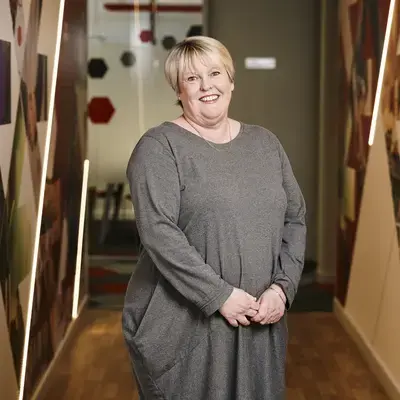
Melanie Beadle
Paralegal
Practice areas
I assist the Commercial Property team with drafting and research as well as post completion tasks and sorting out queries with Land Registry.
I have assisted on several commercial property files and liaised with clients, agents, HMLR and HMRC to help obtain swift and trouble free transactions.
I was a secretary in the Commercial Property for 10 years and a Paralegal for 1 year.
Supervisor:
I pride myself as being the go-to person for fee-earners requiring assistance with their busy day to day files. I am always happy to assist and enjoy learning from their expertise.
My spare time is taken up spending time with my family. I have two adult daughters, a granddaughter and grandson and love looking after them and joining in with their busy lives.
I am also in a Choir (singing popular music) with a lovely group of people and enjoy attending ‘sing outs’ to entertain the general public.

Tania Douglas
Conveyancer
Practice areas
I’ve recently joined Smith Partnership in April 2022 and am building my caseload, which is mainly sale transactions and transfers of equity.
Supervisor:
I would hope they’d say I have a good sense of humour, which I try to take everywhere with me; and I’m helpful.
I enjoy spending time with my two grown up children, cooking, especially eating, I’ve been known to partake in a glass of wine or two, socialising with friends and I love decorating, which I do a lot!!
Recently i moved home, Tania Douglas at Smith Partnership dealt with both the sale and the purchase of the properties. The service supplied to me was outstanding. I was kept in the loop by Tania all the way through the process which enabled me to continue with my busy schedule. Without hesitation i would recommend Tania and Smith Partnership to anyone who is seeking legal representation. This was an exceptional service indeed, thank you.
I had the pleasure of working with Tania Douglas at Smith Partnership Solicitors, and I cannot speak highly enough of the exceptional service I received throughout the entire process. Tania's professionalism and expertise made a wonderful difference in what turned out to be a lengthy matter. Tania consistently went above and beyond to work around my schedule, and promptly responding to my queries and concerns. Her dedication to ensuring I felt supported and comfortable throughout the process was truly commendable.
Sold my house with Smith Partnership, mainly dealing with Tania. The process was very smooth and efficient, any queries i had were answered very quickly and i was kept up to date throughout. highly recommend.
Tania Douglas and her team have been amazing throughout the whole process of buying a house. Always reply’s back quickly and got us moved super fast. Couldn’t recommend this company enough when moving home. Thank you guys you’ve been amazing.
Just to say a big thanks to Smith Partnership and Tania and Viktorija in particular for helping us with the sale and purchase of properties. The service we received was excellent and made a difficult process easier to get through. We wouldn't hesitate to recommend them to anyone wanting some help with the sale and purchase of property.
Staff were courteous and polite and dealt with my concerns almost straight away. Happy with the service of the sale of my late mother’s house. Thanks to Tania and Team.
I was a very nervous client and was probably an annoying one asking lots of questions. I was handed over to Tania Douglas & Maisie. We did have a stumbling block with regard to the house and land registry which delayed things a few weeks, but apart from that was smooth sailing, Tania and Maisie were always at the end of the phone, updated me by email… and just generally really communicative and helpful. Definitely recommend to anyone to use Smiths Partnership. My sincere thanks to all.
Tania has done a fantastic job of looking after my partner's and I's property purchase from start to finish, and even managed to get us in before Christmas! Tania was always reachable for any questions and kept us in the loop at all times. She kept on top the others in the chain to kept our purchase moving forward throughout all stages of the process. We couldn't recommend her and her team enough - thank you so much for all your hard work Tania.
I recently used Smith Partnership for the sale of my house, and I couldn't be happier with the service I received. The team was incredibly responsive, knowledgeable, and proactive throughout the entire process. They made sure all the necessary paperwork was in order and kept me updated at every stage. I highly recommend SP for their professionalism.
Thank you so much for making this process so easy for us. We will thoroughly recommend you to others should the situation occur.
Very pleased with the service from the team at Smith Partnership, especially Tania, Maisie and Vicky. Everyone was so efficient and easy to work with. Considering we live remotely it was a really smooth process. Thank you!
Tania dealt with both the sale and purchase of our properties. The sale was extra quick and smooth, however our purchase became increasingly frustrating due to delays on the sellers end - 8 weeks for enquiries to come back from when Tania issued them. Tania put in her diary to chase the sellers solicitor every other day and kept us updated weekly with progress. When the management pack eventually came in 2 months after Tania requested it, she worked on a bank holiday to review it. Tania also worked on a day off to ensure we could complete this Friday. I don’t think we’d have completed this week if it wasn’t for the pressure applying and effort this end! Many thanks Tania for your hard work and patience with our purchase!
Professional and approachable, Tania Douglas was excellent and is to be highly recommended.
TD, a conveyancer at Smith Partnership Solicitors Derby, did a fantastic job for us when a major problem arose on exchange day. In the midst of dealing with many completions she resolved the issue sufficiently to allow exchange of contracts to go ahead. We would have lost our sale if exchange had not happened that day. On top of that, completion of our house sale and purchase happened by 1.15 - on a Friday! It is excellent to benefit from such professionalism.
Excellent service. Tania was efficient, knowledgeable and very understanding of our situation. Our house sale was handled with every detail explained and dealt with very professionally. would be more than happy to recommend you our friends.
We recently went through the lengthy process of selling our property and purchasing a new one. Tania was amazing throughout and guided us expertly the whole way through!
Smith Partnership dealt with the recent sale of my mother's house. Tania Douglas was the solicitor who handled matters and from the outset communication was very clear, thorough and efficient. We managed to achieve a completion date that met the buyer's tight timescales and much of this was down to Tania ensuring that key matters were chased and dealt with as quickly as possible. I would have no hesitation in recommending the firm.
Smith Partnership were amazing for me and my partner when buying our first home. Tania Douglas was amazing and always communicated with us, we never had to chase or ask. Couldn’t have wished for a better experience!
Tania was very experienced very polite, knowledgeable and did an excellent job thank you.
We just wanted to say thank you so much for your patience with me and all the help and work you did for us selling our old house. We really appreciate it and just wanted to say thanks.
A big thank you to Tania Douglas at SP Burton for handling our property purchase conveyancing efficiently, professionally & with diligence. Tania & her team pulled out all the stops to meet our expectations, which were high I do admit :)
Tania Douglas and Tia Aitken from the Smith Partnership Burton Upon Trent office provided exceptional service during a leasehold apartment sale. They were highly professional, proactive, attentive, and communicative, ensuring a smooth and stress-free process. Their expert handling of details made the experience seamless and are highly recommended.
Marks out of 10, I would give Tania 15, she was knowledgeable, courteous and just a delight to correspond with. The buyers conveyancer was very picky and pedantic but Tania handled this calmly (calming me as well) and precisely. I cannot compliment Tania and the other staff enough. Thank you Tania.
We were very satisfied with the service Tania, Kayleigh and Julie provided and particularly appreciated the phone calls and their sensitivity to our situation. It was very kind of them to offer to meet our mother and just as kind to appreciate that it wouldn't be appropriate due to her lack of capacity. Overall great service for which we thank you and your team very much!
My husband and I both found Tania very easy to talk to. She put us at ease with what was a very traumatic conveyancing procedure. Smith Partnership is a very well run solicitors. If for any reason you cannot reach the overall person in charge of your matter, there is always another colleague ready to step in to help. Smith Partnership were professional at all times.
Michelle Pollard
Licensed Conveyancer
Practice areas
I am currently a Licensed Conveyancer in the Residential Conveyancing Department. I deal with all different types of transactions including sales, purchases, transfers and remortgages just to name a few!
I am also undertaking my Level 6 CLC to ultimately become a Licensed Conveyancer.
Supervisor:
My colleagues say that I can bring good experience and knowledge.
They have said that I am good working under pressure, and bring a calm aurora.
I love spending time with family, and going out for days out with them and exploring the world through little eyes.
I have used the Smith Partnership for conveyancing for the last ten years. I have always found staff to be professional and friendly. Michelle Pollard has handled several of my cases and she always achieves completion professionally and in a timely manner. Thank you!
Michelle was very patient when I was finding the buying and selling of my property stressful. She was always willing to explain what was happening and to reassure me. Other Staff I spoke to were also very helpful. I was very happy with the whole process.
We received an outstanding conveyancing service from Smith Partnership for the sale and purchase of our property. Michelle especially was brilliant throughout, and very good at communicating progress. Thank you.
Viktorija and Michelle,
We just wanted to say again a huge thank you for your work on our sale and purchase - we we're really pleased with the service we received and we will recommend you to friends and family.
Thank you
Thank you very much for all your help in dealing with sale and purchase of our bungalow. You're the best legal professional we have ever had, making the process as least stressful as possible.
Many thanks for your professionalism and swift movement which has made this side of the process very satisfactory.
Our experience when buying our house with Michelle pollard was extremely positive. She was helpful throughout, able to get into contact with and very approachable. Would recommend it to anybody.
Perfect and seamless. From initial act to completion everything was seamless. All I had contact with were polite, professional and super friendly. Michelle Pollard was the perfect match to my needs and put my mind at ease throughout all the stages and kept me up to date with any correspondence and progress.
I have been dealing with Michelle Pollard from the Derby branch buying my house. She has dealt with everything efficiently and would highly recommend. Thanks for your all your hard work.
Just wanted to say a huge thank you for all you’ve done for us, especially with all the stress from this week. Thank you so much, we really appreciate it.
Very professional and efficient conveyancing service, thanks to Michelle, Maisie and the rest of the team. Good response times to emails, able to contact via telephone and when the conveyancer was on leave , I was able to speak to someone who knew what was going on with the sale.
Great service, had Michelle sort out my house purchase and everything went smoothly. Could not fault one bit. Would definitely recommend using and I will 100% use again in the future.
Just wanted to say a massive thankyou for helping us with a very stressful process. You were able to answer any of our questions quickly, offered advice when it was needed and kept us in the loop throughout, which was really appreciated. We would definitely be recommending you to any of our friends and family should they require your services. Thankyou again. I hope the madness now starts to calm down. Thankyou!
The whole SP conveyancing process and due diligence was so professionally undertaken at every step. Nothing including our many emails on points of clarification was too much trouble for Michelle to answer. The SP Property Report was an extensive document very useful for giving full legal context of the purchase. Communications were excellent, especially leading to funds transfer to enable a smooth and very timely completion. So thank you Michelle this is the second matter you have dealt for us, we knew we were in safe hands. Thanks again.
First I wanted to say thank you for all your help through the purchasing process, the house is looking amazing and very happy with it.
Michelle and Maisie were nothing but professional and always cheerful and helpful for the entire process of the sale of my old property and purchase of the new one. I would most definitely recommend Smith Partnership to anyone.
I used Smith Partnership (Derby) for purchasing a house and I would recommend them to anyone. The work Michelle and Evie did was great. They both gave good advice, responded to queries quickly and made the whole house buying process very easy. Thanks for providing a great service!
Fantastic service from start to finish had the pleasure of having Michelle & Evie dealing with my property sale and from start to finish made the process so easy and stress free!
We received excellent and efficient conveyancing from Michelle Pollard on a recent house purchase. She anticipated issues that might come up and we never had to chase on anything. As first time buyers new to the system, she was clear and helpful throughout. Also thank you to Evie for her paralegal help, especially at the last stage of the process. I will recommend Smiths to others.
We had not used a Solicitor in the past 43 years. It was pot luck that we picked Smiths. We purchased and sold a property. The service we received was very professional. A good choice on our part. I would recommend them to anyone . I would like to thank Maisie for the support she gave us nothing was too much trouble. We were kept updated all the way through the sale of our property. Michelle thank you for your support on our purchase. I would recommend Smith’s to anyone needing a solicitor.
We have used smith and partnership a number of times and they have always been brilliant A big thank you this time to Michelle and Evie for helping us through a drawn out and awkward sale and purchase They are always at the end of the phone for advise and reassurance.
I can’t thank Michelle and the paralegal team enough especially Evie. Michelle communicated at every stage in the process and I didn’t need to chase for any sort of update. Thank you for making the process smooth.
I couldn’t recommend Smith Partnership more. We had the pleasure of dealing with Evie and Michelle for the sale and purchase of our properties they were professional and efficient especially when we were under time pressure they made it happen. I can’t thank them enough.
From start to finish our house-buying experience with everyone at Smith Partnership went smoothly and much faster than anticipated. Michelle Pollard, Evie Whotton and Kelly Craythorne were consistently helpful, informative and thorough. We couldn't have asked for better service.
Evie and Michelle were absolutely brilliant throughout my house sale. They handled everything with such care and efficiency, and their communication made the whole process feel calm and manageable. We genuinely felt looked after from start to finish. I wouldn’t hesitate to recommend them to anyone wanting a smooth, stress-free experience.
I recently had the pleasure of working with Michelle Pollard as my solicitor for a chain purchase, and I couldn’t be more satisfied with the service she provided. From start to finish, Michelle was professional, efficient, and incredibly responsive.
She guided me through every step of the process with clear explanations, making what could have been a stressful experience feel smooth and manageable. Her attention to detail and proactive approach ensured that everything progressed without unnecessary delays, and she was always available to answer my questions, no matter how small. What stood out most was her dedication and commitment to keeping me informed throughout. I always felt confident that my case was in capable hands. Thanks to Michelle’s expertise and hard work, the entire transaction was completed successfully and with minimal stress. I would highly recommend Michelle Pollard to anyone looking for a reliable, knowledgeable, and supportive conveyancer.
The service I received from Donna, Krishna and Michelle was excellent. Krishna was very patient over the phone and very helpful and Donna always replied to emails if not same day the very next working day. Michelle and Donna worked so hard to get the sale and purchase over the line also with time not on our side. I’m so grateful, thank you team!!!!
We recently used Michelle Pollard for our property transaction and have been very pleased with the service we received. From start to finish, the team was professional, efficient, and highly responsive.
Communication was excellent throughout the entire process. We were kept informed at every stage, and any questions we had were answered promptly and clearly, which really helped reduce the stress that can come with buying/selling a property.
Everything was handled smoothly and in a timely manner, and we felt confident that our case was in good hands. We would not hesitate to recommend their services to anyone looking for a reliable and communicative conveyancing solicitor.
Thank you again for all your help!
Thank you so much Evie and Michelle for all your help in executing our house sale and purchase. Your communications were always prompt and clear and we have appreciated your expertise!
The service we received was of the highest professional standard. Everyone we dealt with was polite and helpful. A big thank you to Michelle and Evie who went out of their way to ensure we were given excellent service.
I cannot recommend Smiths Solicitors enough. They were incredible in helping us buy our first house—their communication and turnaround times are lightning fast, handling everything with brilliant efficiency while keeping us informed every single step of the way.
A massive shoutout to Michelle and Evie, who were both exceptional. Their professionalism, dedication, and warm approach made buying our first home completely stress-free. If you are looking for a firm that is proactive, reliable, and truly delivers, look no further than Smiths Solicitors!
Viktorija Aleksejeva
Trainee Solicitor
Practice areas
I am currently completing my training seat in the Private Client team, working on a range of matters including Estate Planning, Wills, Probate and Lasting Powers of Attorney. Prior to this, I spent six months in Residential Conveyancing as a Trainee Solicitor, which has provided a valuable foundation for my current work.
Supervisor:
My colleagues say I am a quick learner, kind, very helpful and very approachable.
I like to describe myself as happy and positive.
Languages:
I can speak, read, write and translate Lithuanian and Russian.
I am a very hardworking person who always wants to help. I love doing charitable and volunteering work in the community.
I have a little girl who is my world, I’m happily engaged and I enjoy country walks with our Pug, Joey.
Viktorija and Michelle,
We just wanted to say again a huge thank you for your work on our sale and purchase - we we're really pleased with the service we received and we will recommend you to friends and family.
Thank you
Viktorija has been a great help, attempting to assist and resolve a historical and outstanding issue surrounding a previous house purchase we made. Despite not dealing with the transaction initially, Viktorija has taken ownership of my enquiry, taking it upon herself to assist wherever possible without delay. I would highly recommended using this firm and more specifically, Viktorija, for any property purchase or sale.
Viktorija has been a great help, attempting to assist and resolve a historical and outstanding issue surrounding a previous house purchase we made. Despite not dealing with the transaction initially, Viktorija has taken ownership of my enquiry, taking it upon herself to assist wherever possible without delay. I would highly recommended using this firm and more specifically, Viktorija, for any property purchase or sale.
Just to say a big thanks to Smith Partnership and Tania and Viktorija in particular for helping us with the sale and purchase of properties. The service we received was excellent and made a difficult process easier to get through. We wouldn't hesitate to recommend them to anyone wanting some help with the sale and purchase of property.
I recently used Smith Partnership for the sale of my house, and I couldn't be happier with the service I received. The team was incredibly responsive, knowledgeable, and proactive throughout the entire process. They made sure all the necessary paperwork was in order and kept me updated at every stage. I highly recommend SP for their professionalism.
Thank you for answering my questions, I found the session really enlightening. My peers and I gained a better understanding of the realities of working within the legal profession.
Thank you so much for making this process so easy for us. We will thoroughly recommend you to others should the situation occur.
Very pleased with the service from the team at Smith Partnership, especially Tania, Maisie and Vicky. Everyone was so efficient and easy to work with. Considering we live remotely it was a really smooth process. Thank you!
Quick reply. Very professional. Happy to recommend!
The Smith Partnership's team of conveyancers, particularly Bhakti Parmar, were very helpful during our transaction for our first home. She was able to efficiently sort all of our paperwork out, as well as keep us updated on the process. My only criticism would be lack of communication when going on annual leave; but other than that I would highly recommend! Also, it is worth mentioning Bhakti's associate Viktorija who we liaised with on completion day. She kept us informed regularly, and was more than helpful when things didn't go to plan on the day. Thank you both very much!
Smiths made my home sale go smoothly; despite the usual length of these things, Vik my paralegal was exceptional. Professional, kind and very empathic. I couldn't recommend Smith Partnership highly enough.
Excellent support and communication from paralegals (Vicky) when dealing with the sale of my property.
We have used Smith Partnership on a few previous occasions and found them very professional so we decided to use them again for the sale of our property and the purchase of a new property. Vicky at the Derby office has been really good and kept us informed at every stage of the process, answering any queries we had promptly. We can’t thank Vicky enough for all her hard work behind the scenes.
Just wanted to say a very big thank you for making our first move smooth. We appreciate it very much.
I would like to express my sincere appreciation to Viktorija for her invaluable and highly professional assistance in preparing a Power of Attorney for my mother, ensuring that every detail was handled with great care. As my mum does not speak English and only speaks Russian, we are especially grateful to Viktorija for being able to explain everything clearly in her native language. This made a significant difference and helped my mother fully understand all important aspects of the document. I am very grateful for her help and highly professional service. I would not hesitate to recommend her to others.
Everything was explained well, everyone helpful and friendly.
Every part of the service was faultless, Viktorija was very helpful and patient.
A quick, efficient and friendly service from Vicky.
Very professional, yet friendly service. Knowledgeable staff and all very helpful. Viktorija was friendly, approachable and helpful. She made the process easy and straightforward. When we need things to be clarified, she was very happy to do so.
Jade Evershed
Trainee Solicitor
Practice areas
Supporting fee earners in case management and transactions by being a point of contact for clients and assisting with legal work.
Supervisor:
Friendly, fun and always on hand to help out.
I just wanted to quickly email to recognise the work Jade did on this transaction and how great she is.
I’ve worked with many conveyancers before and Jade has been amazing. She was able to create a rapport, always there to help and got things done when required.
Jade helped with the purchase of my first house and their service was impeccable. Always had fast responses and couldn’t ask for anything more. Highly Recommend!! Thank You
Fantastic service from the team getting my house purchase over the line. Particular thanks to Jade Evershed who was always extremely helpful and prompt with all my queries during the process.

Sarah Genner
Associate
Practice areas
I am a family solicitor specialising in childcare cases. I qualified in 2002, initially undertaking all areas of family law, before focusing upon children matters in 2008.
I have been an accredited specialist of the Law Society’s Children Panel since 2011, and cover all areas of Local Authority involvement from pre-proceedings (Public Law Outline) through to care proceedings.
I have experience in cases involving non-accidental injury, CSE, deprivation of liberty, domestic violence, child neglect, mental health, learning disability, Official Solicitor and alcohol and substance misuse.
I am a good listener and give clear, honest and practical advice.
Accreditation:
Member of the Law Society Children Panel
Qualification year:

Admitted to the roll of Solicitor on 16th September 2002.
Supervisor:
I am hardworking and committed to ensuring the best outcome for my clients.
I am always happy to help out and support my colleagues.
In my spare time I enjoy spending time with my family, reading, walking, making crafts and supporting my daughter with her equestrian activities.
I recently used Smith Partnership, and had Sarah appointed to myself, to support my case and ensure legal guidelines were adhered to by the local authority. She is very easy to speak to, and on the whole, a very capable person who I would not hesitate, should it ever occur-to use here again. 10/10 The contact received by Sarah and her assistant was also on a very good level. At no point was I dissatisfied with the service I received.
I've used Smith Partnership a few times now, very professional and transparent, big thank you to Sarah Genner for her help throughout my PLO process.
Everything was explained well and easily understood and was very helpful. Advice was excellent. Sarah was helpful, friendly, approachable, understanding, listened well and made you feel at ease. Just keep doing what you are doing, excellent service.

Manpreet Chehil
Associate
Practice areas
I work with parents in care proceedings many of which are vulnerable adults requiring additional support. I deal with cases involving neglect, substance misuse, non-accidental injuries, mental health difficulties, emotional harm and physical harm.
Qualification year:
Admitted to the roll of Solicitor on 15th January 2019.
Supervisor:
I am a team player and am always willing to help.
I love spending time with my dog and hiking.
Thanks for everything you are doing and have done to help me get my children back.
I cant thank Manpreet enough for all the help and support she has offered me of the last 6 months whilst I have been going through proceedings to get my daughter back. Manpreet has gone above and beyond to ensure that I understood the process and that I was confident before each hearing. I have always been able to get hold of Manpreet every time I have needed to call. She is prompt at responding to emails and you really feel like she cares about you as a client. I feel that she has done all she could to get the best outcome for me and my daughter.
Zoe Romain
Partner
Practice areas
We all know that legal documents can sometimes be a bit tricky to understand so I work closely with all my clients, whatever their experience with property transactions might be, to ensure that I provide comprehensive but accessible and user friendly advice with real world examples that meet their requirements.
I have experience working with individuals, SME’s, pension trustees, charities and banks and other lending institutions in connection with a wide range of commercial property transactions including both Freehold and Leasehold titles sales and acquisitions and new leases refinancing arrangements including where security is being taken over a portfolio of premises and development work including overages, options and easements.
I have particular experience working with Insolvency professionals in connection with sales / leases/ transfers in specie and other property work where liquidators/ administrators have been appointed in respect of property assets held by companies or where a trustee in bankruptcy has been appointed in connection with the sale of residential property.
I am a proud committee member of WREN, the Property Focused Networking Group in Nottingham.
Qualification year:
Admitted to the roll of Solicitor on 15th September 2008.
Supervisor:
I pride myself in providing clients with prompt, commercially focused legal advice that helps them get their property deals over the line.
I grew up in Sussex and moved to the Midlands after completing my university degree. I have been privileged to meet some amazing friends over the 18 years I have lived in the Midlands and am proud to call it my home (despite the flack I get from my family who are still down south).
Outside of work I enjoy a bit of adventure or trying something new whether that is learning to dance, taking up a kickboxing class or Zip-lining over the Eden Project in Cornwall, Sky Diving at Langar or loading up the mountain bike to ride some trails in Derbyshire or elsewhere in the UK.
A big thank you to both yourself and Lauren for all your help on this. I would definitely have messed it up if I tried doing it myself! I really appreciate the work you have done.
Zoe Romain showed patience and diligence in dealing with our business. The experience was made more bearable by their reassuring manner and the way they dealt with the issues. They were always contactable and dealt with queries swiftly and efficiently and always kept us up to date with developments.
I appreciate most sincerely your firms professional help in rapidly conveying this property transaction with the minimum of stress. I am really most obliged. I am so glad I contacted you.
Lauren Oakley
Associate
Practice areas
I qualified as a solicitor in June 2018 specialising in Commercial Property matters. I have worked across Nottinghamshire and Staffordshire before joining Smith Partnership in 2023.
I am now based from our Derby office and my role involves carrying out a variety of commercial property work for a broad range of sectors including charity, retail, offices and industrial.
Having previously done a stint in litigated work before joining Smith Partnership, I understand how small changes in contractual documents can have a positive or detrimental effect. I strive to educate my clients while acting for them and advise them on the wording of contractual documents in detail, so they can consider how best to protect future risks to their business and premises.
Some of the work I am involved in includes:
Qualification year:
Admitted to the roll of Solicitor on 15th June 2018.
Supervisor:
I am inquisitive and enjoy being a good sounding board to colleagues and clients alike.
In my spare time:
A big thank you to both yourself and Lauren for all your help on this. I would definitely have messed it up if I tried doing it myself! I really appreciate the work you have done.

Charlotte Hope
Senior Associate
Practice areas
I am a Senior Associate in the Personal Injury department. I represent Claimants in a mixture of Public Liability cases, Employer's Liability cases and Road Traffic Accidents, all with varying degrees of complexity.
I dedicate my time to providing a personable, straightforward and thorough service for my clients. Ensuring that each client has the bespoke service they require to secure the best possible outcome, during what is typically a difficult personal experience.
I have worked in the field of Personal Injury since 2019, qualified as a Solicitor in February 2022, and joined Smith Partnership in November 2022.
Qualification year:
Admitted to the roll of Solicitor on 9th February 2022.
Supervisor:
I am very organised, with a love of lists and efficient time management. I am a team player and always happy to help a colleague in need. I try to be a cheerful and positive force within the team (much to their amusement) but if that fails, I bring sweet treats!
You will usually find me cooking (and/or eating) for my friends and family. I also love an early morning visit to the gym and reading as much as I can.
Charlotte and the team have given great communication throughout the process and are doing a fantastic job, which we are very thankful for. We are very hopeful that our son will soon receive the appropriate compensation. I would highly recommend Smith Partnership to anyone wishing to pursue an injury claim.
This is a true and honest testimonial of the service I have received from Smith Partnership Solicitors whom I can highly recommend. The clarity and dedication shown by Charlotte my personal injuries solicitor was second to none, nothing was too much trouble, she is very knowledgeable and any questions I asked was answered quickly, putting me at ease through out the process of putting together my personal injury claim.
I went with smiths for a work matter. They dealt with my situation efficiently and professionally. Nothing was hard work for them, they responded to my emails quickly or if we needed to talk in person they would arrange a time that suited me. I would 100 percent recommend this solicitors for any one that was looking. And I will use them again if I ever did need them in the future. Thank you for all your help especially Charlotte hope.
I would definitely recommend Smith Partnership and particularly Charlotte who, from the very start of my case, has kept me informed and updated with the ongoing situation. I have never had need to chase for updates, she has always been in touch as soon as she had information for me. Her professionalism but also her kindness and understanding has made the process much more bearable. That the case was also sussessful is due in no small part to Charlotte's support. I would like to thank Smith Partnership but especially Charlotte for everything she has done to achieve this.
My son suffered an accident on a flight that required surgery. Charlotte Hope from Smith Partnership took on our claim against the airline. Charlotte was outstanding throughout the entire process and helped to secure an excellent compensation package for my son. I would highly recommend Smith Partnership to anybody, especially if they are seeking compensation for an injury that is not their fault.
Excellent service. We dealt with Charlotte she was always professional, friendly and knowledgeable. Considering the sensitive nature of our case, Charlotte made the process as straightforward as it could be and always kept us up to date.
I have received excellent service from Smiths partnership, particularIy Charlotte Hope the solicitor acting on my behalf. She has worked in a professional and timely manner to bring my case to a very satisfactory conclusion. Charlotte kept me informed by regular emails and if I needed something explaining in more detail she would give me a call. Nothing has been too much trouble and would happily recommend Smiths to anyone.
Our Solicitor, Charlotte, was exceptional. She dealt with our case, which was extremely delicate, with professionalism and kindness. Always keeping us informed and updated. Charlotte made the whole process as straightforward and easy for us as it could be.
Charlotte was very professional, kept us informed and was very understanding of the situation. We wouldn't hesitate to recommend you to someone else based on the great service we received. We would like to thank Charlotte for her understanding and empathy during this case.
I used Smith Partnership and in particular Charlotte Hope to handle my accident at work claim. Charlotte organised everything including expert medical opinions and a dental expert. I felt that Charlotte definitely knew her stuff,she kept me updated regularly. So my advice if you need an injury lawyer-contact Smith Partnership and ask for Charlotte Hope. (PS-We won the claim)
Charlotte was very approachable and well informed and was a great help in identifying areas which helped my case. She was prompt in responding to my queries and helped hugely in making and valuing a complete list of factors and expenses that contributed to my claim. Her choice of Consultant to do my orthopaedic report was excellent. Charlotte kept me informed throughout the process and was good at updating progress. I would thoroughly recommend her.
Excellent professional solicitors, I would use them again in a heartbeat. Charlotte was friendly and professional at all times. Even in trying times with my claim. Do not hesitate to use them.
Highly recommend! Charlotte Hope has been an incredible support from the very start of my personal injury claim. I received an exceptional legal service, outstanding communication, a high standard of support along with friendly professionalism. Charlotte cut through the legal jargon, whilst keeping me financially protected. We got the outcome we’d hoped for and I cannot thank her enough. I would highly recommend Smith Partnership solicitors.
Shameela Chopdat
Senior Associate
Practice areas
I qualified as a Solicitor in 2011 and have since specialised in all areas of family law including (but not limited to) divorce, financial settlements, issues regarding children and cohabitation disputes.
I combine my expertise with empathy to ensure clients feel confident and supported every step of the way.
I am also a member of Resolution which promotes resolving matters in a constructive non-confrontational manner.
Accreditations
Qualification year:
Admitted to the roll of Solicitor on 1st December 2011.
Supervisor:
I like to think I am a good listener, and this coupled with my caring and compassionate approach, helps build an excellent rapport with clients.
I am also a big team player and am happy to help my colleagues in any way.
Languages:
I can speak and translate Gujarati and Urdu.
I am mum to three beautiful boys who keep me busy outside of work.
I also enjoy a bit of retail therapy, eating out and travelling whenever I can.
Shameela Chopdat acted for me in drawing up a Pre Nup agreement. Despite a few twisty turney pensions arrangements, all was completed satisfactorily in the timeline. Would recommend.
I used Shameela and smith partnership for both our house purchase and more importantly for a family law case. The team for both items are brilliant. Excellent communication and made all the legal stuff easy to understand, I cannot recommend them enough!
I just want to say thank you to you all. You really made a really positive difference in not only my life, but that of my son and my wife! You guys are legends!
I wanted to thank Shameela who has worked on my case. She is highly professional and very approachable and I got the results I wanted very quickly and would highly recommend her. Thanks again for the good work.
I was recommended by a friend to use Smiths Partnership for a family matter. Shameela has been my solicitor for the 8 months and she has been fantastic. I would highly recommend. Everyone is so friendly and helpful. Couldn’t thank Shameela enough.
Very happy with the level of care and service from Shameela during my divorce proceedings. From my very first meeting with Shameela she took the time to explain things to me in great detail and answer any questions I had. The whole process I believe was conducted in a quick manner and she was honest and did not cause unnecessary costs I feel I was treated very fairly and I would recommend Shameela to anyone needing her professional services.
Shameela was very helpful and professional and gave me really valuable advice. She really put me at ease at a difficult time. So thankyou.
Shameela was my grandma’s solicitor. We were very happy with the service provided and got the best outcome. Thanks!
Shameela has been an incredible support throughout my legal matters. Her calming demeanor was exactly what I needed during a very stressful time, and she was always available to discuss any concerns I had. When things became overwhelming, she was able to explain the legal side of things clearly, supporting me to have a good understanding of the process. She consistently responded to my emails quickly and provided clear, helpful advice. I’m truly grateful for her professionalism and efficiency. I would definitely recommend Shameela to anyone in need of a solicitor who is not only knowledgeable but also genuinely supportive.
I am extremely satisfied with the service I received from Shameela and her team. Their professionalism, dedication, and expertise truly set them apart. From the outset, Shameela made me feel heard and understood, always taking the time to explain the intricacies of my case in a way that was clear and reassuring. Her attention to detail and commitment to achieving the best possible outcome were evident throughout the entire process. Communication was seamless and timely, with regular updates and prompt responses to any queries I had. I highly recommend Shameela to anyone in need of legal assistance.
Shameela handled my case for my daughter and was amazing throughout. I now see my daughter what feels like all the time and it’s all thanks to her. Already recommended to others.
Bhakti Parmar
Senior Associate
Practice areas
I am a senior associate solicitor within the Residential Property department at Norman House, Derby. I have over 10 years of conveyancing experience and qualified as a solicitor in 2019.
I cover a broad range of matters such as freehold and leasehold purchases and sales, new build purchases, remortgages, lease extensions, transfer of equity, bridging loans and many more.
Qualification year:
Admitted to the roll of Solicitor on 1st March 2019.
Supervisor:
I am always willing to help, and I bring a calm demeanour to the team.
I am very organised and have a keen eye for detail.
I enjoy spending time with my family. I have a little girl and boy who keep me busy!
I had a very positive experience with Smith Partnership and in particular, our solicitor Bhakti. She allowed for a very smooth transaction and was very professional and lovely to speak to. Will definitely be using their services again, it was the best experience I have ever had with a firm.
I would like to thank you for the professional way in which you completed the conveyancing of Mum’s house for me and the understanding which you showed me.
Bhakti was extremely good and did things very quickly and professionally. Thank you for everything.
We just wanted to send a final email to thank you so much for your help and services throughout the purchasing of the Barn. Your advice and information were concise and helped make the process easier, even with us being on the opposite of the world! Thank you so much again, your help had been invaluable and much appreciated.
Bhakti Parmar was fantastic at Smith Partnership with handling my mortgage. It was a bumpy road to begin with for a number of reasons however once Bhakti took over it was smooth sailing. I cannot thank Bhakti enough for dealing with the issues faced and on such a tight deadline. Helpful and supportive Bhakti was a pleasure to work with and never to busy to take a call. Fantastic.
Bhakti has been excellent, a very good communicator keeping me informed, efficient! Very happy with her service.
We used smiths to both sell and buy our properties and our solicitor Bhakti Parmar and all smith staff we dealt with were excellent throughout. I trusted them throughout the process and will certainly continue to use them again for any other legal matters in the future.
We recently used Smith Partnership to purchase our property. We had a few issues with the first house we chose due to the loss of title deeds so had to find another property before our mortgage offer expired. Bhakti Parmar was amazing and supported us to ensure we got our dream house before the deadline. She kept us updated on the progress from start to finish and ensured a seamless purchase. We cannot thank her enough!!
Thank you for all your help with completing the sale of our property. You have been communicative and professional throughout the whole process. Thank you also to Bhakti for helping us during the sale and again being so prompt and professional throughout.
Thank you so much for your help throughout this process, you've both been great... We are so happy with our new home.
Thank you again!
The Smith Partnership's team of conveyancers, particularly Bhakti Parmar, were very helpful during our transaction for our first home. She was able to efficiently sort all of our paperwork out, as well as keep us updated on the process. My only criticism would be lack of communication when going on annual leave; but other than that I would highly recommend! Also, it is worth mentioning Bhakti's associate Viktorija who we liaised with on completion day. She kept us informed regularly, and was more than helpful when things didn't go to plan on the day. Thank you both very much!
Best news I’ve had all week. Many thanks for your help on this and I know it’s been a rush to get it over the line however this means a lot. Thanks again for your help throughout this process and we may speak again in the future.
I found the experience went without any issues. The sale of my property was quick and any queries were handled on my behalf without any problems.
I'm really pleased you took on the conveyancing job as it's been the one rock solid part of this process. Thank you and your team very much.
Bhakti, thank for you everything you did for us and keeping us updated. We can imagine it was a very busy time for you. We are very happy with the service Smith Partnership provided for us.
Just a personal note from me, thank you so much for the efficient service you have provided during this process. You have always responded promptly, and always called me back the same day. You have turned this around for us really quick, which is great for us.
We will definitely use your services in the future and would always ask for you personally, due to the excellent service you have provided.
Thank you, take care and hopefully we will speak again in the future.
We wanted to say, Many thanks for all your help with getting us into our new home finally! We really appreciate the push at the end from you all, it wasn’t easy!
Can I provide my gratitude to you, Tia and rest of the team for all your tireless effort to date. You have been very quick and efficient at answering any questions/issues I have.
Just wanted to say a very big thank you for making our first move smooth. We appreciate it very much.
Bhakti was fantastic - we are first time buyers so didn't really know what we were doing. She helped us with every step and would always email back quickly. Thank you.
I have used Smith Partnership twice now for home moves. I would in particular like to thank Bhakti and Maisie for their assistance this time round. Professional, efficient and communication is spot on-I never had to chase. Highly recommend and will definitely use again in the future.
Excellent service from Bhakti, with support from Olive and the rest of the Team at the Derby Office.
Both Bhakti and Olive Wong in particular were professional, attentive and helpful in getting my sale to completion - thank you.
This is the second time I have used Smith Partnership now (first time property sale, this time property purchase) and I would thoroughly recommend them to anyone considering. Bhakti and colleagues were thorough, professional and enabled my completion to happen in the timescale hoped for. Excellent all-round!
I wanted to share my gratitude and sincerest thanks to Bhakti Parmar in the Derby office. She has gone above and beyond for me in our freehold purchase. Handled everything thrown at her with such patience and professionalism. I would highly recommend her for efficient conveyancing!
We were very pleased with our experience, Bhakti and Olive were so helpful in our experience buying our first home: keeping us informed regularly, explaining anything we needed further and I felt trusting and comfortable during the whole process. I would recommend for anyone buying a house who want a reliable service.
Bhakti was a great help throughout the process of our property sale and purchase. Dealing with everything clear, professionally and as quick as possible. Help received from Olive and Martina whilst Bhakti was away was also good, ensuring a good transition with no hiccups.
Amazing service from Bhakti and Olive for my first house purchase!! Very speedy, and we were kept updated at every step.
Maisie Marshall
Trainee Solicitor
Practice areas
I am a trainee solicitor within the firm and currently completing a seat in the Commercial Property Department.
My role consists of assisting my colleagues on various different matters including purchases, sales, and leases.
Prior to my seat in Commercial Property, I was a trainee solicitor in the Conveyancing Department and a Paralegal prior to that. My time in Conveyancing has enabled me to develop a strong knowledge of Property Law which I am keen develop in my Commercial Property seat.
Supervisor:
I have been told by my colleagues that I bring a positive sunny demeanour to the team, and that I am a quick learner!
I enjoy spending my free time with my family, friends, and my dog, Pip!
I was a very nervous client and was probably an annoying one asking lots of questions. I was handed over to Tania Douglas & Maisie. We did have a stumbling block with regard to the house and land registry which delayed things a few weeks, but apart from that was smooth sailing, Tania and Maisie were always at the end of the phone, updated me by email… and just generally really communicative and helpful. Definitely recommend to anyone to use Smiths Partnership. My sincere thanks to all.
Very pleased with the service from the team at Smith Partnership, especially Tania, Maisie and Vicky. Everyone was so efficient and easy to work with. Considering we live remotely it was a really smooth process. Thank you!
Thank you for all your help with completing the sale of our property. You have been communicative and professional throughout the whole process. Thank you also to Bhakti for helping us during the sale and again being so prompt and professional throughout.
Thank you so much for your help throughout this process, you've both been great... We are so happy with our new home.
Thank you again!
Very professional and efficient conveyancing service, thanks to Michelle, Maisie and the rest of the team. Good response times to emails, able to contact via telephone and when the conveyancer was on leave , I was able to speak to someone who knew what was going on with the sale.
Thanks for all your help. I really appreciate everything you've done, in particular that you've been available and able to answer my questions in a timely manner.
Michelle and Maisie were nothing but professional and always cheerful and helpful for the entire process of the sale of my old property and purchase of the new one. I would most definitely recommend Smith Partnership to anyone.
We had not used a Solicitor in the past 43 years. It was pot luck that we picked Smiths. We purchased and sold a property. The service we received was very professional. A good choice on our part. I would recommend them to anyone . I would like to thank Maisie for the support she gave us nothing was too much trouble. We were kept updated all the way through the sale of our property. Michelle thank you for your support on our purchase. I would recommend Smith’s to anyone needing a solicitor.
I have used Smith Partnership twice now for home moves. I would in particular like to thank Bhakti and Maisie for their assistance this time round. Professional, efficient and communication is spot on-I never had to chase. Highly recommend and will definitely use again in the future.
Amelia Sutcliffe
Solicitor
Practice areas
I’m a Solicitor in the Clinical Negligence team.
I joined the firm in June 2021 and progressed to my Trainee Solicitor role in May 2023. Within my training I completed a year in our Personal Injury team, before qualifying into Clinical Negligence in November 2024. I have growing experience in all types of clinical negligence work, to include delays in diagnosis, GP claims and dental negligence. I dedicate my time to providing a personable, bespoke, and thorough service to my clients. I’m keen to ensure they feel supported, heard, and advocated for, as victims of medical negligence.
I’m based at Norman House in Derby, but travel to all Smith Partnership branch offices and will visit clients at home to ensure all our clients have access to our services.
Qualification year:
Admitted to the roll of Solicitor on 29th October 2024.
Supervisor:
My colleagues would say I am enthusiastic, hard-working and passionate, but above all else, I bake a great banana bread.
In my spare time I enjoy going to the gym, Pilates and more recently running. I’ve fortunately received a London Marathon 2026 place so I’m very focused with my training. I enjoy walks in the Peak/Lake District with my dog and finding a nice coffee shop.
There are moments in life when all we can do is ask for help. One of those moments came for me in the form of an inquest in to my wife’s death. I will forever be grateful that one of the people I turned to was Amelia Sutcliffe. Amelia was professional, informed, kind and reassuring. It was a constant source of comfort and strength to have her with us throughout such a difficult time. She was always ready to answer any questions I or my family had and she walked us through the whole process with care and understanding. She made sure we always knew exactly what to expect. Should I ever find myself facing such a difficult time in the future, I would be encouraged to know I had Amelia by my side.
This is the second time I have used The Smith Partnership. Excellent service every time. I would like to extend my heartfelt thanks to Amelia Sutcliffe for her outstanding work and assistance. Her professionalism, kindness, and empathy were truly remarkable. She remained in constant contact with me throughout the process. I highly recommend her to anyone in need of legal services.
My first time going to Smith Partnership and I was not disappointed. They were professional, knowledgeable, and always kept me informed. Their guidance throughout the process was clear and reassuring. They were incredibly supportive throughout what could’ve been a really stressful process. From the beginning, they were always clear and communicative, I never felt like I was left in the dark or unsure about what was happening. I’m really thankful for their help and would definitely recommend them to anyone looking for honest, thoughtful, and professional legal support.
Amelia has been great and amazing helped me through alot and explain things when I didn't understand. She also helped when feeling abit rubbish on myself, and made me feel welcome and it just made my situation abit easier even though it been tough.
Clare, you’re absolutely amazing, that is all I can say - you won me my daughter back. You and Amelia have both been amazing through all of my difficulties, I don’t think I’d have got through it without help from you both.
I was assisted in a child case by Amelia, cannot thank her enough, always on time, punctual, honest, straight forward, but also kind and compassionate as well, really helped me get through it all and can’t thank her enough, absolutely amazing and can’t recommend her enough, 5/5 all day long, a real pleasure to have through the journey, definitely a must use service!
Amelia at Derby Smith Partnership was so good with me. Always updated me on the case. She is amazing! Thank you so much.
I would highly recommend Smith Partnership and especially Amelia Sutcliffe who was dealing with my case. She has been fantastic throughout the entire process – professional, knowledgeable, supportive, and always quick to respond to any questions or concerns. Amelia kept me informed every step of the way and made what could have been a stressful situation much easier to deal with. Her expertise and dedication gave me complete confidence from start to finish. Thank you, Amelia, for all your hard work and support. I wouldn’t hesitate to recommend you to anyone looking for an excellent solicitor and so thankful for the brilliant outcome. Again, thank-you Amelia!
Amelia was just amazing, could not ask for anything else. Very prompt on the updates and dealt with my situation very friendly. My case was successful and this is all because of Amelia’s hard work. I would highly recommend to all friends and family. Thanks again Amelia for all of your hard work!
I can't thank Amelia enough for her hard work bringing my clinical negligence claim to a successful conclusion. She guided me through a very stressful situation with professionalism, kindness and friendliness. I was kept informed about all that was happening, and everything was explained very clearly. If I had any queries she was always available to help. I must also mention Anna, who was also involved with my case, for her kindness and help. I would not hesitate to recommend Smith Partnership Solicitors Derby.
Anna and Amelia have been amazing, always there to explain things. They show genuine care and a willingness to do the best for my case and are very down to earth while being exceptionally professional.They are really good at communicating, not stuffy, really relatable, and friendly. They genuinely care.

Harry Mitchell
New Business Supervisor
Practice areas
I’m responsible for new business in our conveyancing department. This involves being the first point of contact for potential clients, providing them with quotes and with ensuring we have all the information and documents we need for a matter to be handed over to one of our solicitors as smoothly as possible. I also help with new matters for Family and Wills & Probate.
Supervisor:
I approach every situation with an open mind so I can learn and develop as much as possible. I’m happy to help out with whatever the team needs!
During the week when I get home in the evening, I’ll relax by watching a good series on Netflix. A few times a week I play football to keep myself fit. At the weekend I like to go out for food and drinks with my friends. When I get the chance, I like to travel to different cities and countries to learn about the culture and try different food.

Andy Cash
Associate
Practice areas
Crime, Magistrates, Police Station
Areas of Specialism
Qualification year:
Admitted to the roll of Solicitor on 15th December 1979.
Supervisor:
Experience [and knowledge of surfing].
Languages
Proficient in British Sign Language
I would just like to say thank you for your help it really meant a lot. And I would use in the future because you were brilliant.
Always advise people to go to Smiths, best solicitors for crime. Was handled fairly and was really happy with the outcome. Thank you Andy Cash.

Natalie Nicholls
Paralegal
Practice areas
I am a Childcare Paralegal and have worked within the Childcare sector for over 15 years. I represent parents, grandparents, and those with Local Authority involvement within pre-proceedings and Court proceedings. I provide clients with clear, honest, and practical advice.
Case Study
I recently represented a mother through pre-proceedings in respect of her unborn baby. Her older children had previously been removed from her care. Despite my client complying with Local Authority during the pre-proceedings process, they remained concerned. Upon baby's birth, care proceedings were issued. The Local Authority sought removal hearing, the Judge allowed my client to enter a residential assessment with her baby. Following a 12-week assessment, my client had made significant progress and a plan was implemented to allow her to return home with her baby. With help and support, my client's care proceedings concluded under a 6-month Supervision Order with her child in her care at home.
Supervisor:
I am hardworking and committed to ensuring the best outcome for my clients. I am always happy to help out and support my colleagues.
In my spare time I enjoy spending time with family. I also enjoy showing our herd of pedigree Limousin cattle.
I want to say thank you so much for being there for me through the PLO. I wish you all the best for the future.
Neelam Khaleel
Associate
Practice areas
I qualified as a Solicitor in 2021 and joined Smith Partnership in October 2023 based in our Derby office. Prior to my move to Smith Partnership, I worked in and around Nottinghamshire working predominately in Commercial Property.
I work on various Commercial Property transactions including freehold and leasehold acquisitions / disposals, new leases (acting for both Landlord and Tenant) and various other Landlord and Tenant matters. I also deal with property finance matters.
Qualification year:
Admitted to the roll of Solicitor on 2nd September 2021.
Supervisor:
I enjoy being kept busy!
I am a team player and support my colleagues wherever I can.
I have a down to earth and solution-based approach when it comes to my team and my clients.
Languages:
I can speak, read, write and translate Punjabi and Urdu.
I spend most of my time outside of work with my family and friends and enjoy going for long walks, especially in the Peak District.
I am a keen gym goer but also a huge foodie! I like trying new cuisines – especially in different places around the world!
I worked with Neelam Khaleel on a very drawn out and changeable purchase of a mixed use property and she worked tirelessly to keep the process moving along and dealt with the unforeseen changes with efficiency and calm. I would definitely use her services again.
I appreciate most sincerely your firms professional help in rapidly conveying this property transaction with the minimum of stress. I am really most obliged. I am so glad I contacted you.
Thank you so much for your help in selling my industrial unit, you really went above and beyond the normal to ensure this sale proceeded. You were dealing with a difficult situation at times and you rose above adversity and delivered a fantastic service to me. Always pleasant and courteous and most of all extremely professional. When I sell my next unit, I will not hesitate you use your services again. I look forwards to dealing with you again. I cant even start to thank you enough. Best wishes.

Ellie Saroglou
Solicitor Apprentice
Practice areas
I joined Smith Partnership in October 2023, having graduated university with a law degree in July 2023.
My day-to-day tasks whilst assisting with commercial property matters can include anything from opening new files, closing completed cases, making the necessary ID checks for clients, or obtaining numerous documents whether that be from the Land Registry or Companies House.
Supervisor:
I like being prompt and thorough with all my tasks. Also, reliability to work well within the team as well as independently.
Languages:
I can speak, read, write and translate Greek and Polish.
Travelling to a new destination each year, weekend trips away and taking my dogs out for long walks are some of my favourite activities.
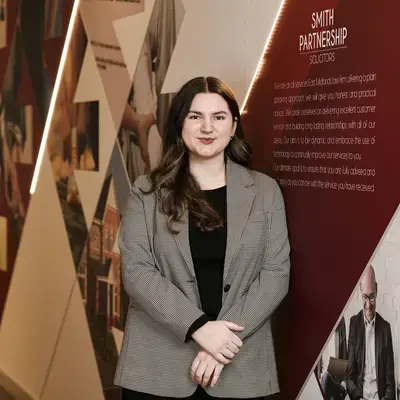
Lydia Walsh
Solicitor Apprentice
Practice areas
I graduated from the University of Leeds in 2023 with a degree in Law with Hispanic Law before joining the Commercial Property department, where I support the fee earners on a wide range of commercial property transactions. I am currently studying the Solicitor's Qualifying Examination at Nottingham Trent University and became a Solicitor Apprentice in July 2025.
Supervisor:
I'm a team player who completes tasks to the best of my ability, and I am always happy to help where I can.
Languages:
I can speak, read, write and translate Spanish.
In my free time I love to spend time with my friends, family and dogs. I also enjoy reading, watching films and baking. I have recently taken up climbing but I think I might be afraid of heights!
I appreciate most sincerely your firms professional help in rapidly conveying this property transaction with the minimum of stress. I am really most obliged. I am so glad I contacted you.

Sukhvir Rai
Solicitor Apprentice
Practice areas
I specialise in Dispute Resolution - Aviation. On matters related to Regulation (EC) No 261/2004 of the European Parliament and of the Council against claims relating to flight cancellations and/or delays. I graduated in Law from University of York in July 2023.
Supervisor:
Colleagues would say I bring an enthusiastic attitude to work with a readiness to learn and help others whenever required.
In my spare time when I am not studying or working I enjoy spending time with my family, exercising by going to the gym and spending time with friends, often playing or watching football.
Great network. Strong aviation experience. Good services.
Increasingly a force to be reckoned with in heavyweight transport and travel related claims.

David Birchall
Partner & Head of Wills and Probate
Practice areas
Managing a multi office Private Client team.
Areas of Specialism
Accreditations:
STEP Member (TEP Qualified)
Qualification year:
Admitted to the roll of Solicitor on 16th October 1995.
Supervisor:
I encourage open communication, transparency of thought and collaboration with others. I empathise with and encourage others to be positive and try to do what we do with a smile on our face.
Animal lover and life-long Coventry City Football Club fan. Involved as a trustee of my local Village Hall Charitable Trust, avid gardener and interested in all thing’s technology related.
It was a real pleasure meeting you and David and I am very grateful for all your excellent work.
Efficient, nothing too much trouble, extremely helpful through the whole process. Definitely recommend Smith Partnership twice we used them. First for house buying for our daughters house, second for wills and LPA's for both of us.

John Ellis
Associate
Practice areas
I am a Solicitor in the Dispute Resolution Department. I joined the firm in 2023 after qualifying as a Solicitor. I studied Law (Int.) at Lancaster University, and then completed the LLM-LPC at Nottingham Trent University, I then completed my Training Contract at a high-street firm in Derby before moving to the firm.
My work is wide ranging, helping both Commercial and Civil Clients resolve their Disputes across a range of areas, including contractual disputes and boundary disputes.
Case Study
Helping a Commercial client dealing with a former employee who had breached post-termination restrictive covenants. Helping to reach a positive conclusion for our client swiftly and efficiently.
Qualification year:
Admitted to the roll of Solicitor on 22nd November 2023
Supervisor:
I work hard for my clients, and thrive taking on challenges to help them. I aim to bring a sense of calm and rationality to help clients through difficult situations, and help to maintain the firm’s reputation as experts Dispute Resolution.
I also bring a sense of humour to the team, and when that doesn’t work, a decent round of coffee.
Languages:
Some German, both written and spoken.
I am the current President of the Derby Junior Law Society, a Society helping to make the legal sector a welcoming environment for young professionals making their way into the industry.
Away from work I enjoy playing guitar, hockey, hikes in the countryside, and being on constant tenterhooks thanks to Derby County. A trip to the theatre is lovely treat too.
I have been using Smith Partnership Solicitors for a long stressful dispute resolution case. John Ellis, was fantastic, very professional, quick to respond and a great guy. I would recommend to anyone in a similar situation.
Brilliant service from this firm John Ellis is very cooperative and has guided us to a great success in our case. I recommend everyone to use this firm.
Reliable friendly service. Communication by telephone or email was swiftly dealt with and we were kept fully informed on each stage of the process. Their commitment was 100%. Thank you John Ellis for all your assistance.
I had a personal dispute that had reached a point of zero resolution over the course of 6 months. A friend asked me to contact Smith's and I was introduced to their Dispute resolution Solicitor, John Ellis. From the outset John was phenomenal, he clearly laid out a strategy and worked meticulously on getting me a hugely successful outcome. All this within 6 weeks of my initial call with him.
Smith Partnership were quite simply fantastic and in particular John Ellis. Nothing was too much trouble and all of initial concerns were put to rest as early as the initial consultation. We now have, what is ours, protected and secure for the future. Thank you.
I very much look forward to using the services of John and the firm (hopefully only for conveyancing and not John's specialist skills) in the future.
I am so happy with the fantastic support received from John and I truly appreciate his warm and personable nature - if there ever was a way a solicitor should interact with a client then John makes the process optimistic, realistic and overall puts the client at complete ease. And I really also appreciated the transparent discussion on costs and also the little equalisation of rates to make the whole process truly mutually amicable.
I never thought that I would in the shortest time not only have received a contractual agreement from the other party, a penalty and all my legal costs back and also a 10% interest on the loan, clear of John's invoice - This is a stupendous result and makes me incredibly satisfied.
I will be telling everyone in my family and friend circle about SMITHS, and the reason for this is the service received from John.
We engaged John of Smith Partnership to handle an employment matter regarding an ex-employee of our business. John provided guidance throughout the issue, dealing with the matter quickly and efficiently, at a reasonable cost to our business. A very good experience all round.
Jodie & John were both fantastic, Jodie supported me in the sale of a property which was in my company with the upmost professionalism possible. The transaction was complex given certain issues however, she had dealt with them and the purchasers solicitors pragmatically. Have used Smith Partnership for many transactions and previous purchases - cannot highly recommend them more than anyone else especially for that boutique service.
John Ellis provided excellent clear honest legal advice during a traumatic period of our life. He was very sensitive and supportive but most professional at all times. We would most certainly recommend his services in this practice. If we ever need legal advice again we would use their services.
I had an excellent experience with John Ellis. He was professional, knowledgeable, and always took the time to explain everything clearly. Communication was prompt, I wouldn’t hesitate to recommend their services to anyone in need of reliable and trustworthy legal support.
I'm writing to you to express my sincere gratitude for the outstanding support and guidance that John provided throughout my case. John is professional, friendly, knowledgeable and clear communication made what was a very stressful process feel more manageable. I especially appreciated how approachable John was, I feel like no question was a silly question. And he always took the time to explain things in a way that I can fully understand as English is my second language. With Johns professional guidance, I managed to achieve a positive result in my case which I'm thankful for. Thank you again for his hard work and I would not hesitate to recommend your service to others.
The professional way in which the company operates is first class. Our appointed solicitor John Ellis was very polite and informative, he made our dealings clear and concise. He always responded and kept us in the picture with how he was progressing with our case. The main point with myself and my wife was that he gave us all the options and recommended how we should deal with our issue. Hopefully our case won't go any further but if it did we would feel safe and confident in the knowledge that John and the rest of the team would resolve our predicament in the future.
I would highly recommend John. As a small business owner, the situation felt overwhelming at first, but he took the time to explain everything clearly and guide me through each stage of the process.
He understood our position, talked through the possible scenarios, and was honest about where he could help and where specialist counsel might be needed. He was professional, approachable, and supportive throughout.
I would highly recommend John Ellis from Smith Partnership. He was professional, knowledgeable, approachable and extremely polite throughout what was a lengthy and complicated matter.
He was always honest about the strengths and risks of my case and took the time to explain the legal and practical considerations clearly. I particularly appreciated that he gave me his genuine professional advice while always allowing me to make the final decisions myself.
I had a lot of questions throughout the process and carried out a significant amount of my own research and preparation, and he was always willing to consider the information and evidence I provided and incorporate the relevant points into the case.
He helped me navigate what was a very challenging and stressful process and I always felt that my case was being handled professionally and thoughtfully. Thank you for all your help, guidance and support throughout the process. I really appreciate your professionalism, knowledge and kindness, and I would happily recommend your services to others. Thank you John.
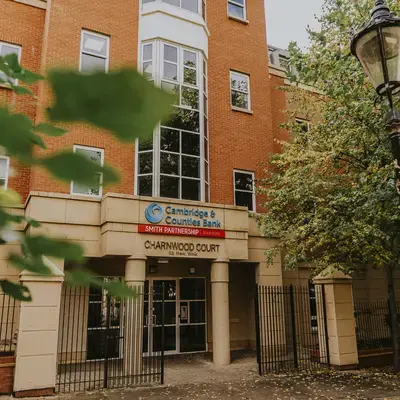
Shabana Abdulla
Legal Secretary
Practice areas
I just want to say thank you to you all. You really made a really positive difference in not only my life, but that of my son and my wife! You guys are legends!

Sophie Mitchell
Trainee Solicitor
Practice areas
I joined Smith Partnership in January 2024, having graduated in 2022 from the University of Derby with a First Class Honours law degree, and a Masters in Legal Practice in 2023.
I am a Trainee Solicitor currently undertaking my third seat in Clinical Negligence and Personal Injury. I have previously completed seats in Childcare and Criminal Defence, following prior experience as a Paralegal within the Crime department.
I’m experienced in supporting clients across a range of sensitive and complex matters, with particular strengths in client care, legal research, and case management.
Supervisor:
I am well organised, hardworking, and willing to take on any task. I take pride in the work that I do and like to support my colleagues wherever I can.
Outside of work, I enjoy going to the gym, socialising with my friends, and spending time with my family.
It's been a long journey and court case. All for trying to do the right thing and standing up for others involved. Happy with the outcome. And all my legal team, I particularly Adrian, Sophie and David. Well done to all mentioned, I owe you all a good meal and drink. Thanks for all the hard work everyone. Highly recommend.
Andrea Wilkes
Senior Associate
Practice areas
I qualified as a solicitor in 2003. I am a Senior Associate in our Crime team in Stoke on Trent and have over 21 years’ experience in criminal law dealing with cases from the initial police station investigation through court proceedings in both the Magistrates and Crown court. My main area of work and expertise is dealing with cases in the magistrate’s/youth court where I appear regularly.
Qualification year:
Admitted to the roll of Solicitor on 1st September 2003.
Supervisor:
I am organised, hardworking and focused on getting the best outcome for my clients.
I am a team player and always happy to help out and support my colleagues.
In my spare time, I do enjoy spending time with my family, walking our three dogs and a little retail therapy. I also enjoy planning and designing new projects in our house.
Just writing a review on my solicitor and how fairly they have been to help me with understanding what's going on and being available to help, I could not have asked for a better solicitor when it's come to offering me advice and helping me understand things that I don't understand, I could not have asked for a more harder working solicitor as she does the up most she can and is available and ready help when needed. Many thanks to Andrea Wilkes.
I had never been arrested before and these solicitors explained everything so that I could understand what was happening with my case. They were brilliant and I recommend them to anyone.
Andrea Wilkes was amazing, I was very scared, anxiety had kicked in big time and felt a melt down coming on but she reassured me calmed me down and gave me the advise I needed, it went well and I left a lot happier than I did when arrested big big thanks to her thanks again Andrea.
Andrea Wilkes of Smith Partnership acted for our case with compassion and very clear advice, would highly recommend.

Jo Wright
Post Completions Clerk
Practice areas
I oversee all matters from exchange of contracts through to completion as well as submission and monitoring of registrations.
Supervisor:
I am very careful and methodical in my work and pride myself on attention to detail. I am honest, caring and helpful toward others.
Outside of work I enjoy photography, crafts, dancing, going on scenic walks & spending time with family and friends. I also love travelling and going to the ballet.
Jodie, Zoe, Jo and the team provided a careful and professional service during the sale of my late father's property. Thanks to all.
I was delighted with the service I received from the excellent team at Smith Partnership. The process of conveyancing for the property I was buying was very efficient and especial thanks go to Jodie Aston and Jo Wright for their diligence and kindness in going the extra mile when needed.
Smiths Partnership Solicitors at Swadlincote have been absolutely brilliant. Jodie Aston and Zoe Goddard could not have done anymore for us. They were both always at the end of the phone and if I had to leave a message they replied back quickly. Moving house is very stressful, especially selling Leasehold but they were great and would highly recommend them. Even Jo Wright was prompt and there for us on day of completion. We want to say a big thank you to them all.
We have used the Conveyancing team at Swadlincote many times and it has always been a pleasurable experience. Jodie, Zoe, Jo and the lady on reception are always friendly, professional and helpful. Jodie and Zoe always respond quickly to queries and Jodie always has time to speak to you either in person or on the phone. They are a great team and I would not hesitate to recommend them and have done to several people who have always been grateful of the good experience they have had. Thank you Jodie, Zoe, Jo and the lady on reception.
Yasmin Williams
Conveyancer
Practice areas
Sale and Purchases of properties. I have worked in conveyancing since 2015.
Supervisor:
As I have indicated to both Yasmin and Vikki I was utterly delighted with the committed way they both handled our case and continued to pursue the buyers solicitors to resolve the numerous issues they kept bringing to the table. The information we received was always very instructive and whether by email or post would always be followed up by phone calls to explain any areas of interpretation and what the next move was. I would 100% recommend you to any one who required legal expertise. In my working life I've had numerous dealings with solicitors but I've never come across any firms that are always willing to discuss all aspects of our case like you have done.
Selling a property can be difficult enough, but selling using Power of Attorney when the buyer's solicitor was, frankly, uncommunicative, unhelpful and bordering on incompetent, could have spelt disaster! However, thanks to Yasmin and her colleagues in Swadlincote, the whole process was much less fraught than it might have been.
It was easy to build an effective working relationship with the entire team, each one of whom remained calm, professional and (especially in Yasmin's case) persistent on my behalf throughout the entire process. They proved time and again that having a local, accessible, solicitor is invaluable and so much less stressful than dealing with remote, online only, alternatives.
If you are buying or selling property in the Swadlincote area, I cannot recommend them highly enough!
I cant thank Yasmin and the team at Swadlincote Smiths enough for all their hard work from start to finish on completing on my first house. They worked tirelessly to make sure that the fragile chain completed in a timely matter regardless of all the complications we faced from other solicitors/estate agents. Thank you again, Fab team, great work!
The whole experience selling our house was dealt with by Yasmin and the team at Smiths Swadlincote in the most friendly, professional manner. I cannot recommend them highly enough and will not hesitate to use again
Yasmin worked incredibly hard to get my property sale sorted, in the face of staggeringly complicated issues with Leases, different Landlords, different property agents and different Management Companies. Very, very difficult, but they just worked calmly through the lot, finding answers as they went. Hugely impressed with Smith Partnership and I would greatly recommend the combination of Yasmin and Jessica for anyone buying or selling a property.
Very responsive and ensured I was kept up to date throughout the way. They made me feel comfortable to ask any questions along the way. I am very impressed by the service. Highly recommend!
Fantastic service throughout our house sale. Yasmin and colleagues have been amazing, keeping us updated all the way through. My sister and myself would certainly recommend Smiths partnership every time. Thank you all so much.
Totally professional service from Yasmin & the team. I was kept informed throughout the whole process by a knowledgeable friendly team. I would certainly recommend Smith Partnership.
We recently used Smith Partnership conveyancing for the purchase of our new home. Yasmin was fantastic throughout and our experience with Smith Partnership was fast and efficient from start to end. I'd recommend to others and would use their services again in the future.
Yasmin at the team were fantastic! First time buyer so I had a lot of questions about the process and the team was so helpful answering all my questions and keeping me up to date on the process and status. Once we set a date, Yasmin made sure this date was achieved. Both service and overall cost was great!
Thank you for everything you have done over the last few months in regards to my house purchase and sale. To say it has been challenging is an understatement, mainly due to the incompetence and unprofessionalism of other parties. They have certainly done the profession an injustice and this has been costly for myself both financially and emotionally. You are a credit to Smith Partnership and I appreciate all your efforts in finally getting the sale to completion.
Yasmin Williams has been an amazing solicitor to handle a sale and purchase for myself. The chain had many obstacles out of her control and she was always polite and professional but there whenever I needed her for a chat or advice too. She’s a lovely person and very helpful, and I can’t thank her enough for the work she has done.
I have the keys to the house now. I wanted to thank you for everything you did. I know the last couple of weeks were tense, but you got it done. I appreciate you and your teams help. Again a big thank you!
We would like to thank you for your prompt response and service involved in the sale of our property keeping us well informed and being patient with us, thank you again.
I just wanted to say a big thank you to you and your team regarding the sale of mums house. You made what seemed like a daunting task to me easier to cope with.
Used Smiths Partnership to sell and buy simultaneously and would certainly recommend. They were helpful, informative and efficient throughout the process. Most importantly for us was communication with ourselves and internally so everyone was on the same page, and both estate agents were kept in the loop too.
Ella Davis
Marketing Assistant
Practice areas
Business Development
I joined Smith Partnership’s Business Development Group in April 2024 as a Marketing Assistant. I assist with the firms’ marketing reports, social media, website, events and any other business development activities.
I recently completed my Level 3 Digital Marketing Apprenticeship.
Supervisor:
I am a bubbly person who is always happy to help others.
In my spare time, I volunteer with a charity called Derby Kids’ Camp, who take 300 disadvantaged children on a free holiday every year. As part of this, I do 1-2 weeks as as on-camp volunteer helping the children with their day to day needs throughout the holiday. I also support the fundraising team and am training to become a camp leader.

Cynthia Webster
New Business Assistant
Practice areas
I provide quotes to our conveyancing clients and assist with the onboarding process ensuring we have all the information and documents we need for a matter to be handed over to one of our solicitors as smoothly as possible.
A can-do positive attitude to all situations.
In my spare time I like watching films in particular horror films. I also love to spend time with my children.

Evie Whotton
Paralegal
Practice areas
My job role is a paralegal in Conveyancing department. I deal with a variety of matters. I help and assist my team, from file opening, drafting documents, assisting with clients and managing expectations.
Supervisor:
My colleagues would say I am very helpful, I am eager to learn and I am a quick learner.
I bring positivity and enthusiasm to the team.
I have two dogs both cavapoos (Daisy and George) They are both very needy dogs and require a lot of attention. I like to take them on walks at the weekend with my partner.
We would highly recommend Smith Partnership, which was mostly due to the work of Evie Whotton who made our experience 5 stars! She offered a friendly, supportive and reassuring approach through the whole process making a stressful time much more comfortable. Perfect communication making sure our emails were responded to, calls returned and information provided as soon as she could. Thank you Evie you were amazing!
I used Smith Partnership (Derby) for purchasing a house and I would recommend them to anyone. The work Michelle and Evie did was great. They both gave good advice, responded to queries quickly and made the whole house buying process very easy. Thanks for providing a great service!
Fantastic service from start to finish had the pleasure of having Michelle & Evie dealing with my property sale and from start to finish made the process so easy and stress free!
We received excellent and efficient conveyancing from Michelle Pollard on a recent house purchase. She anticipated issues that might come up and we never had to chase on anything. As first time buyers new to the system, she was clear and helpful throughout. Also thank you to Evie for her paralegal help, especially at the last stage of the process. I will recommend Smiths to others.
We have used smith and partnership a number of times and they have always been brilliant A big thank you this time to Michelle and Evie for helping us through a drawn out and awkward sale and purchase They are always at the end of the phone for advise and reassurance.
I can’t thank Michelle and the paralegal team enough especially Evie. Michelle communicated at every stage in the process and I didn’t need to chase for any sort of update. Thank you for making the process smooth.
I couldn’t recommend Smith Partnership more. We had the pleasure of dealing with Evie and Michelle for the sale and purchase of our properties they were professional and efficient especially when we were under time pressure they made it happen. I can’t thank them enough.
From start to finish our house-buying experience with everyone at Smith Partnership went smoothly and much faster than anticipated. Michelle Pollard, Evie Whotton and Kelly Craythorne were consistently helpful, informative and thorough. We couldn't have asked for better service.
Evie and Michelle were absolutely brilliant throughout my house sale. They handled everything with such care and efficiency, and their communication made the whole process feel calm and manageable. We genuinely felt looked after from start to finish. I wouldn’t hesitate to recommend them to anyone wanting a smooth, stress-free experience.
Thank you so much Evie and Michelle for all your help in executing our house sale and purchase. Your communications were always prompt and clear and we have appreciated your expertise!
The service we received was of the highest professional standard. Everyone we dealt with was polite and helpful. A big thank you to Michelle and Evie who went out of their way to ensure we were given excellent service.
I cannot recommend Smiths Solicitors enough. They were incredible in helping us buy our first house—their communication and turnaround times are lightning fast, handling everything with brilliant efficiency while keeping us informed every single step of the way.
A massive shoutout to Michelle and Evie, who were both exceptional. Their professionalism, dedication, and warm approach made buying our first home completely stress-free. If you are looking for a firm that is proactive, reliable, and truly delivers, look no further than Smiths Solicitors!
Emma Symes-Goodman
Paralegal
Practice areas
Reviewing files and chasing progress. Dealing with will release, assisting with initial contact with new clients/ matters, preparing probate applications, documents and letters, drafting wills and LPAs, administration of estates work.
Supervisor:
I am very organised and friendly, happy to help where I can.
Going on holidays and exploring new places, socialising with friends and family.
Many thanks for your excellent service, delivered in a very supportive manner. You and Emma make a very professional team!
Thank you Emma for all the support to reach where we are, it could not have been possible without your work and colleagues.It is much appreciated by all of us.
Even though we have not met its been a pleasure. Very Prompt and on the ball for every email I have sent you. I'll be sorry not to deal with you anymore. Thankyou for your input into it all.

Misha Varia
Solicitor
Practice areas
I am a solicitor within the Residential Property department at Charnwood Court, Leicester. I qualified as a solicitor in 2023. I have worked in conveyancing around 5 years and 1 PQE.
Qualification year:
Admitted to the roll of Solicitor on 23rd May 2023.
Supervisor:
Organised, good sense of humour and positive attitude.
I enjoy hiking and spending time with my family in Switzerland.
I enjoy travelling, especially road trips – when I can!
Misha from Smith Partnership has been my guardian angel throughout the purchase of my new house. I am a first time buyer unfamiliar to the whole process but Misha made sure I was kept in the loop and she had great due diligence and made sure as my solicitor everything checked out. I cannot thank her enough she is a credit to smiths and deserves all the praise in this review and more. Keep up the Great work. Thanks!
We would like to thank Misha Varia and Gemma Brien at the Leicester Office and Rachel Maxwell at the Derby Office for the help given in purchasing our bungalow and getting the sale over the line. It took a while due to Proof of Funds but we got there in the end. Speaking on the telephone with Misha and sending emails to and fro was the easy part, however we weren’t very good at other IT things. Gemma sent us paper copies for signing which helped us enormously. We are moving in today and couldn’t be more pleased with your friendly helpful and patient service, so we give Smiths Partnership a 5/5.
Misha Varia and Gemma Brien were fantastic throughout our home sale and purchase. Extremely professional, helpful, responsive and proactive. Above all they were supportive and kind when complex issues arose very late in the process. We would not hesitate to recommend in future. Thank you both for all of your hard work and help!
Gemma was so kind and helpful with any questions I had, making a dream come true in purchasing my first house. I honestly couldn't thank her and the team enough (Misha and Rachel included), It was a very hard time for me personally after loosing my nan in December, but thanks to there hard work and resolving the few issues we came across . It is all worth it and i know its made nan proud thanks again guys.
Really pleased with the service from Gemma Brien and Misha at Smith Partnership during our house purchase. There were a few amendments and corrections needed along the way, but Gemma was always quick to respond, helpful, and kept things moving. Misha and Gemma both worked hard to get everything through to completion and made sure we got there in the end. Communication was good throughout, and they were always professional and supportive during what can be a stressful process. Thank you both for helping us complete on our new home.
Gemma and Misha - Very efficient team, easy to contact, made selling of my house incredibly easy. Thank you ladies!
Misha and Gemma could not have been more helpful! They were always on hand to explain anything I needed clarifying and did not make me feel silly for asking questions. They were extremely supportive and worked so hard to ensure that everything went as smoothly as possible. Fantastic customer service!

Sarah Reader
Head of HR
Practice areas
I joined Smith Partnership following 17 years working in the public sector, primarily within the NHS and then later moving into the education sector.
I am a chartered member of the CIPD and a mental health first aider
I lead the HR function for the firm throughout the employee lifecycle. Adopting a pro-active approach to our people services, ensuring our employees feel valued and supported. I’m looking forward to changing our HR function to ensure it is fit for purpose for the firm.
I started my HR career after graduating with a BA (Hons) in Business Studies from De Montfort University, Leicester. Shortly after graduating I was successful in obtaining a place on the NHS HR Graduate training scheme, which enabled me to start my HR career properly and work towards and gain my profession qualification, later upgrading this to Chartered status.
During my time in the NHS I experienced a number of changes and merges of Trusts, by the time I left the only NHS Trust I hadn’t worked in was an Ambulance Trust!
Supervisor:
Outside of work most weekends have a football focus whether that’s watching my two boys or following Derby County FC.
I also enjoy walks around and vising National Trust properties, especially when there is a cream tea at the end of it!
Davina Charlton
Senior Associate
Practice areas
I am a Senior Associate in the Private Client team advising client on estate planning, Wills, Lasting Powers of Attorney and Probate.
Areas of specialism:
I specialise in estate planning for high net worth clients and I have an interest in dealing with administration of estates and estate planning for client’s with international assets.
I am an accredited member of the Association of Lifetime Lawyers who specialise in support and legal services for older and vulnerable clients.
Achievements:
Accreditation's:
Fully accredited member of the Association for Lifetime Lawyers.
Qualification year:
Admitted to the roll of Solicitor on 15th November 2016.
Supervisor:
I joined my local rugby team in January this year and am still trying to work out what’s going on when the ball comes to me.
I love travelling and water much to the dislike of my rescue dog.
Thank you so much for your help and advice. You’ve really put my mind at rest and I will certainly follow-up your suggestion concerning Care Necessities. I was very impressed with Smith Partnership and will look to use your company if it is ever appropriate in the future.
Davina was very thorough, friendly and understanding of our situation, and had a warm, professional approach in all of our dealings with her. We also had great confidence in her knowledge of legal matters that concerned us at the time.
Just wanted to say Davina was absolutely marvellous.
Davina was professional throughout the whole process. She explained all the legal wording in a clear and precise way.
Everything went very smoothly. Davina was friendly, always available, listened to my problems, concerns etc. I would give her 10/10.
Very friendly & professional communication. Everything was very clear & queries were dealt with promptly. Davina always took the time to make sure we understood everything, which was much appreciated.

Annebel Ellis
Paralegal
Practice areas
Day-to-day I draft documents, communicate with clients, attend PLO’s and support the solicitors in my department.
Supervisor:
I am calm, caring and always willing to go the extra mile to support the team.
In my spare time I enjoy spending time with family and socialising with friends.

Lorna Davidson
Paralegal
Practice areas
Trusts and Estate Planning | Wills and Probate
I am a Paralegal within the Private Client Trusts team. I have been working in law since 2021, qualified with a distinction from the Institute of Legal Secretaries and PAs and joined Smith Partnership’s Private Client team as a Legal Secretary in 2023. I became a Paralegal specialising in Wills and Lasting Powers of Attorney in April 2024 and have more recently transitioned to the department’s specialist Trusts team at the beginning of 2025.
Supervisor:
I am friendly and outgoing with a positive mindset. Always happy to help. I am a quick learner, always looking for opportunities to develop professionally and contribute effectively to the team. I also love getting the team together outside of work.
I enjoy long weekends away and am a big pesto pasta lover.
It was a real pleasure meeting you and David and I am very grateful for all your excellent work.
Efficient, nothing too much trouble, extremely helpful through the whole process. Definitely recommend Smith Partnership twice we used them. First for house buying for our daughters house, second for wills and LPA's for both of us.
We all do appreciate the hard work and advice you have given to hopefully bring the trust to an end.
As executors of my late sister's will, Smith Partnership kept us informed throughout, answered any queries we had and brought the matter to a very successful conclusion. Many thanks to all involved.
Rachel Maxwell
Partner & Head of Conveyancing
Practice areas
I am a Partner and Solicitor within the Residential Property and Conveyancing Team.
My career in residential conveyancing started in 2012 and qualified as a solicitor in 2017. I have a wealth of knowledge and experience to assist with all sorts of property transactions.
Qualification year:
Admitted to the roll of Solicitor on 17th July 2017.
Supervisor:
I thoroughly enjoy working in the conveyancing industry and believe that my positivity towards conveyancing and delivering the highest level of client service is infectious.
I am actively involved with the Derby and District Law Society. I am regularly seen at social and networking events for property professionals to help bring the property/ conveyancing community together.
Finding balance in life is important to me and so away from work, my spare time is enjoyed with my family on walks out in the countryside and along canals!
We would like to thank Misha Varia and Gemma Brien at the Leicester Office and Rachel Maxwell at the Derby Office for the help given in purchasing our bungalow and getting the sale over the line. It took a while due to Proof of Funds but we got there in the end. Speaking on the telephone with Misha and sending emails to and fro was the easy part, however we weren’t very good at other IT things. Gemma sent us paper copies for signing which helped us enormously. We are moving in today and couldn’t be more pleased with your friendly helpful and patient service, so we give Smiths Partnership a 5/5.
Saved Our Home Purchase, Forever Grateful! We can’t recommend Smith Partnership highly enough. We were caught up in the sudden closure of our solicitors. On the very day we were due to complete, our funds were frozen, our deposit was at risk because contracts had already been exchanged, and we were absolutely devastated. Donna and Rachel at Smith Partnership went above and beyond for us. Every email was answered, every concern was acknowledged, and we received daily updates without fail. They were kind, reassuring, and most importantly, completely honest throughout the process. We were incredibly fortunate to have our money returned in under two weeks, and I genuinely believe the outcome would have been very different had we been with another firm. Thanks to their hard work and support, we are now settled in our dream home, and we cannot thank them enough.
Annis Rowlands
Associate
Practice areas
I qualified as a solicitor in 1999. I work as part of the Crime Team in Stoke on Trent. I have over 25 years experience of dealing with defence work and have spent nearly all my professional career in private practice in Derbyshire. I am a qualified duty solicitor and deal with predominately police station, youth and magistrates court work, where I appear regularly. I assist with the preparation of Crown court cases. Before qualifying I worked as a law lecturer and in the legal department of a well known motoring organisation.
Areas of specialism:
Qualification year:
Admitted to the roll of Solicitor on 15th January 1999.
Supervisor:
Straight talking, I am committed to achieving the best results for my clients. I work hard and enjoy being part of a team.
I have 2 grown up children. Enjoy getting out and about in the fresh air with my dogs in the Peak District where I live. I have interests in farming, horses and things with engines. I have an old landrover which is always in need of attention.

Grace Outram
Associate
Practice areas
I am an Associate in the Private Client team who advises clients on Estate Planning, Wills, Lasting Powers of Attorney and Declarations of Trust.
I qualified with CILEX (the Chartered Institute of Legal Executives) in October 2023 and joined Smith Partnership in December 2024 as a Chartered Legal Executive and Line Manager.
I was promoted to Associate in October 2025.
Supervisor:
I try to bring a friendly, positive and approachable attitude to the team. I enjoy mentoring the paralegals and trainees in the department and enjoy passing my knowledge onto them.
In my spare time I enjoy running and going to the gym. I ran the London Marathon in 2023 where I raised over £4,000 for Blood Cancer UK.
On the weekends I enjoy baking, long walks, coffee dates and nice meals out with my family and friends.
Great knowledge and extremely good service and patience. Grace Outram was great help in all areas concerned, willing to explain and considerate.
Miss Outram explained everything clearly and made sure we understood. From the first meeting to the last we were shown respect and treated as intelligent people, spoken to not spoken down. We were made to feel comfortable at all times.
Would definitely recommend from start to finish everything excellent and helped me. Environment was lovely and clean. Car park was easy to find and park. They even had nice coffee with biscuits.
Everything was explained, discussed and clarified to our satisfaction - the level of service was exemplary. The fact that we were able to understand the process in layman's terms rather than solicitor language was great. We learnt things that we never considered in our previous wills. Grace and Rashifa are a credit to Smith Partnership. Nothing was too much trouble. The standard of service was excellent. Thank you!
Extremely professional and friendly service. Certainly will recommend to others!
Grace and Rashifa were very competent, explained things very well and kept us up to date via email. They provided a professional but caring service and Grace explained info very well which made it easier for us to understand.
Grace was very professional, kind and explained everything very well.
Grace was professional, friendly and efficient. Would recommend the service provided. It has given me total peace of mind making my will and LPA's. Ten out of ten service.

Gemma Brien
Solicitor Apprentice
Practice areas
As a solicitor apprentice in the conveyancing department, I support clients through one of the most important transactions of their lives—buying or selling property. I assist with drafting legal documents, reviewing contracts, and liaising with clients, estate agents, and other solicitors to help ensure a smooth and efficient process.
I’m currently working towards qualifying as a solicitor through the apprenticeship route, which allows me to gain hands-on experience while studying law. I’m passionate about making the legal process clear and approachable for clients, and I take pride in being part of a team that helps people move forward with confidence.
Supervisor:
My colleagues would describe me as kind and caring with a strong determination to work hard and support others - qualities I strive to bring to every task and client interaction.
I also love to bake and often bring homemade treats into the office—something that’s become a bit of a tradition! It’s a small way to brighten the team's day and add a personal touch to our collaborative environment.
Outside of work, I enjoy baking, reading, and spending time with my friends and family. I also volunteer as a Sunday school teacher at my local church, which allows me to give back to the community and support young people in their learning and development.
Fun Fact – I have a pet tortoise named Frankie!
We would like to thank Misha Varia and Gemma Brien at the Leicester Office and Rachel Maxwell at the Derby Office for the help given in purchasing our bungalow and getting the sale over the line. It took a while due to Proof of Funds but we got there in the end. Speaking on the telephone with Misha and sending emails to and fro was the easy part, however we weren’t very good at other IT things. Gemma sent us paper copies for signing which helped us enormously. We are moving in today and couldn’t be more pleased with your friendly helpful and patient service, so we give Smiths Partnership a 5/5.
Working with Gemma Brien at Smith Partnership has been an absolute pleasure. During the process, communication with the property lawyer unfortunately broke down, but Gemma stepped in and completely turned things around. She quite literally saved the file. Without her support and determination, we would not have exchanged today, and I am incredibly grateful for everything she has done. Thank you once again, Gemma — I truly appreciate your help and hope our paths cross again in the future!
Misha Varia and Gemma Brien were fantastic throughout our home sale and purchase. Extremely professional, helpful, responsive and proactive. Above all they were supportive and kind when complex issues arose very late in the process. We would not hesitate to recommend in future. Thank you both for all of your hard work and help!
Gemma was so kind and helpful with any questions I had, making a dream come true in purchasing my first house. I honestly couldn't thank her and the team enough (Misha and Rachel included), It was a very hard time for me personally after loosing my nan in December, but thanks to there hard work and resolving the few issues we came across . It is all worth it and i know its made nan proud thanks again guys.
Thanks for your work. I've been very happy with the service provided by you and everyone at Smith partnership. I greatly appreciate your patience and professionalism when dealing with the buyers queries and my own concerns. When I find myself in need of a solicitor again I will be coming back to Smith Partnership.
Really pleased with the service from Gemma Brien and Misha at Smith Partnership during our house purchase. There were a few amendments and corrections needed along the way, but Gemma was always quick to respond, helpful, and kept things moving. Misha and Gemma both worked hard to get everything through to completion and made sure we got there in the end. Communication was good throughout, and they were always professional and supportive during what can be a stressful process. Thank you both for helping us complete on our new home.
A very smooth transaction, despite the property being nearly 100 years old and not being land registered. The information was thorough and I was updated regularly throughout. Gemma was great at getting it all completed, communicating right through to the end. Would highly recommend Smith Partnership for a house move!
Gemma and Misha - Very efficient team, easy to contact, made selling of my house incredibly easy. Thank you ladies!
Misha and Gemma could not have been more helpful! They were always on hand to explain anything I needed clarifying and did not make me feel silly for asking questions. They were extremely supportive and worked so hard to ensure that everything went as smoothly as possible. Fantastic customer service!
Connor Ball-Wood
Associate
Practice areas
I am an Associate in the Company and Commercial team having joined Smith Partnership in January 2025. I can assist with the following:
Qualification year:
Admitted to the roll of Solicitor on 10th January 2024.
Supervisor:
I am a huge Derby County fan. I also enjoy everything Marvel. I am currently aiming to complete a 10km race every month in 2025. I do also enjoy long distance walking in the peaks with my friends and family.

Farris Saleem
Solicitor Apprentice
Practice areas
I primarily work on the aviation side of things, with matters relating to Regulation (EC) No 261/2004 of the European Parliament which lay down principles of compensation and assistance to air passengers in the event of denied boarding, cancellation and delays of flights.
Supervisor:
The confidence to wear bright coloured pimple patches to the office.
Reading, working on my novel, playing the piano, and travelling.
Oliver Maxwell
Partner
Practice areas
I advise on a wide range of property-related disputes, with a particular emphasis on disputes (or, more accurately, any matter that could give rise to a dispute) involving commercial real estate assets. I have worked with an array of clients, from individuals and regional SME’s to national and global PLC’s.
I am regularly involved in disputes involving commercial landlords and tenants, including:-
I also have significant experience in disputes concerning commercial easements (including maintenance and rights to repair), adverse possession, trespass and nuisance claims.
Having specialised almost exclusively in real estate litigation since 2019, I am able to help my clients navigate complex disputes to reach the best possible outcome, whether that be by using litigation, ADR or strategic correspondence.
I qualified in 2014, and have specialised in commercial real estate litigation since 2019. I am also a member of the Property Litigation Association.
Qualification year:
Admitted to the roll of Solicitor on 15th September 2014.
Supervisor:
An enthusiasm for the law and for my clients. I’m approachable, pragmatic, and am known for being a “safe pair of hands”. I’m never far away from a quote from either an enjoyable judgement or, failing that, from any number of noteworthy films or songs.
Outside of work, I enjoy spending my time (and money) on my wife and two young children. I also enjoy spending time with the wider family, and enjoying regular walks canalside.
I try to run regularly and attend a tai chi class on a Monday. I also hold a shotgun licence, and try and shoot (clays only) as much as I can.
I am a Past President of the Derby and District Law Society, and continue to offer it my support by attending events and offering my judging services in the annual debates competition ran in conjunction with the University of Derby.
Oliver was brilliant throughout the whole process. He was a great help both legally and emotionally.
My experience of working with Oliver Maxwell has been exceptional. He has been engaging and provided timely advice on a number of lease related issues. What makes him stand out is that he has a very concise and pragmatic approach which helps when I have multiple demands on my time.
Thank you for your consistent professionalism throughout our time dealing with you. Our case admittedly was not straight forward and for us to get a negotiated deal with [our opponent] is a result to say the least.
We chose Oliver Maxwell to handle a delicate and very complicated matter. He was extremely hardworking, sometimes out of office hours to suit our needs. His advice, representation and assistance was excellent, and ultimately he was instrumental in bringing this very stressful matter to a close. We would highly recommend him.
Oliver, thank you on behalf of the Directors for your expert advice and guidance. You have excelled not only in your professional guidance, but also in your approach in communicating with [the opponent] to reach an amicable settlement. We look forward to working with you again.
Oliver, we just wanted to pass on our thanks to you for all your help, advice and patience. It hasn’t been an easy process for anyone involved, but we both have smiles back on our faces and, at our age, life is too short and precious for us to dwell on such matters. You have allowed us to conclude this dispute with our honesty, integrity, and our consciences intact. Thanks again my friend.
Vikki Walker
Paralegal
Practice areas
I work on the legal aspect of Conveyancing, ensuring the transaction runs smoothly for all clients regardless of their instructions i.e sale, purchase etc.
I have been working in Conveyancing for 10 years. I started out as a legal secretary.
Supervisor:
I like to think I will bring good humour and lots of support to the team and will make their working day more efficient with the support I provide.
I am a mum of 3 beautiful girls, in my spare time I will either be home watching Disney films with them or we have family days out. I am also a big Liverpool fan :)
As I have indicated to both Yasmin and Vikki I was utterly delighted with the committed way they both handled our case and continued to pursue the buyers solicitors to resolve the numerous issues they kept bringing to the table. The information we received was always very instructive and whether by email or post would always be followed up by phone calls to explain any areas of interpretation and what the next move was. I would 100% recommend you to any one who required legal expertise. In my working life I've had numerous dealings with solicitors but I've never come across any firms that are always willing to discuss all aspects of our case like you have done.

Tia Aitken
Paralegal
Practice areas
I work as a paralegal in the residential conveyancing department. On a day-to-day basis my role is to learn from and help the fee earners with their cases. So far, I help the team with various tasks like drafting documents, speaking to clients, checking requisitions and closing files.
I am still trying to decide what areas I wish to specialise in after I have finished my LPC. At the moment my favourite areas have been Medical Negligence, Criminal Justice, international Trade law, Human Rights Law and Commercial Law. However, I enjoyed most of the subjects I studied.
This is my first conveyancing role, and I am looking to finish my LPC in 2026. Before this I have have mostly customer service-based roles and also worked in debt collection for 9 months. After this I will be seeking a training contract to qualify.
Supervisor:
I would like to say I’m a positive person and I tend to learn quite quickly.
I spend most of my time when I’m not working or studying either reading or swimming.
Can I provide my gratitude to you, Tia and rest of the team for all your tireless effort to date. You have been very quick and efficient at answering any questions/issues I have.
Tania Douglas and Tia Aitken from the Smith Partnership Burton Upon Trent office provided exceptional service during a leasehold apartment sale. They were highly professional, proactive, attentive, and communicative, ensuring a smooth and stress-free process. Their expert handling of details made the experience seamless and are highly recommended.
Nicole Saroglou
Marketing Assistant
Practice areas
Business Development
I recently joined Smith Partnership as a Marketing Assistant, having just graduated university in July 2024.
My role is to support the firm’s business development strategies. I assist with the organisation of networking and charity events, as well as with additional marketing projects the team is working on.
Supervisor:
A friendly, positive attitude and a willingness to take on any tasks.
Languages:
I can read, write, speak and translate Greek.
I particularly enjoy travelling abroad, spending time with family and friends, and taking long nature walks with my dogs.
In my spare time, I also like to read, journal and watch movies.
Lucy Birchall
Solicitor Apprentice
Practice areas
I work within the Private Client team as a Solicitor Apprentice specialising in dealing with different aspects of Wills and Lasting Powers of Attorney for Asset protection and future Estate planning. This consists of meeting with clients, discussing their options, reviewing documents and preparing the relevant documentation.
I specialise in Wills and Lasting Powers of Attorney within my team.
I have a wide range of experience in dealing with Administration of Estates, Trusts and Inheritance Tax.
I have worked in the Private Client area for just shy of three years and I graduated with my LLB Law Degree in 2022.
Supervisor:
My experience allows for me to bring a wide range of knowledge whilst offering a positive attitude to contribute to the team.
I am hard-working, enthusiastic and most of all, I love being organised!
I love going to the gym, keeping active and finding new hobbies and places to explore as well as socialising with family and friends. Not forgetting my weekend walks with my crazy springer spaniel.
Lucy was professional and friendly in her approach. Everything was explained very well and in a timely manner. Difficult to say how it could be improved further. We have dealt with Smith Partnership over the last 40 years and always found them to be reliable.
Lucy dealt with the re-writing of my will in a very professional and efficient way. She created a very comfortable environment in which to discuss my will. Many thanks.
Lucy was very professional, patient and kind to an old lady. Any queries concerning my business were answered promptly.
Lucy was very nice and understanding, she has done exactly what we wanted her to do. I would recommend your solicitors to everyone. Thank you Lucy!
Good service in a timely manner with support at all times. Lucy was clear, helpful and professional!
Lucy was very professional and helpful all the way through the process.
Krishna Valand
Paralegal
Practice areas
I work in the Conveyancing department at Leicester, dealing with a range of matters helping the team with sales, purchases and re-mortgages.
I completed my undergraduate law degree in 2024 and was working as a Debt Advisor since graduating. I am fairly new to the ‘Conveyancing’ world however, I look forward to progressing and learning more about this area of work.
Supervisor:
Languages:
I can also fluently speak in Gujarati.
Donna and Krishna of Smith Partnership were exemplary in their conveyancing of our properties. They were polite, professional and efficient. Explanations were clear and they were patient when we required further detail. Our thanks for providing us with an excellent service.
The service I received from Donna, Krishna and Michelle was excellent. Krishna was very patient over the phone and very helpful and Donna always replied to emails if not same day the very next working day. Michelle and Donna worked so hard to get the sale and purchase over the line also with time not on our side. I’m so grateful, thank you team!!!!
Donna, Krishna and Abbie helped me with my first-time house purchase. The process of buying your first house is daunting but their fast replies and use of plain English really helped me to feel informed and involved in the process. They made the process simple and stress free. Thank you!
Kelly Craythorne
Paralegal
Practice areas
As a Paralegal in the Residential Conveyancing Department I speak to Clients on a daily basis. My aim is to ensure all Client’s understand exactly where we are in the conveyancing process and to keep them updated every step of the way, whilst progressing their matter through to exchange and completion.
This can look different on a day-to-day basis however it includes assisting on sales, purchases, remortgages and transfers of equity. Not only do I correspond with the Clients and Solicitors on the other side of the transaction, but also Estate Agents, Mortgage Brokers, Management Companies and Lenders.
I love the transactional nature of Conveyancing and the fact that it is always changing and updating, which means we are constantly driving to keep up.
After passing my exams on first attempt I graduated my Masters in Law and Legal Practice Course from the University of Derby with a Commendation in June 2023.
I am hoping to earn myself a Training Contract here at Smith Partnership to progress my Career and qualify into the Firm. After almost two years working in legal office’s, I believe I am now equipped to take on further responsibilities and enhance my vocational skillset.
Supervisor:
I am currently an Orange Belt in Kickboxing and enjoy watching MMA, Football and Boxing on TV. I have also attended London Stadiums to see Anthony Joshua, Tyson Fury, Oleksander Usyk and Daniel Dubois fight live in person.
From start to finish our house-buying experience with everyone at Smith Partnership went smoothly and much faster than anticipated. Michelle Pollard, Evie Whotton and Kelly Craythorne were consistently helpful, informative and thorough. We couldn't have asked for better service.
My contact with Kelly at Smiths solicitors was very good. My husband & I moved house a couple of months ago and the last few weeks were rather challenging. It was nice to have Kelly helping us through the worrying time until we exchanged contracts and eventually completed.
We recently purchased a house and we had Taqhdees and Kelly acting for us, they were very attentive and excellent with their client care. They answered all questions we had and explained everything throughout, they kept us updated at every point of the transaction. I’d highly recommend them to anyone who needs help with purchasing/selling a property.
Thanks to Taqhdees, Kelly and Martina for sorting my house purchase, they were always helpful with every question I asked, even the stupid questions and very understanding.

Taqhdees Mahmood
Associate
Practice areas
I am an Associate in the Residential Property Department and have been qualified for over 5 years.
I specialise in all aspects of conveyancing, including sales, purchases, remortgages, and transfers of equity. I am committed to providing clear, practical advice and a smooth, efficient service tailored to each client's individual needs.
Whether you're a first-time buyer, a seasoned investor, or simply looking to remortgage your home, I aim to make the process as straightforward and stress-free as possible. I pride myself on being approachable, responsive, and proactive in driving transactions forward.
Qualification year:
Admitted to the roll of Solicitor on 3rd February 2020.
Supervisor:
I enjoy working collaboratively with colleagues across the firm and pride myself on being approachable, dependable, and committed to achieving the best outcomes for our clients.
Languages:
I can understand and speak Punjabi and Urdu.
Outside of work, I love spending time with my family, trying out new recipes in the kitchen, and exploring different cuisines. I'm always up for a good travel adventure and enjoy discovering new places whenever I can.
We recently purchased a house and we had Taqhdees and Kelly acting for us, they were very attentive and excellent with their client care. They answered all questions we had and explained everything throughout, they kept us updated at every point of the transaction. I’d highly recommend them to anyone who needs help with purchasing/selling a property.
Thanks to Taqhdees, Kelly and Martina for sorting my house purchase, they were always helpful with every question I asked, even the stupid questions and very understanding.

Olive Wong
Paralegal
Practice areas
I currently work for the new business team- file opening, quoting. I worked in Conveyancing admin for just under 4 years before coming to Smith Partnership.
Supervisor:
My friends/colleagues always say I am funny but not on purpose due to my language barrier. I am very shy to strangers but once I am closer to them, I show more of my fun side.
Languages:
I recently married, we have a lovely 2 years old Tri colour Border collie boy called Jesse. I love reading and we spend a lot of weekends travelling down south to see our friends.
Excellent service from Bhakti, with support from Olive and the rest of the Team at the Derby Office.
Both Bhakti and Olive Wong in particular were professional, attentive and helpful in getting my sale to completion - thank you.
We were very pleased with our experience, Bhakti and Olive were so helpful in our experience buying our first home: keeping us informed regularly, explaining anything we needed further and I felt trusting and comfortable during the whole process. I would recommend for anyone buying a house who want a reliable service.
Bhakti was a great help throughout the process of our property sale and purchase. Dealing with everything clear, professionally and as quick as possible. Help received from Olive and Martina whilst Bhakti was away was also good, ensuring a good transition with no hiccups.
Amazing service from Bhakti and Olive for my first house purchase!! Very speedy, and we were kept updated at every step.

Josh Cureton
Paralegal
Practice areas
I am a Paralegal in the Personal Injury team. I deal with a wide range of claims from slips and trips, industrial disease, accidents at work and RTA’s.
Supervisor:
A great work ethic and sense of humour.
Outside of work I love going to the gym and I love exercise in general. Big football fan as well as F1 and GT3 racing. I have a big interest in cars, and I love learning about them and how they work, as well as their culture and history.
Elizabeth Currie
Head of Risk & Compliance
Practice areas
I’m the Head of Risk & Compliance at Smith Partnership. I joined the firm in August 2025 after nearly 15 years of working in compliance, risk management and operations positions in firms across the UK.
I’m responsible for ensuring our business operates in full compliance with the Solicitors Regulation Authority (SRA) regulations and other relevant legal and regulatory frameworks. I work to mitigate business risks and ensure that we work efficiently within the compliance controls required.
I also work with our service partners and suppliers to implement processes, checks and balances to ensure we are as efficient as possible in our compliance, along with utilising the latest technologies to support the growth and success of the firm.
Areas of specialism:
Supervisor:
I like to bring a calm and approachable presence to the team so they feel comfortable sharing any concerns they may have. By combining expert knowledge with a practical mindset, my focus is on providing commercially sensible solutions that support both the firm and my colleagues.
Outside of work, I enjoy keeping active and regularly take part in triathlons, sportives and running races. I also love being outdoors, whether that's hiking or exploring new places in my motorhome. Most of my free time though, is happily spent with my dog, Jackson!

Martina Singh
Paralegal
Practice areas
As a Paralegal I am helping the fee earners on their day-to-day tasks through any transaction, from Exchange of Contracts to Post-Completion. My job title includes reviewing and drafting legal documents and make sure to keep our clients updated. Thanks to teamwork and to everyone’s support, we want to make sure every case goes smoothly until the transaction is registered on the Land Registry. This is my first time as a Paralegal, but I am already learning so much! In conveyancing, you never stop learning as every transaction is quite different to another.
In the meantime, I am also doing the LPC at Nottingham Trent University. I hopefully can specialise in Residential or Commercial Property one day.”
Positivity! I always tend to be positive even when things get difficult, I try to be as much helpful as I can especially when teamwork is needed. I am a very happy and sociable person so my colleagues can always count on me if they need a friend or someone to talk to. I take quite seriously my job as I would like to become a solicitor soon!
Languages:
I speak 5 languages:
I have been studying them since high school, and always trying to develop them!
As an Italian, I love to eat (especially pasta and pizza or a nice aperitivo). But most of all, I love travelling. When I am free, I like to visit new places, and countries and learn about new cultures. I am also very into fashion; I always have a Vogue magazine in my bag and dream to have a closet like Carrie Bradshaw.
Thanks to Taqhdees, Kelly and Martina for sorting my house purchase, they were always helpful with every question I asked, even the stupid questions and very understanding.
Bhakti was a great help throughout the process of our property sale and purchase. Dealing with everything clear, professionally and as quick as possible. Help received from Olive and Martina whilst Bhakti was away was also good, ensuring a good transition with no hiccups.

Kalvin Suddhi
Solicitor
Practice areas
I work within the Private Client team as a Solicitor specialising in Wills and Lasting Powers of Attorney. This consists of meeting with and discussing the various options with clients and preparing the appropriate documentation. I am a newly qualified solicitor as of September 2025. During my two-year training contract, I completed seats in 3 different practice areas including 6-month seats in Commercial Property and Litigation and a 12-month seat in Private Client.
Qualification year:
Admitted to the roll of Solicitor on 3rd September 2025.
Supervisor:
I am a calm and collected individual who can be trusted to provide advice coherently. I take pride in my organisation skills and always focus on achieving the best outcome for clients.
Outside of work, I enjoy keeping fit and going to the gym. I enjoy all things sports related and I’m a die-hard Manchester United fan.
We were dealt with in a friendly but professional way. We were very happy with the service received and feel confident enough to highly recommend to friends and family.
Kalvin explained everything well and carried out our wishes brilliantly.
Kalvin was very helpful, kind, professional and thorough. He explained matters that I was confused about very well. Thank you for your support and excellent service. I had a very positive experience at this firm.

Rebecca Reid
Head of Employment & Senior Associate
Practice areas
I support employers of all shapes and sizes with pragmatic and solution-focused advice on all areas of employment law, including internal procedures (such as disciplinaries), discrimination, whistleblowing, reorganisations, TUPE transfers and employment tribunal proceedings. My advice is always tailored to a client’s particular needs.
As well as advisory work, I am passionate about delivering employment law training for clients.
In addition, I advise senior employees on matters involving settlement agreements, contracts, post-termination restrictions and negotiated exits.
Accreditations:
Employment Lawyers Association (ELA)
Supervisor:
Qualification year:
Admitted to the roll of Solicitor on 16th March 2015.
Enthusiasm and snacks! I also really enjoy keeping up to date with all things employment-law related and disseminating and debating upcoming changes with the team.
I live in Rutland with my husband and daughter, so my weekends are largely consumed by my daughter’s ballet, gymnastics and swimming classes. We also like to support our local pub!
Involving an employment issue, Smith Partnership provided clear, comprehensive and supportive guidance and advice. The professional advice from Rebecca was impeccable, identifying issues that I would not even have thought of, and her support through the process made a very stressful time much easier to deal with.
Working with Rebecca to reach an agreeable and fair settlement with my employer has been an absolute pleasure. From the very start, she was approachable, patient, and genuinely understanding, taking the time to listen and make sure I felt supported throughout the entire process. Her guidance was always prompt, clear, thorough, and fair. Rebecca made what could have been a stressful experience feel manageable and reassuring. I always felt that she truly cared about achieving the best outcome and making things run as smooth as possible to closure. I’m incredibly grateful for their help and wouldn’t hesitate to recommend her and the practice to anyone looking for professional, compassionate, and reliable support.
I just wanted to take a moment to express my gratitude for all your help and support throughout this process. Your prompt responses and clear guidance have made everything much smoother. I am truly thankful for your expertise and professionalism.
Rebecca Reid helped me work through an employment matter over the course of the last couple of weeks. The entire process was seamless, she made sure I was happy with everything, listened to my concerns and provided advice. I trusted her expertise and would definitely recommend her.
The service provided by Rebecca Reid was excellent. She accommodated me at short notice and was extremely professional dealing with a settlement agreement on my behalf.
The company were very efficient in a time sensitive senior employment negotiation. The team modified their schedules to meet a tight timescale and gave excellent detailed advice. Rebecca Reid took me through the complex subjects well and we reached agreement to plan. I would highly recommend Rebecca and her team.
From start to finish you were a great help in the redundancy process with clear explanations coupled with good advice and insight ensuring I received the best advice.
Rebecca was first class. Very easy process , very responsive and great advice.
Smith Partnership displays a wide range of capabilities spanning contracts and policies, disciplinary and grievance, TUPE and restructuring. Recently the team has developed a settlement agreement service for individuals supporting with negotiating exit packages. Rebecca Reid leads the team’s Derby office, handling redundancies, TUPE transfers and the employment aspects of commercial transactions.
'Rebecca Reid offers valuable support, often dealing with complex queries. She has a professional approach and provides a pragmatic consideration. She is very knowledgeable and gives you confidence in the decisions you need to make. The team is always receptive and professional when we request support and advice. The advice is clear and jargon-free, which helps to make decisions on issues raised.'
Aaliyah Daniel
Paralegal
Practice areas
My day consists of supporting the fee earners on my team drafting standard documents for a variety of transactions. I also help with research and any admin tasks that needs doing.
Supervisor:
High spirits and lots of energy.
I enjoy gaming, playing badminton and taking long walks in the Peak District.

Amy Lunn
Legal Assistant
Practice areas
I joined Smith Partnership in October 2025 after having graduated from Lancaster University with a first-class law degree in June 2025.
My day-to-day tasks can be anything from opening new files, closing completed matter and assisting in the preparation of documents to obtaining searches, ID documents and obtaining documents from Land Registry.
Supervisor:
I am prompt and efficient with my tasks and enjoy being busy. I enjoy working independently on my tasks as well as communicating with the whole team.
I am known for bringing books into the office to read before work and sometimes during lunch.
I am a bookworm through and through and will always have a high reading goal for the year.
I also spend my free time playing the trumpet in Derwent Valley Wind Band and playing the piano and singing whenever I can.

Emily Spence
Paralegal
Practice areas
I assist the solicitors in my department by attending client meetings, drafting documents, preparing applications and conversing with clients and other professionals.
I am a quick learner who can keep a cool head under pressure.
I always bring a positive outlook to the office.
Outside of work I enjoy keeping active and playing football (not very well) with my local team.
I also enjoy spending time and socialising with my family and friends.

Katie Burgess
Associate
Practice areas
I am based in our Derby office, having rejoined Smith Partnership after previously working in the Burton Upon Trent office, bringing with me strong local knowledge and expertise. I started working in Property in 2006 and qualified in January 2012.
I specialise in Commercial Property matters. I have acted for a wide range of clients, including landlords, tenants, developers, business owners and individuals.
My work includes:
I also have a strong background in residential conveyancing, having acted for buyers and sellers in a wide range of transactions, including sales and purchases of registered and unregistered property, probate sales, transfers of equity and remortgages.
I am friendly and approachable and always happy to help.
Outside of work I enjoy spending time with my young family and travelling.
Donna Richardson
Conveyancer
Practice areas
I am a Conveyancer dealing with all aspects of residential conveyancing; including freehold/leasehold sale and purchases, transfer of equity and remortgages.
Achievements:
I won the Peoples Award at the ESTAS for two consecutive years running (2023/2024), which recognises staff who go above and beyond for their clients and is based solely on the individual’s reviews.
Supervisor:
I am friendly, helpful and caring. My friends would say that I have a great sense of humour and my laugh is contagious!
I love to spend time with my family and my two boys (now 18 and 20!). I have also have a dog and love spending time with him and talking him for walks. I also enjoy socialising with friends.
Saved Our Home Purchase, Forever Grateful! We can’t recommend Smith Partnership highly enough. We were caught up in the sudden closure of our solicitors. On the very day we were due to complete, our funds were frozen, our deposit was at risk because contracts had already been exchanged, and we were absolutely devastated. Donna and Rachel at Smith Partnership went above and beyond for us. Every email was answered, every concern was acknowledged, and we received daily updates without fail. They were kind, reassuring, and most importantly, completely honest throughout the process. We were incredibly fortunate to have our money returned in under two weeks, and I genuinely believe the outcome would have been very different had we been with another firm. Thanks to their hard work and support, we are now settled in our dream home, and we cannot thank them enough.
Exceptional service from solicitor Donna!!! Super professional, efficient and got the job done. Highly recommended!!!!!!
The support and service from Donna Richardson has been nothing short of fantastic. She's kept me informed along with our clients to make the transaction smooth throughout especially as we were operating with tight deadlines, a real credit to the Smiths team. Thank you!
I needed a Conveyancer to help support my clients with their first investment property under a layered limited company structure. As this was an auction purchase the timescales were tight. Donna Richardson has been nothing short of incredible! Amazing with my clients providing the right support and guidance, working with me and the lender to get everything signed off along with working closely with the vendors solicitors to get this transaction through with time to spare. 10 out 5.
Donna and Krishna of Smith Partnership were exemplary in their conveyancing of our properties. They were polite, professional and efficient. Explanations were clear and they were patient when we required further detail. Our thanks for providing us with an excellent service.
I went to The Smith Partnership halfway through a house purchase after a PM law firm closed their doors on all business, leaving thousands of people high and dry. The lady who looked after my case was Donna Richardson. She was brilliant from start to finish. She caught up with the house chain very quickly and always got back to me if I couldn’t speak to her directly. I had a number specifically for her so I didn’t need to go through a long switchboard. I don’t think the move would have happened as smoothly as it did without Donna and her team. I couldn’t recommend them enough. Thank you.
The service I received from Donna, Krishna and Michelle was excellent. Krishna was very patient over the phone and very helpful and Donna always replied to emails if not same day the very next working day. Michelle and Donna worked so hard to get the sale and purchase over the line also with time not on our side. I’m so grateful, thank you team!!!!
We had a fantastic experience with our house purchase, and the whole team kept us informed every step of the way. A special thank you to Donna Richardson, who went above and beyond to take away so much of the stress and worry during what can be a very stressful time. Donna was always available whenever we needed her, chasing things up, answering our questions promptly, and keeping the process moving. Her professionalism, communication, and support made all the difference. We would definitely recommend Smith Partnership to anyone looking for a reliable and supportive conveyancing solicitor, and we wouldn't hesitate to use them again if we decide to move in the future. Thank you for making our house purchase as smooth and stress-free as possible!
Donna, Krishna and Abbie helped me with my first-time house purchase. The process of buying your first house is daunting but their fast replies and use of plain English really helped me to feel informed and involved in the process. They made the process simple and stress free. Thank you!
Thank you for dealing with my matter recently. I appreciate your help, support, and quick replies and seeing the job through, especially at this difficult time. On a personal level, I would like to give you 5 stars.

Daria Preda
New Business Assistant
Practice areas
I support the onboarding of new clients for the Family department, acting as a first point of contact and helping ensure a smooth start of their journey with us. This involves speaking with clients, gathering key information and making sure files are set up accurately so matters can progress smoothly. I always aim to make clients feel informed and supported throughout the onboarding process.
I bring a positive attitude, curiosity and a genuine willingness to learn. I enjoy working with others and am always happy to help, especially when supporting the team. I approach my work in an organised and efficient way, while remaining friendly and approachable.
Languages:
I’m always happy to support clients with translation of any form between English and Romanian.
Outside of work, I like to keep a balance between staying active and relaxing. I enjoy playing tennis during the warmer months, unwinding with a good book and spending time with family and friends.

Ellie Wilson
Paralegal
Practice areas
I work within the Private Client department where I am responsible for handling the initial enquiries.
In 2025 I graduated with a 1st Class LLB (Hons) Law with Criminology degree.
To the team I bring a positive attitude, I am always happy to help.
In my spare time I enjoy cooking new recipes, dancing and going on walks around Derbyshire. I also love to travel to new places.
Nicola Bell
Associate
Practice areas
I am a Criminal Defence Advocate attending Magistrates Court and Crown Court.
I first joined Smith Partnership in 1999 to 2008 and then returned in November 2025.
After qualifying in 2004, I was granted Higher Rights of Audience in 2008.
Qualification year:
Admitted to the roll of Solicitor on 1st July 2004.
Supervisor:
Safe pair of experienced hands.
25 years in criminal justice system.
Dog walking and spending time with her adult children at different ends of the country.
Clear communication, expertise and a successful outcome. Nicola was very helpful and honest about the case and possible outcomes, was less stressful due to her input. I would recommend your services.
I honestly cannot thank Nicola Bell enough for everything she has done for me. From the very beginning of my case right through to the end, Nicola was there for me every step of the way. She made me feel supported, listened to, and reassured during what was an incredibly stressful and emotional time.
Nicola worked tirelessly on my behalf and never gave up. She showed genuine care and understanding, and I always felt that she truly wanted the best outcome for me and my dogs. Having my dogs returned to me means more than I could ever put into words, and I will always be grateful to Nicola for helping make that happen.
I couldn’t be happier with the outcome and I genuinely feel that I couldn’t have asked for a better solicitor to represent me. Nicola went above and beyond throughout my case, and I would wholeheartedly recommend her to anyone who needs someone who is not only professional and knowledgeable, but who genuinely cares about their clients.
Thank you so much, Nicola, for everything. I will always be incredibly grateful.

Kelly Gray
Associate
Practice areas
I am an associate Solicitor within the Childcare department at the Stoke on Trent Office.
I represent parents involved in childcare proceedings and the pre proceedings (Public Law outline) process.
I conduct advocacy at court, advise clients on interim Care Orders, Supervision Orders and Special Guardianship Orders. I have acted for clients lacking capacity and therefore taken instructions from the Official Solicitor.
I routinely represent parents subject to care proceedings, but I have also represented grandparents wishing to make applications within those proceedings. I have advised and assisted clients incarcerated whereby their family Law proceedings have been significantly impacted by their criminal proceedings.
Qualification year:
Admitted to the roll of Solicitor on 5th September 2023.
Supervisor:
I take a friendly, sincere, professional approach with my clients whilst offering objective, realistic advice on sensitive issues.
Prior to specialising in Family Law, I worked within the Criminal Law sector including Staffordshire Police as a Police Officer.
I have also worked with diverse groups of ex-offenders providing advice and guidance into education and employment.
I enjoy running outdoors and going to gym classes. I cherish spending quality time with my two children. I enjoy socialising with friends, shopping and travelling abroad.
I had the support of Kelly Gray through a very awful time in my life. I found her to be very knowledgeable, friendly and approachable she walked me through everything and was very patient with me when I had a wobble I would recommend her services to anyone struggling with family legal issues for sure. Thank you Kelly!!!

Emma James
Senior Associate
Practice areas
I have extensive experience of all areas of family law work including private law children cases, divorce, financial remedy matters, and domestic abuse. I aim to put clients at ease from the very first meeting, helping clients to resolve matters constructively and cost effectively, taking into consideration both the financial and emotional costs of their case.
I am a Resolution Accredited Specialist in the areas of Private Law Children and Domestic Abuse. Resolution is a large network of family law solicitors and other professionals who are committed to resolving family disputes constructively and non-confrontationally. I keep the Resolution Code of Practice at the heart of my work.
Qualification date:
Admitted to the roll of Solicitor on 1st September 2000.
Supervisor:
I’d hope my colleagues would say that I’m friendly and approachable and can bring a good sense of humour to bear in most situations, however challenging!
I enjoy spending time with my family, retail therapy and eating out. I am a cricket fan and enjoy watching my son play matches throughout the summer season each year.
Thank you so much for helping with my difficult divorce, and then related childcare matters, which were long and drawn out. The outcome was exactly what I was hoping for, and we now move forward in a more concrete way, without the need for court.
Emma James was superb at explaining the ins and outs of the divorce proceedings. Very professional but also very human! Great solicitor, can’t recommend her enough! Thank you.
Michael Whelan
Associate
Practice areas
I am an Associate in the Private Client team advising clients on estate planning, Wills, Lasting Powers of Attorney, and estate administration/probate. I have administered a wide range of estates of both high and low value and everything in between.
Areas of Specialism:
I specialise in estate administration but I can also assist with inheritance tax planning, Wills, and Lasting Powers of Attorney.
Qualification date:
Admitted to the roll of Solicitor on 25th October 2021.
Supervisor:
I bring experience of working with clients from a wide variety of backgrounds and can tailor expert advice and guidance to meet their individual needs. I also bring an unfortunate but reliable talent for telling terrible dad jokes.
Outside of work I can often be found watching live music, listening to my vintage record collection, or indulging my inner history buff. I follow Bradford City, value family time, and serve at the pleasure of my two inherited rescue cats.
We are very happy with the efficiency and professionalism.
Michael was very helpful from initial contact until finish. Excellent service!
Muhammad Arslan
Solicitor
Practice areas
I specialise in criminal law, primarily representing clients in the Magistrates’ Court. My day‑to‑day work involves advising clients from the earliest stage of investigation, preparing cases for first appearances, sentencing, and trial, and ensuring that every client receives clear, realistic, and compassionate advice. I regularly liaise with the police, CPS, and court staff to progress matters efficiently and achieve the best possible outcomes. I have worked in criminal law since 2019 as a Solicitor, building hands‑on experience in fast‑paced court environments and developing strong advocacy and negotiation skills.
Case study:
I recently represented a client charged with a drink‑driving offence. After conducting a detailed review of the evidence, I identified significant procedural and evidential flaws in the prosecution case, including issues that undermined the reliability of the breath test evidence. made strong oral submissions to the CPS highlighting these defects. As a result, the prosecution agreed to withdraw the charge before trial, securing an excellent outcome for the client while maintaining full confidentiality throughout.
Areas of specialism:
Qualification year:
Admitted to the roll of Solicitor on 1st May 2025.
Supervisor:
Languages:
We recently used Muhammad Arslan as our dads solicitor and couldn’t be more pleased with the service we received as a family. From the very beginning, he was professional, approachable, and took the time to truly understand the situation. Everything was explained clearly, and the case was handled efficiently and with great attention to detail, which made what could have been a very stressful process feel far more manageable. What stood out most was his dedication and genuine care. We never felt like just another client, he was supportive, responsive, and always willing to answer any questions we had. I would highly recommend Muhammad Arslan to anyone looking for reliable, professional, and compassionate legal support. Thank you again for everything you’ve done for our dad and us as a family.

Nisha Sandhu
Senior Associate
Practice areas
I am a Senior Associate within the Personal Injury Department at Norman House, Derby. I represent clients in a wide variety of areas involving public liability, employer’s liability, industrial diseases and road traffic accidents.
I bring over 16 years of experience in representing clients across a broad spectrum of cases with a strong record of successful outcomes. Each personal injury claim is unique, and I take pride in offering a truly bespoke service to support clients through what can be a very challenging time.
Qualification date:
Admitted to the roll of Solicitor on 3rd August 2009.
Supervisor:
Technical expertise gained through acting on behalf of adversaries, enabling me to anticipate response and deliver actionable strategies.
Travelling the world and exploring new places, culture and cuisines with my family. I am also a big fan of psychological thrillers especially stories with unexpected plot twists, whether it’s a good book or a Netflix series.
I had an excellent experience with Nisha Sandhu handling my personal injury claim. From the very beginning, she was professional, knowledgeable, and supportive, keeping me informed throughout the entire process. She took the time to explain everything clearly, answered all of my questions promptly, and always made me feel confident that my case was in good hands.
Thanks to Nisha’s hard work and dedication, I achieved a great outcome with my claim. Her attention to detail, persistence, and genuine commitment to securing the best possible result really stood out.
I would highly recommend Nisha Sandhu to anyone looking for a solicitor who is professional, approachable, and truly cares about her clients. Thank you again for your excellent service!
Tyler Milbourne
Legal Clerk
Practice areas
I support the Criminal Department by preparing case materials, managing files, and handling day‑to‑day legal administration to ensure matters progress smoothly and efficiently. I also regularly attend Crown Court hearings and trials, assisting counsel and taking detailed, accurate notes.
I bring a positive and energetic presence to the team, while remaining professional, level‑headed, and driven.
My law degree also means I bring knowledge to the team.
Outside of work, I’m big on staying active, whether that’s going to the gym or playing football and I’m a committed Chelsea supporter.
I’m also an avid F1 fan and have followed Lewis Hamilton for years.
I love travelling and discovering new places, and I also enjoy taking part in sponsored charity walks, with four completed so far
Tyler went above and beyond, well pleased with him and the results he achieved. I am very satisfied with your service.

Katie Moran
Paralegal
Practice areas
I support the Employment department through drafting and reviewing documents, attending client meetings and assisting with tribunal preparations. I also assist with new enquiries, aiming to offer a high level of customer service - leaving clients well informed and reassured.
Supervisor:
I like to bring a positive and motivational energy to the team, along with supplying the occasional sweet treat.
My passion in life is traveling, you can often find me researching new places, it is safe to say I will always make the most of my annual leave. I also enjoy keeping fit by going to the gym and going on nice walks with my dog.
I contacted Smith Partnership in relation to a Settlement Agreement shortly after getting the document. During an agreement of this nature, a solicitor is a legal requirement and many companies limit the entire process to 10 calendar days so time is of the essence. Katie Bullimore and Katie Moran were very helpful, went through the process quickly and made it much less stressful than it could have been. Most of the communication was done over email with a call over Teams so ideal for people who can't physically make it to their offices.
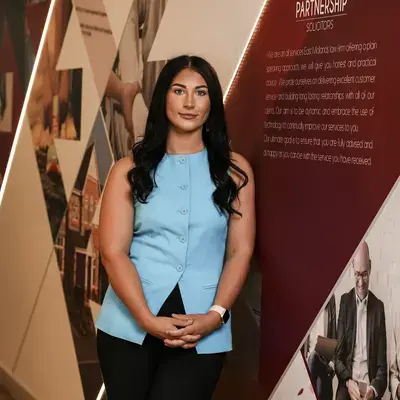
Lucy Fletcher
Solicitor Apprentice
Practice areas
As an Apprentice Solicitor I support senior colleagues across a diverse caseload including financial matters, Children Act applications, injunctions and divorce.
My role involves acting as a key point of contact for clients, attending meetings, and drafting legal documents.
I also carry out legal research, manage court preparation through to completion and maintain accurate case files to ensure every matter progresses smoothly. I balance these responsibilities with my studies for the Solicitors Qualifying Examination (SQE), applying my developing legal knowledge directly to my practical work.
Case Study
I recently assisted on a complex Children Act case representing grandparents who had been facing a significant period of separation from their grandchild. This was a challenging case that required sensitive handling and diligent legal advocacy. I am proud to say we successfully restored regular contact, ensuring the grandparents could once again play an active and meaningful role in the child’s life.
Areas of Specialism
I specialise in family law, navigating the complexities of financial matters, Children Act applications, injunctions, and divorce.
I have worked in this area for 7 months and I am currently completing my SQE apprenticeship, due to qualify as a Solicitor in May 2028.
My colleagues would describe me as an enthusiastic, highly organised and professional team member and I am known for my commitment to ensuring tasks are completed to the highest standard.
I am always ready to offer support to my colleagues and I provide a level-headed approach that helps the team navigate high-pressure situations and demanding caseloads effectively.
Languages
I have a passion for the Spanish language. Having achieved an A* at A-level, I possess an advanced intermediate proficiency. I can confidently understand complex factual information and engage in professional discussions, with skills across reading, writing, speaking, and translation.
Outside of work I enjoy spending time with my family, taking my dog on long walks in the countryside and keeping fit and healthy.
I like to travel as much as I can – I love exploring new places and recharging in the sun!
Excellent service from Lucy Fletcher!

Mica Gerrard
Paralegal
Practice areas
I assist in all matters regarding Contentious Trusts and Probate. This includes working on disputes relating to estates and trusts, together with assisting other members of the team with their caseload.
Supervisor:
I would say I am fast learner who can pick up new things quickly.
I am always willing to go on a sweet treat run.
Languages:
Outside of work, I like to cook and bake new recipes. I love gaming, reading fantasy novels and trying new places to eat.
I am also an avid gym and Pilates goer – after work you will probably find me reading at the gym in between sets!

Gail Butler
Conveyancer
Practice areas
I deal with all aspects of residential conveyancing transactions. I have worked in this area since 1996 and passed my ILEX membership exams in 2006.
Case Study
I have recently completed a purchase of an ex PRC Airey property which had the necessary remedial works but still had multiple additional complications. The client was a cash purchaser and I made sure that she had sufficient information to make her decision to proceed with regard to future resale issues.
Supervisor:
I like proper organisation and am a bit of a grammar nut but I make up for this by regularly supplying treats to boost morale!
I love hiking up a big hill and the odd fast bike ride. I have 2 children and a cat called Tilly. I enjoy cooking and baking.
Georgina Gillott
Conveyancer
Practice areas
I deal with all matters of a conveyancing transaction. I have been qualified in the area for 8 years.
Supervisor:
Snacks and a positive attitude!
I live with my partner and little boy, along with two cats. When I have free time, I enjoy reading, cross stitching, listening to music and playing video games.

Rashifa Ali
Paralegal
Practice areas
I am a Paralegal in the Private Client team who prepares Wills and Power of Attorney documents and help progress files efficiently from initial instruction through to completion.
Friendly, always willing to help the team and humorous.
I am a perfume fanatic through and through with a love for fashion and shopping. I enjoy long walks in the Peak District, trying new restaurants and cafés, and spending quality time with friends and family.
Rashifa and the staff were very courteous and helpful. Please pass on our thanks.
Everything was explained, discussed and clarified to our satisfaction - the level of service was exemplary. The fact that we were able to understand the process in layman's terms rather than solicitor language was great. We learnt things that we never considered in our previous wills. Grace and Rashifa are a credit to Smith Partnership. Nothing was too much trouble. The standard of service was excellent. Thank you!
Grace and Rashifa were very competent, explained things very well and kept us up to date via email. They provided a professional but caring service and Grace explained info very well which made it easier for us to understand.
This is the third ocassion we have needed to use legal services over the past 6 months, every department has been excellent, professional but more importantly there is an understanding that people access legal services at, usually, very difficult times in their lives so the care and compassion we have been shown has been second to none. Thank you.
Abbie Titchener
Paralegal
Practice areas
As a Conveyancing Paralegal, I run sale files and assist with purchases, transfers of equity, and remortgages. I work closely with clients, estate agents, lenders, and solicitors to help transactions progress smoothly, providing clear communication and support from start to finish.
After completing my A Levels in 2022, I began my career in conveyancing as an Administrator and have worked my way up to a Conveyancing Paralegal role. With over three and a half years of experience in residential conveyancing, I have developed a broad knowledge of property transactions and enjoy supporting clients throughout the process.
I like to think I bring a warm, approachable attitude to the team and enjoy building positive relationships with both clients and colleagues. I also consider myself quite funny, although I'm not entirely sure my colleagues would always agree! Above all, I am hardworking, supportive, and always willing to help wherever I can
When I'm not at work, you'll usually find me spending time with my family and friends, or out in the countryside with my dog, who is without a doubt my favourite family member! I love being outdoors and making the most of my weekends whenever I can.
Donna, Krishna and Abbie helped me with my first-time house purchase. The process of buying your first house is daunting but their fast replies and use of plain English really helped me to feel informed and involved in the process. They made the process simple and stress free. Thank you!

Almas Ali
New Business Assistant
Practice areas
As a New Business Assistant in the Conveyancing department, I act as the first point of contact for new clients. My role involves managing the onboarding process, including issuing quotes, completing ID Checks, and carrying out conflict checks to ensure a smooth and compliant start to their matter.
I bring a friendly, positive, and approachable attitude to the team, helping create a supportive and collaborative working environment.
Languages:
I can fluently speak in Urdu and Pothwari
After work, I enjoy winding down with a good Netflix series, especially crime dramas. I also value spending quality time with my friends and family.
Sophie Foster
HR Advisor
Practice areas
I had worked on my own in HR for a few years before joining Smith Partnership, now I get to work alongside Sarah!
I enjoy working in HR, especially moving things forward and seeing the positive impact of our work.
Ultimately, I care about the experience people have when they come to work.
Supervisor
Authenticity and transparency, I will always be myself!
I believe I’m approachable and caring, I like to think I can provide a safe space for people to share any concerns.
Quite a bit of sarcasm!
I love walking with my partner and our dog, I’m happiest in the middle of nowhere surrounded by animals and great views!
Sarah McCleary
Associate
Practice areas
I am an Associate Solicitor working within the Residential Property Team, based at our Stoke branch where I head up the Conveyancing work for the office.
Having worked within the residential property sector for over 10 years, I have extensive experience acting for clients across Staffordshire, Stoke-on-Trent, Newcastle-under-Lyme, and Cheshire. Since qualifying as a Solicitor in 2018, I have built strong local knowledge and a practical understanding of the property market, so as to assist a wide range of clients with their residential property transactions
I advise on a broad range of residential conveyancing matters, such as: -
To name just a few!
Case Study
I recently acted for a buyer purchasing a new build property with a related sale, forming part of a lengthy property chain.
Due to the time pressures involved with the chain, the client was feeling, understandably, anxious and somewhat overwhelmed. I took the time to explain each stage clearly, remaining approachable and accessible to all throughout the transaction. I ensured I was available to answer questions promptly and provide regular updates to client and connected parties during the transaction.
When unexpected delays arose due to enquiries and management company information, I worked proactively with all parties involved to resolve matters as quickly as possible, whilst keeping the client informed throughout.
The transaction completed successfully, allowing the client to move into their home on schedule and with peace of mind.
Qualification year:
Admitted to the roll of Solicitor on 15th March 2018.
Supervisor:
I pride myself on delivering excellent customer service to clients and connected parties, taking a friendly, approachable, and empathetic approach throughout the conveyancing process.
I understand that the conveyancing process can be a stressful and significant time for many clients, and I tailor my advice to each individual so as to provide clear guidance, reassurance, and support at every stage of the journey.
Outside of work, I enjoy spending time with my family and friends, walking the National Trust properties with my partner and dog, and baking in the kitchen when I get a chance.
I used Smiths for the sale and purchase of my new home, and throughout the process they were very proactive, supportive and rapid with all communication. No questions I asked were ever dismissed, I was kept updated throughout the process via phone and email. Sarah, Jackie and Stella were the main three that I communicated with and I would go back and use them again 100%. Sarah was extremely thorough throughout and found errors with my new purchase which other solicitors had previously missed and she sorted it to prevent any issues further down the line.
Couldn’t recommend Sarah and Stella at Smith Partnership highly enough. We’ve used half a dozen conveyancing solicitors over the last five years, and they are by far the best we’ve used. They’re quick, responsive, professional and incredibly easy to communicate with. Nothing ever feels like too much trouble, and they’ve been absolutely brilliant from start to finish. Would highly recommend!
We cannot thank Sarah McCleary enough for making the sale of our home as painless as possible given that the communication from the buyers solicitors was challenging to say the least. Stella was very responsive to any questions raised and certainly had the knowledge and calmness needed to manage difficult negotiations. We requested that she also dealt with our purchase even though this is happening at a later date. A mention to Stella Clarke too. A great team and most certainly we would recommend them.
We recently used Smith Partnership for our house sale and purchase, and this was handled by Sarah McCleary, along with Stella Clarke. They exceeded our expectations, and we would highly recommend them to anyone. They were extremely efficient, and very quick to deal with all matters. They kept us updated all the way through the process, and were very responsive to any queries we raised.
Niva Vigneswaran
Private Client Practitioner
Practice areas
I am a Private Client Practitioner in the Private Client team advising on estate planning, Wills, Lasting Powers of Attorney and Probate.
I specialise in asset protection, estate planning, estate administration and agricultural estates. I provide strategic, tailored guidance to high-net-worth individuals, farming and business owners and individuals.
I have been working in Wills and probate since 2018. I was called to the Bar in 2021. I am an Associate Member of the Society of Trust and Estate Practitioners (STEP).
Foodie of the office- always checking what’s for lunch, making creative sandwiches for the work charity bake sale, and bringing a little extra heat with my homemade chilli crunch.
Languages:
Outside of work, life revolves around my two young kids, staying active with badminton and running and my love of all things – food! I enjoy cooking, experimenting with new dishes and bringing people together over good food. I also love travelling, exploring new places, cultures and naturally, the local food!
Muhammad Issat
Legal Clerk
Practice areas
Whilst in the office, my role consists of trial preparation, taking instructions from clients, reviewing evidence and far more. Outside of the office, I attend university and I'm on my way to complete my police station representation accreditation.
Reliability, communication, teamwork, adaptability, positive attitude.
I enjoy sports including: football, padel, boxing, golf and badminton.
Stella Clarke
Paralegal
Practice areas
I am a paralegal in the Conveyancing Department. I help the team by preparing documents to clients/other parties and other various tasks throughout the process. I appreciate that it is a very stressful time for clients and hope the clients feel I am approachable to try to help.
Supervisor:
I consider myself to be down to earth and approachable. I am a team player and always willing to learn and help out where I can.
Outside of work I enjoy attending concerts and festivals. I look forward to spending time with family and friends as well as walking my dog. I also enjoy swimming and attending my local keep fit class.
I used Smiths for the sale and purchase of my new home, and throughout the process they were very proactive, supportive and rapid with all communication. No questions I asked were ever dismissed, I was kept updated throughout the process via phone and email. Sarah, Jackie and Stella were the main three that I communicated with and I would go back and use them again 100%. Sarah was extremely thorough throughout and found errors with my new purchase which other solicitors had previously missed and she sorted it to prevent any issues further down the line.
Couldn’t recommend Sarah and Stella at Smith Partnership highly enough. We’ve used half a dozen conveyancing solicitors over the last five years, and they are by far the best we’ve used. They’re quick, responsive, professional and incredibly easy to communicate with. Nothing ever feels like too much trouble, and they’ve been absolutely brilliant from start to finish. Would highly recommend!
We cannot thank Sarah McCleary enough for making the sale of our home as painless as possible given that the communication from the buyers solicitors was challenging to say the least. Stella was very responsive to any questions raised and certainly had the knowledge and calmness needed to manage difficult negotiations. We requested that she also dealt with our purchase even though this is happening at a later date. A mention to Stella Clarke too. A great team and most certainly we would recommend them.
We recently used Smith Partnership for our house sale and purchase, and this was handled by Sarah McCleary, along with Stella Clarke. They exceeded our expectations, and we would highly recommend them to anyone. They were extremely efficient, and very quick to deal with all matters. They kept us updated all the way through the process, and were very responsive to any queries we raised.
Carolina Monteiro
Trainee Solicitor
Practice areas
I am a trainee solicitor specialising in criminal law, with a real interest in helping people through what can often be a difficult and uncertain time. I work closely with clients, from providing advice at the police station to preparing cases for court, making sure they understand what is happening and feel supported throughout the process. I am building my experience across a wide range of criminal matters and enjoy the combination of client care, problem-solving and advocacy that comes with working in criminal defence.
I have worked on a wide variety of criminal cases, ranging from straightforward matters such as common assault to serious indictable-only offences, . This experience has allowed me to develop a broad understanding of criminal law and gain valuable experience in supporting clients through what can often be a stressful and unfamiliar process.
I began my legal career in 2023, working at a small firm where I was given the opportunity to gain hands-on experience from an early stage. During this time, I completed my accredited police station representative training, which enabled me to represent clients at the police station and further develop my practical skills. Since then, I have continued to build my experience and grow within criminal law.
Supervisor:
I bring positivity, passion and a genuine desire to learn and develop. I have had an interest in criminal law since the beginning of my undergraduate studies, and that interest has only grown throughout my career. I enjoy the challenges that criminal law presents and am committed to continuing to develop my knowledge and experience while providing the best possible support to clients.
Languages:
I am fluent in Portuguese (Brazil and Portugal) and I can comfortably understand Spanish.
Outside of work, I have far too many interests to choose from! I am a huge Formula 1 fan and support McLaren and Oscar Piastri whenever I can. When I need to switch off, you will often find me in the kitchen trying out a new recipe.
I am also a keen bookworm and spend hours photographing. More often than not, you can see me at home learning digital art while I have a true-crime or criminal documentary playing in the background!
Excellent professional! Carolina Monteiro demonstrated outstanding legal expertise, attention to detail, and genuine commitment throughout the entire process. Always available to answer questions, she provided confidence and reassurance every step of the way. I highly recommend her services for her ethics, competence, and dedication.
Nelia Salt
New Business Assistant
Practice areas
I act as a first point of contact for Conveyancing and Family Clients, ensuring they are guided and supported throughout the onboarding stage with the firm. This role involves issuing quotes, managing the onboarding stage, carrying out ID and conflict checks, to allow a smooth experience for the clients.
Supervisor:
I bring a good sense of humour, a helping hand, and a positive attitude to the team.
Outside of work I enjoy spending time with my family and friends. My hobbies are reading, going on walks with my dogs and getting hooked on a new TV show.
Enrika Khaw
Paralegal
Practice areas
I work alongside experienced and highly regarded Partner, Alison Neate, supporting her on a wide range of disputes concerning wills, estates, trusts and property ownership.
My day-to-day work includes legal research, preparing legal documents, liaising with clients and third parties, assisting with the progression of claims through negotiation and, where necessary, court proceedings.
My role also involves problem-solving, managing competing deadlines, and helping to keep a busy Partner one step ahead.
Supervisor:
I bring attention to detail, organisation, and a determination not to let deadlines or to-do-lists get the better of me.
Languages:
I am fluent in Mandarin and can communicate in Cantonese and Malay. I also understand Malaysia Chinese dialects, including Hokkien and Teochew.
Outside of work, I enjoy playing badminton, playing the piano, and baking. I am also a keen foodie and enjoy trying different cuisines and discovering new places to eat.

Erina Gjeraj
Paralegal
Practice areas
I assist with preparing Crown Court cases for trial, helping to ensure that each matter is organised and ready to proceed. My day-to-day work includes reviewing case papers, preparing documents and liaising with clients and other parties as required. I support the wider legal team throughout the preparation process, paying close attention to detail and ensuring that important information is handled accurately and efficiently.
My experience in Prison Law has given me a strong understanding of the criminal justice system. I communicate with clients in a clear, approachable manner and explain the criminal process in straightforward, accessible terms.
I am an avid reader and enjoy exploring a wide range of genres. I particularly value books that offer fresh ideas, compelling stories and new ways of looking at the world.

Eve Jefferson
Debt Recovery Assistant
Practice areas
I assist with debt recovery matters from the beginning stages through to enforcement by producing correspondence, maintaining case files and liaising with clients and debtors.
From the beginning I have been able to see cases from the beginning stages of sending LBAs or LOCs through to enforcement action.
This is my first time working in the law world and debt recovery so I am dedicated to learning as much as possible and dealing with matters in a proactive way, ensuring attention to detail!
Supervisor:
I think I am quite an approachable person, I bring a strong willingness to learn, and enthusiasm.
I enjoy reading, going on long walks and spending time socialising with my friends and family.
Laura Charles
Paralegal
Practice areas
As a paralegal in the debt recovery team, I assist clients with recovering monies due to them from the letter before action stage through to enforcement with dedication, attention to detail and a proactive approach to every matter.
I have 15 years experience in debt recovery specifically but generally in law firms – 28 years with various litigation roles.
Supervisor:
I am approachable, reliable, hardworking with a positive attitude and willingness to support other members of my team.
Walking the dogs and bingeing a good TV series, the cinema.

Tracy Harwood
New Business Assistant
Practice areas
As a New Business Assistant in the Conveyancing department, I act as the first point of contact for new and potential clients at the start of their property journey. My role involves managing the onboarding process, issuing quotes for our services, and completing ID checks. It is imperative that I obtain all the correct information and documentation required before transferring cases over to one of our solicitors for them to begin the conveyancing process with our clients.
I have 2 years experience as a sales negotiator and sales progressor in a small estate agency firm. I was the first point of call for clients, supporting them through their registration process, producing property brochures, booking and carrying out property viewings and supporting clients throughout their property journey.
Supervisor:
I am a dedicated, bubbly, enthusiastic person with a good sense of humour.
I have been happily married for 26 years and have two boys, two stepchildren and five step grandchildren that I am very proud of.
We love taking our two dogs Milo and Murphy on long walks and spending time with our family.

Interested in finding out more? We regularly post legal updates and guides on all the latest developments and frequently asked questions in this area of law. Here are some related articles.
To find out how our expert team of solicitors can help you, contact us today on 0330 123 1229, send us an email via info@smithpartnership.co.uk or request a callback.
Not quite what you were looking for? Here are some other services we offer.